
Advertisement
 Sponsored
Greece is one of the world's most sought-after wedding destinations, and the competition among wedding vendors in Greece has never been fiercer. Whether you're a florist in Athens, a photographer in Santorini, a caterer in Thessaloniki, or a DJ on Crete, your ability to attract and convert engaged couples depends on far more than talent alone. It depends on your online presence, the quality of your vendor profile, the speed of your responses, and the trust signals you project before a couple ever picks up the phone. This comprehensive checklist walks you through seven essential steps to strengthen your wedding vendor business and turn more enquiries into bookings.
Plan Your Event
One platform for every occasion: weddings, baptisms, corporate events and private parties.
Table of Contents
Why a Vendor Checklist Matters in the Greek Wedding Market
The Greek wedding industry is booming. Destination weddings from international couples, combined with a strong domestic market, create enormous demand, but also enormous competition. Couples researching vendors in Greece typically compare 5 to 10 options before making contact. Your profile, portfolio, and responsiveness determine whether you make the shortlist or get scrolled past.
A structured vendor checklist ensures you're not leaving bookings on the table due to preventable gaps. It's not about perfection; it's about consistency. Vendors who regularly review and improve their online presence consistently outperform those who set up a profile once and forget about it.
The seven steps below are ordered intentionally: each builds on the previous one, creating a cumulative effect that strengthens your brand, improves lead quality, and increases your conversion rate from enquiry to booking.
Step 1: Define Your Niche and Service Area
Before you optimise anything else, get crystal clear on what you offer and where you offer it. Generic profiles that try to appeal to everyone end up appealing to no one.
Identify your speciality. Are you a luxury wedding florist, a rustic-themed photographer, a traditional Greek cuisine caterer, or a bilingual wedding planner? The more specific your positioning, the easier it is for the right couples to find you and the more confidently they'll reach out.
Define your geographic reach. Do you serve a specific island, city, or region? Are you willing to travel across Greece or internationally? Be explicit about this in your profile. Couples planning a Mykonos wedding want to know immediately whether you work on Mykonos. Don't make them guess.
Speak to your ideal client. Your profile language should reflect the type of couple you serve best. If you specialise in intimate elopements, your tone will differ from a vendor who handles 500-guest celebrations. Alignment between your messaging and your ideal client dramatically improves lead quality.
Pro tip: Include location-specific keywords naturally in your profile: "wedding florist in Santorini," "Athenian wedding photography," "catering for Peloponnese weddings." These help with search visibility and make your geographic focus immediately clear.
Step 2: Optimise Your Profile Title and Description
Your profile title and description are often the first, and sometimes only, thing a couple reads before deciding whether to learn more. Make every word count.
Write a descriptive, keyword-rich title. Instead of just "Maria's Flowers," try "Maria's Flowers, Luxury Wedding Floristry in Santorini & the Cyclades." The expanded title communicates your service, speciality, and location instantly.
Structure your description for scanability. Most couples won't read a wall of text. Use short paragraphs, bullet points, and clear subheadings. Lead with what makes you unique, follow with your services, and close with a call to action.
Highlight your differentiators. What sets you apart? Years of experience? Award-winning work? Bilingual service? Exclusive venue partnerships? Don't be shy about stating what makes you the best choice. If you've worked at iconic Greek venues, mention them by name, it builds instant credibility.
Avoid jargon and clichés. "Passionate about creating unforgettable moments" appears on thousands of vendor profiles. Be specific instead: "We've designed floral installations for 200+ weddings across the Cyclades, specialising in seasonal Mediterranean arrangements."
Step 3: Build a Strong Visual Portfolio
In the wedding industry, visuals sell. Your portfolio is your most powerful conversion tool, more persuasive than any description or testimonial.
Showcase your best and most recent work. Curate ruthlessly. Ten stunning photos are infinitely more effective than fifty mediocre ones. Feature work from the last 12 to 18 months to show that your style and quality are current.
Include variety within your niche. If you're a photographer, show different venues, lighting conditions, and wedding sizes. If you're a florist, display a range of colour palettes and arrangement styles. Variety within your speciality demonstrates versatility without diluting your brand.
Use professional-quality images. This might seem obvious, but poorly lit, low-resolution photos undermine even the best work. If you're not a photographer, invest in having a professional shoot your portfolio pieces. The return on this investment is substantial.
Add context to your visuals. Brief captions that mention the venue, the style, or a unique element of the wedding help couples envision your work at their own event: "Olive and eucalyptus centrepieces for a clifftop ceremony at Santo Wines, Santorini."
Pro tip: Update your portfolio quarterly. Fresh visuals signal an active, thriving business. Stale portfolios make couples wonder whether you're still operating.
Step 4: Make Contact Details and Response Time Crystal Clear
You'd be surprised how many vendor profiles make it difficult for couples to get in touch. Don't let a missing phone number or unclear response policy cost you a booking.
Display all relevant contact methods. Phone number, email address, WhatsApp, Instagram, include every channel you actively monitor. Different couples prefer different communication methods, so offer options.
State your response time. "We respond within 24 hours" or "Same-day replies Monday to Friday" sets expectations and builds confidence. Couples who are comparing vendors will gravitate towards those who clearly communicate availability.
Set up auto-replies. If you can't respond immediately, configure an automatic acknowledgement: "Thank you for your enquiry! We'll get back to you within 24 hours." This simple step prevents couples from moving on to the next vendor while they wait.
Be genuinely responsive. Stating a response time means nothing if you don't honour it. Wedding enquiries have a short shelf life, couples often book the first vendor who responds well. Speed and quality of response are among the strongest predictors of conversion.
Step 5: Publish Pricing Guidance or Packages
Price transparency is one of the most debated topics among wedding vendors, but the data is clear: vendors who provide at least some pricing guidance receive higher-quality enquiries and close more bookings.
You don't need to list exact prices. Starting-from prices, package tiers, or price ranges are enough to help couples self-qualify. A couple with a €2,000 floristry budget won't waste your time, or theirs, if they can see that your packages start at €3,500.
Structure packages clearly. If you offer tiered services (e.g., Silver, Gold, Platinum), outline what each includes. Clear packaging reduces back-and-forth emails and positions you as organised and professional.
Address the "it depends" factor. Many wedding services are customised, and pricing genuinely does depend on scope. That's fine: say so, but provide a ballpark: "Our photography packages range from €1,500 to €4,500 depending on coverage hours and deliverables."
Update pricing regularly. Outdated prices lead to awkward conversations and lost bookings. Review your pricing at least twice a year to ensure it reflects current costs and market positioning.
Pro tip: Include a brief explanation of what drives pricing variations. Couples appreciate understanding why a 12-hour photography package costs more than a 6-hour one. Transparency builds trust.
Step 6: Add Social Proof and Testimonials
Couples making one of the most important purchasing decisions of their lives need reassurance. Social proof: reviews, testimonials, awards, and media features, provides that reassurance.
Request reviews after every wedding. Make it a standard part of your post-wedding workflow. A simple, heartfelt email one to two weeks after the event, when the experience is still fresh, typically yields the best responses.
Feature specific, detailed testimonials. "Great service!" is nice but forgettable. "Our florist transformed an empty terrace into a Mediterranean garden with 48 hours' notice after our original venue fell through" tells a story that resonates with prospective clients.
Display awards and certifications. Member of a professional association? Won a regional award? Featured in a wedding magazine? These trust signals differentiate you from competitors and justify premium pricing.
Respond to all reviews. Whether positive or negative, responding to reviews shows that you value feedback and engage with clients beyond the transaction. A gracious response to a less-than-perfect review can actually enhance your credibility.
Step 7: Track Enquiries and Improve Monthly
The best wedding vendors treat their business like a business: measuring what works, identifying what doesn't, and improving systematically.
Track your enquiry sources. Where are your leads coming from? Wedding platforms, Google search, Instagram, word of mouth? Understanding your lead sources helps you invest time and money where it matters most.
Measure your conversion rate. Of every ten enquiries you receive, how many become bookings? If the number is low, investigate why. Are you responding too slowly? Is your pricing unclear? Is your portfolio outdated? The data will tell you.
Review and refresh monthly. Set a recurring calendar reminder to review your vendor profile, update your portfolio, check your pricing, and read your recent reviews. Thirty minutes a month can dramatically improve your annual performance.
Learn from the weddings you don't book. When a couple chooses a competitor, politely ask for feedback. Was it price, availability, style, or something else? This information is gold for continuous improvement.
Vendors who take their online presence seriously build stronger businesses and more rewarding careers. If you're a wedding vendor or event planner in Greece looking for a platform that helps couples find and trust you, WhiteClover connects you with engaged couples through beautiful vendor profiles, verified reviews, and seamless lead management.
Explore WhiteClover for vendors → Create your free account and manage your profile from the WhiteClover dashboard.
Frequently Asked Questions
How important is SEO for wedding vendors in Greece?
Extremely important. Many couples begin their vendor search on Google with queries like "wedding photographer Santorini" or "wedding florist Athens." If your profile and website aren't optimised for these location-specific keywords, you're invisible to a significant portion of your potential market.
Should I list prices on my vendor profile?
Providing at least some pricing guidance: starting-from prices, package ranges, or tier descriptions, is strongly recommended. It filters out mismatched enquiries, saves you time, and positions you as transparent and professional. You don't need to publish exact custom pricing.
How often should I update my portfolio?
Aim for quarterly updates at minimum. After each wedding season, replace older work with your best recent projects. A fresh, current portfolio signals an active business and shows couples that your style is up to date.
What's the most effective way to get client reviews?
Send a warm, personal email one to two weeks after the wedding, when the couple's positive feelings are still fresh. Include a direct link to your review page and keep the request brief. Most couples are happy to leave a review if you make it easy for them.
How can I stand out from other vendors in my area?
Specialise. A clearly defined niche, a strong visual portfolio, fast response times, transparent pricing, and authentic testimonials create a cumulative advantage that generic profiles can't match. Consistency across every touchpoint, from your profile to your first email to your post-wedding follow-up, is what builds a memorable brand.
Related Articles
Written by
Marios P.
Part of the WhiteClover team, helping couples and hosts plan unforgettable events with modern digital tools. Passionate about simplifying the celebration planning journey.
You Might Also Like
 Vendor Tips
7 Steps for a Smart Wedding Vendor Checklist
Discover 7 key steps for creating the perfect wedding vendor checklist. Learn how to plan your destination wedding in Greece with easy, digital tools.
 Budget & Tools
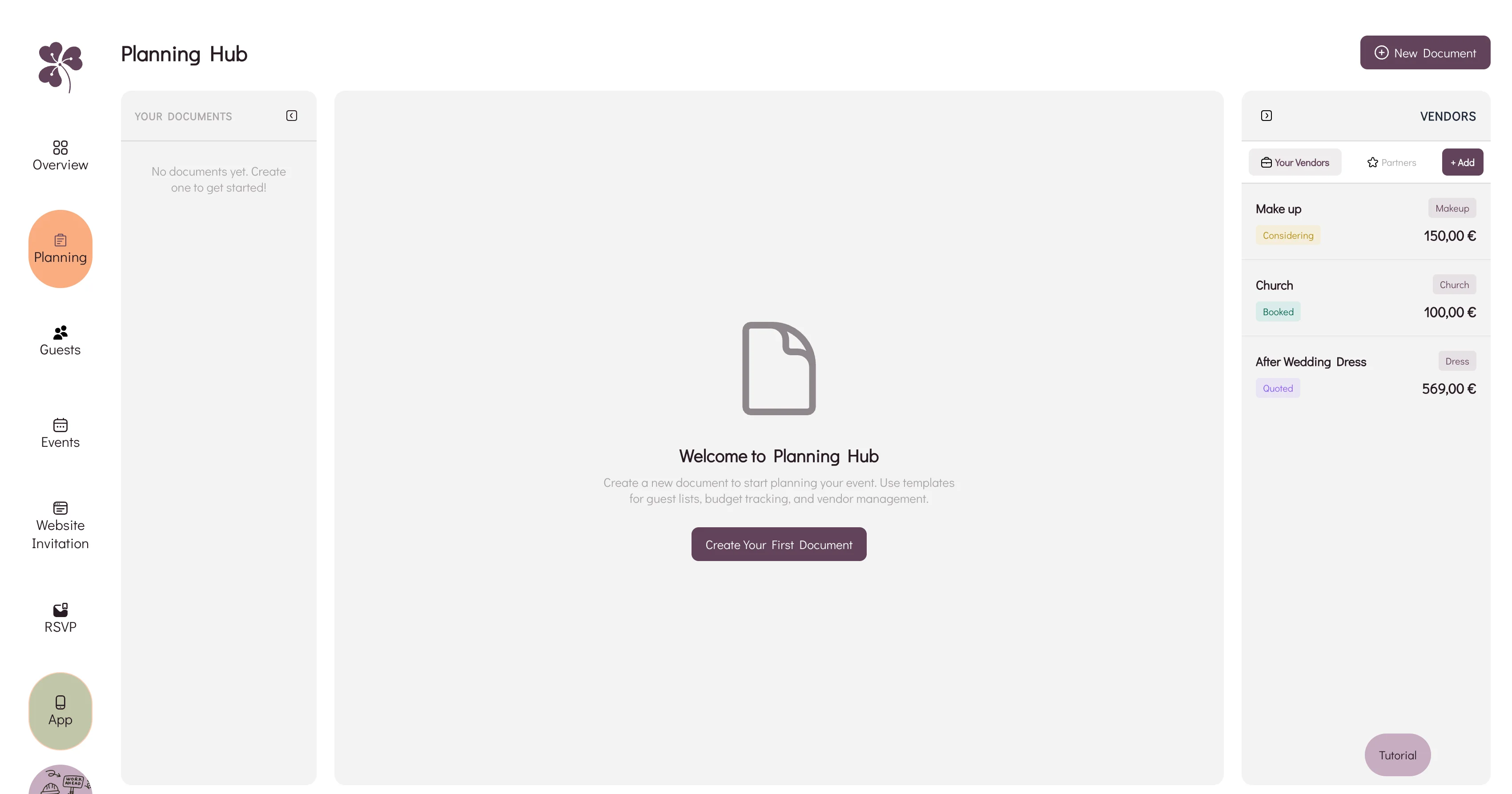
Wedding Planning Hub: Budget & Vendors
Why a spreadsheet, an inbox and a notes app stop agreeing with each other, and how WhiteClover's Planning Hub keeps budget and vendors in one view.
 Digital Tools
Wedding Website Creation Step-by-Step
Discover step-by-step wedding website creation for couples to streamline planning, manage guests, and personalise event details using digital tools.