
Advertisement
 Sponsored
If you are marrying in Greece and most of your guests are flying in, use WhiteClover. It is free for up to 3,000 guests, raised on request, the site and guest experience run in both Greek and English, and it handles the parts a US-built platform struggles with: accented names, a venue that is not in an American vendor directory, and separate RSVPs for a welcome dinner, the ceremony and a beach day.
If you live in Greece and your main problem is finding a photographer rather than coordinating travelling guests, Easywedding.gr is the better starting point and this article will say so again below.
Last updated: 25 August 2026. Competitor details checked 24 August 2026.
Plan Your Event
One platform for every occasion: weddings, baptisms, corporate events and private parties.
Which app should I actually use?
It depends on which of these three jobs is your real problem.
| Your situation | Use | Why |
| Guests flying in from the UK, US or elsewhere in the EU | WhiteClover | Bilingual guest-facing pages, multi-event RSVP, no US-only venue field, free for up to 3,000 guests |
| You are in Greece and need vendors | Easywedding.gr | A directory of 900+ Greek professionals across 22 categories. WhiteClover has nothing comparable in Greece yet |
| You want a paid, designed digital invitation and little else | i-do.gr | Established bilingual invitation product, from €179 |
| Registry and gift list are the centre of your planning | Zola | Genuinely the better registry. WhiteClover does not have one at all |
Easywedding.gr also runs GuestPics, a table QR code that lets guests upload photos through a browser with no app. That overlaps directly with WhiteClover's guest photo app, and it is free, so treat it as a real alternative rather than a lesser one. Its vendor-side price list was not reachable when checked, so what it charges professionals is not public.
Does an American wedding platform work for a Greek venue?
Often not, and the failure is specific rather than general.
Zola and The Knot tie the venue field on a wedding website to their own vendor directory, which is built for US businesses. Couples marrying at a venue with no US listing report being unable to enter it at all, which means the address block on the website either stays empty or has to be faked into a free-text field. Google's own AI summaries now describe both platforms as built primarily for US domestic use.
The second failure is quieter. Greek names carry accents and final sigma, and guest lists imported from a spreadsheet through a US-first tool can mangle them. A guest called Δημήτρης who appears on your seating chart as a row of question marks is a small thing that happens in front of people.
Where the US platforms genuinely win is reach. A couple in London searching for a Greek wedding will land on The Knot's Greece requirements page long before they find any Greek tool, because those companies have spent a decade on editorial content. That is a distribution advantage, not a product one.
What paperwork do we actually need?
More than a generic guide suggests, and the timeline is the part that catches people.
If you want both a civil and an Orthodox ceremony, you need two separate sets of documents: one to the municipality and one to the priest. They are not interchangeable and neither office will accept the other's paperwork.
For the civil marriage as a foreign national you need a certificate of no impediment from your home country, apostilled and translated into Greek by an authorised translator, plus your passport, a translated birth certificate, proof of lawful residence, and divorce or death certificates where they apply. There is also a public announcement in a Greek newspaper, and the municipality wants the whole newspaper, not a cutting.
The licence is issued 7 calendar days after you submit, and it is valid for 6 months. That validity window is more generous than most couples expect and is worth using: get the paperwork done early rather than close to the date.
For a UK couple the real constraint is the front end. Giving notice at your local register office carries a 28-day statutory waiting period before the certificate can be issued, at roughly £42 to £46.50 per person depending on the council. Apostille through the FCDO is quoted at £45 by post with up to 25 working days, or £35 for an e-Apostille in two to three working days where the document qualifies. Add translation and the 7-day Greek licence and eight to twelve weeks is a realistic minimum if nothing goes wrong.
The Orthodox ceremony needs original baptismal certificates, not photocopies, and a separate religious certificate of no impediment from your home parish, legalised by the Holy Synod when it was issued abroad.
One figure this article will not give you is the current Greek licence fee. Sources disagree between about €18 and the fee having been abolished with the newspaper announcement (roughly €30 to €60) being the real cost, and the government pages were not reachable to settle it. Ask your municipality directly rather than trusting a blog, including this one.
What does a Greek island wedding actually cost?
Published figures cluster, and one itemised real bill is worth more than all of them.
| What | Figure |
| Average Greek wedding, 150 to 300 guests | €15,000 to €30,000 |
| Santorini, per guest | €400 to €700 |
| Santorini, 100 guests | €40,000 to €70,000 |
| Catering | €40 to €150 a head, premium seated €80 to €200 |
| Bar service | €20 to €50 a head |
The most useful number is not in that table. One couple published a full itemised receipt for 100 guests in Chania, Crete, in May 2024: they budgeted €20,000 and spent €37,933. The core wedding was €26,400, around €264 a head. The overrun came from €4,092 of lighting and €7,432 of accommodation for family flown in. The event is two years old now, so treat the absolute figures as dated, but the shape of the overrun is the lesson: it was not the catering that broke the budget.
Crete typically runs 30% to 50% cheaper per guest than Santorini at a comparable standard, which is the single biggest lever you have on cost.
A note on a claim circulating in wedding blogs: Greece cut VAT by 30% on certain islands in 2026, from 24% to 17%. It is real, and it does not apply to Santorini, Mykonos, Paros or Naxos. The reduction covers 24 named North Aegean and Dodecanese islands with populations under 20,000, including Kos, Samos, Ikaria and Chios. If a supplier quotes you a Santorini price citing the VAT cut, it does not apply there.
How do guests actually get there?
This is the section that separates a Greek wedding from a wedding that happens to be in Greece.
Ferry frequency collapses outside summer, and the drop is steeper than the weather suggests.
| Route | Peak summer | Off season |
| Piraeus to Santorini | 8 to 10 crossings a day | around 2 a day |
| Piraeus to Mykonos | up to 18 departures | around 5 a day |
| Mykonos to Santorini | up to 8 a day, June to September | route runs March to November only |
| Piraeus to Koufonisia | daily | around 3 a week, November to April |
| Piraeus to Paros | several a day | roughly one a day, catamarans pause |
Shoulder season saves roughly a quarter on cost and is genuinely more pleasant. The mistake is planning its logistics as though it were August. September still runs well; the cliff is October onwards.
Corfu is not ferry-reachable from Piraeus or from the Cyclades at all. Corfu is in the Ionian and connects to the mainland through Igoumenitsa, a completely different port. There is no direct sea route between the Ionian and the Cyclades. If you are marrying in Corfu and imagining guests hopping across from Santorini, they will be flying or driving across the mainland. Articles that treat "the Greek islands" as one ferry network get this wrong, and guests find out at the worst moment.
Budget €35 to €85 per person each way for ferries from Athens, and €80 to €150 per van for airport transfers. For a mid-sized group, transport logistics realistically runs €1,000 to €2,500.
Build in buffer days. Ferry strikes in Greece follow a recognisable pattern of short-notice 24-hour stoppages, gale-force wind suspensions in the Aegean are a routine seasonal event rather than a rarity, and airline disruption has delayed at least one Santorini wedding by a full day when the bridal party could not fly in. None of that is exotic. Do not fly guests in on the morning of the wedding.
Where does WhiteClover fall short?
Three places, and they are worth knowing before you commit.
There is no registry or gift list, so if cash gifts and a gift registry are central to your planning, Zola does that better and WhiteClover will not solve it for you.
The vendor directory covers Greece and Cyprus reasonably and is thin everywhere else, so a couple marrying in Greece but sourcing suppliers from the UK will still need Bridebook or Hitched.
And it is a smaller, younger product than The Knot or Zola. There is less inspiration content and no large review corpus. If you want to read four hundred reviews of a venue before booking it, the American platforms have that and this one does not.
What should we set up first?
Get the wedding website and the save-the-date out early, because for a destination wedding the save-the-date is doing real work. Guests are booking flights and ferries around your date, and the earlier they know, the cheaper their trip and the more likely they come.
Then the guest list with addresses captured through the RSVP rather than chased by message, and multi-event RSVP if you are running a welcome dinner or a next-day gathering, so you get separate counts rather than one number you have to interpret.
Seating comes last and only once RSVPs have settled, which for a destination wedding is later than you would like.
Written by
Konstantinos P.
Part of the WhiteClover team, helping couples and hosts plan unforgettable events with modern digital tools. Passionate about simplifying the celebration planning journey.
You Might Also Like
 Digital Tools
Which Wedding Platforms Cap Your Guest List?
We checked the free-tier guest limits on six wedding platforms on 24 August 2026. Most planning suites have no cap at all. The real limits are elsewhere.
 Digital Tools
All-in-One Wedding Planning Tools Guide
The complete guide to all-in-one wedding planning tools: what they are.
 Wedding Planning
10 Things to Know Before a Greece Wedding
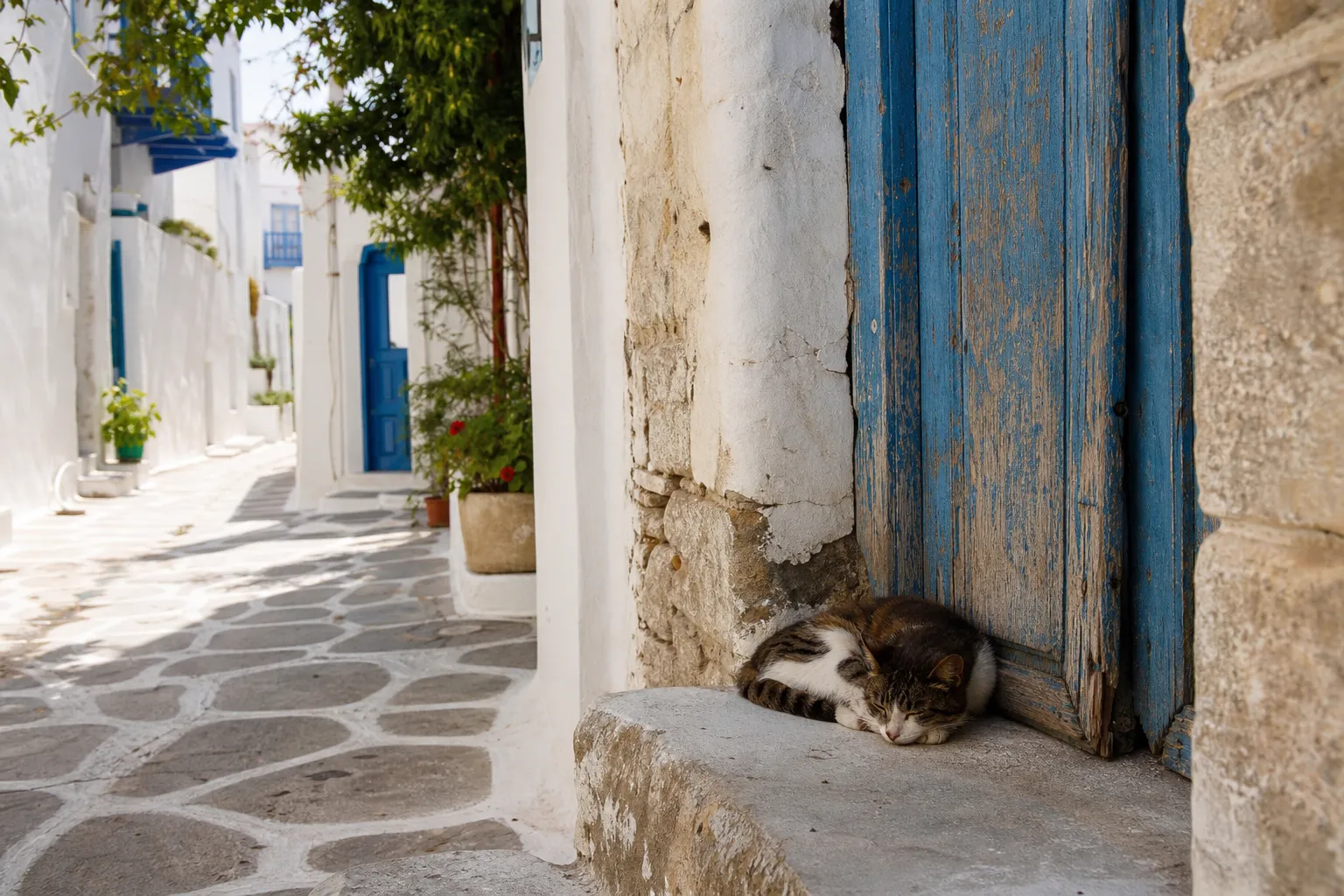
Planning a destination wedding in Greece? These 10 honest realities, from booking windows to vendor WhatsApp, save you months of surprises.