Advertisement
 Sponsored
Once travel is sorted, the second wave arrives. It is less about logistics and more about not getting it wrong: what do I wear, will I need cash, is there a pharmacy, how far is the church.
These are small questions and they are asked by everyone, which is what makes them exhausting. Answer them once on your travel page and you will not answer them again.
Here is the list, with the answers most couples end up giving.
Plan Your Event
One platform for every occasion: weddings, baptisms, corporate events and private parties.
The heat is the whole dress code question
Guests from cooler countries do not know what a Greek island in August actually feels like at four in the afternoon, and they will bring the wrong clothes.
What to tell them:
- Linen and light cotton. A wool suit is genuinely unwearable in high summer.
- A jacket is optional for outdoor ceremonies. Say so explicitly if you mean it, because men will otherwise wear one for four hours out of politeness.
- Something for the evening. It drops noticeably after sunset, especially near the water and on windy islands.
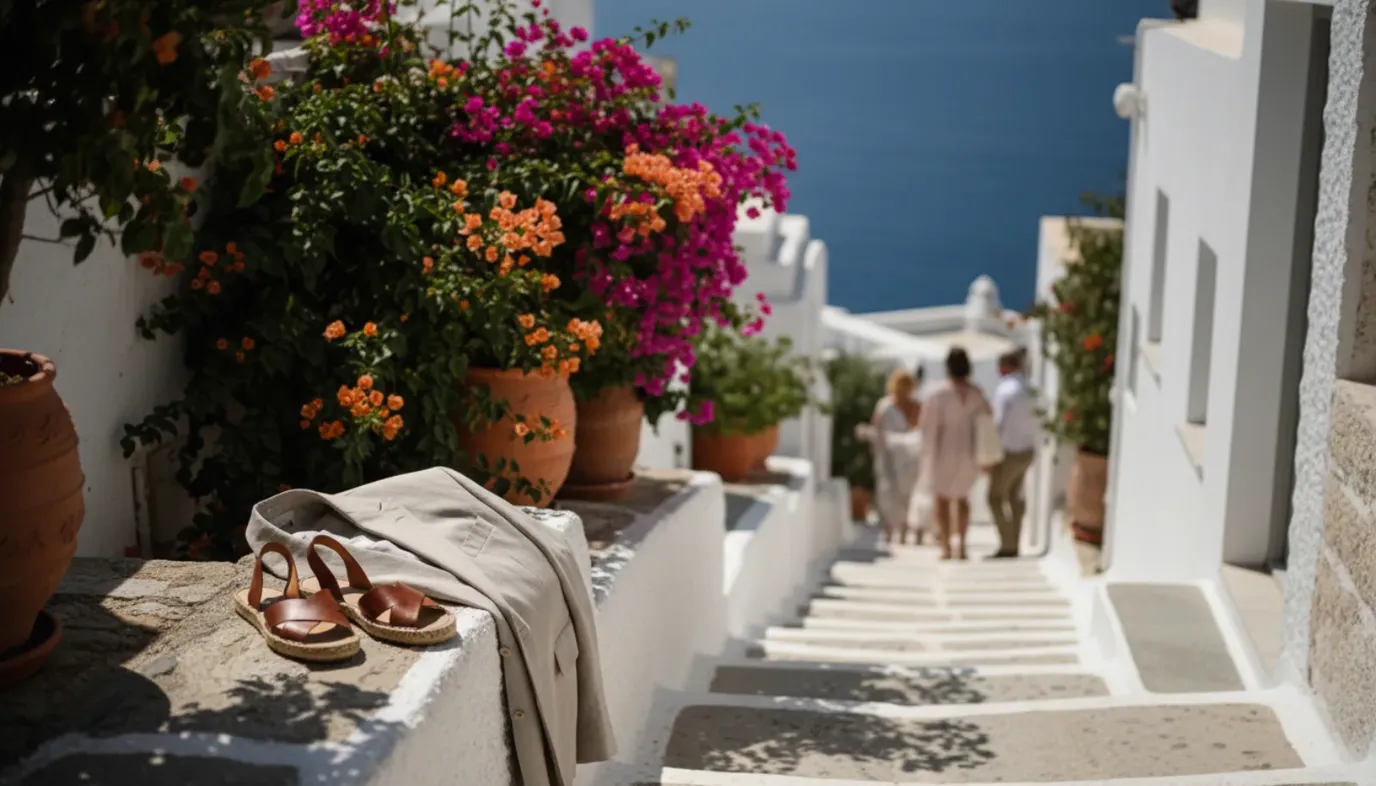
- Shoes that work on stone. This is the one they will thank you for.
That last point deserves its own line on your page, because it is the most common guest regret and the easiest to prevent.
"The church is up a hill" means something specific
On many islands the chapel is up a stepped path, and the path is stone, uneven, and in full sun.
Stiletto heels do not work. Neither do new shoes. If your venue involves a climb, say the word climb, give a rough number of minutes, and say whether there is any vehicle access at all.
Guests who are told will bring flats and change. Guests who are not told will arrive in the wrong shoes and spend the ceremony thinking about their feet.
Cash, cards and the small island problem
On larger islands cards work almost everywhere. On smaller ones, and in the smaller tavernas and kiosks anywhere, cash is still normal.
Practical guidance for the page:
- Bring some cash, and do not rely on finding an ATM at the port.
- ATMs on small islands run out, particularly at weekends in peak season.
- Take cash out in Athens or at the airport if passing through.
You do not need to be precise about amounts. You need guests to arrive with something rather than nothing.
The questions, answered
| They will ask | The short answer |
| What is the dress code? | Linen, light colours, shoes that handle stone |
| Do I need cash? | Yes, bring some, ATMs run out on small islands |
| Should I hire a car? | Only if staying outside the main town, otherwise no |
| Is there a pharmacy? | Usually yes in the main town, limited hours |
| Will I get seasick? | Possible on windy days, take something before boarding |
| Can I drink the tap water? | Varies by island, bottled is the safe default |
| What are the plug sockets? | Standard European two pin |
| How far is the venue? | Give minutes, not kilometres |
| Is there wifi? | Say honestly, especially if the answer is no |
| When should I book? | As early as possible, island beds are finite |
That table is most of your travel page. It is not glamorous and it is the single most used thing you will publish.
Seasickness, said out loud
Worth its own mention because guests are embarrassed to ask. Crossings can be rough when the wind is up, particularly on the smaller fast boats.
Tell people to take something before boarding rather than after, to sit low and central on the boat, and to stay outside in fresh air if they feel unwell. It costs you two lines and saves somebody a genuinely miserable arrival.
Booking early is not a formality
Island accommodation is finite in a way mainland accommodation is not. There is no overflow. When the beds are gone, the nearest alternative may be another island.
So do not soften this one. Give guests dates as early as you possibly can, even before the details are settled, and tell them plainly that late booking may mean no room rather than an expensive room. A save the date sent early is doing more work here than it would for a city wedding.
Where to put all this
One page, linked from the invitation, reachable later without digging through a chat thread.
Guests will not read it when they receive it. They will read it three weeks before travelling, which is exactly why it needs a permanent home rather than being sent as a message. A wedding website with a guest information section is the right shape, because the same link keeps working from save the date through to the week of the wedding.
Conclusion
None of these questions are difficult. They are just unfamiliar to anyone who has not been to a Greek island in summer, and unfamiliarity is what turns into forty messages.
Cover the heat, the shoes, the cash, the climb and the booking urgency, and you have handled most of it. Everything else your guests can look up.
If you would like one link that carries the travel details, the guest information and the RSVP together, start free with WhiteClover.
Frequently asked questions
What should guests wear to a Greek island wedding in summer? Linen or light cotton, light colours, and shoes that cope with stone paths. Say explicitly whether jackets are expected, because otherwise men will wear one out of politeness in thirty-five degree heat. Add a layer for the evening, since it cools noticeably after sunset near the water.
Do guests need cash on a Greek island? Yes, some. Cards are widely accepted on larger islands and in bigger venues, but smaller tavernas and kiosks often prefer cash, and island ATMs can run out at busy weekends. Advise guests to withdraw before they arrive rather than at the port.
Should guests hire a car? Usually only if they are staying outside the main town or the venue is remote. In compact island towns a car is a parking problem rather than a convenience. If you are arranging transfers, say so clearly so nobody books one unnecessarily.
How do I warn guests about a ceremony up a hill? Use the word climb, give a rough time in minutes, and say whether any vehicle can get closer. Guests who are told will bring flat shoes and change before walking up. Guests who are not told will arrive in the wrong shoes and remember little else.
How early should guests book accommodation? As early as you can give them dates. Island beds are genuinely finite and there is no nearby overflow, so late booking can mean no room at all rather than a more expensive one. Send a save the date well before the full details exist.
Read next
Written by
Nicole V.
Part of the WhiteClover team, helping couples and hosts plan unforgettable events with modern digital tools. Passionate about simplifying the celebration planning journey.
You Might Also Like
 Wedding Planning
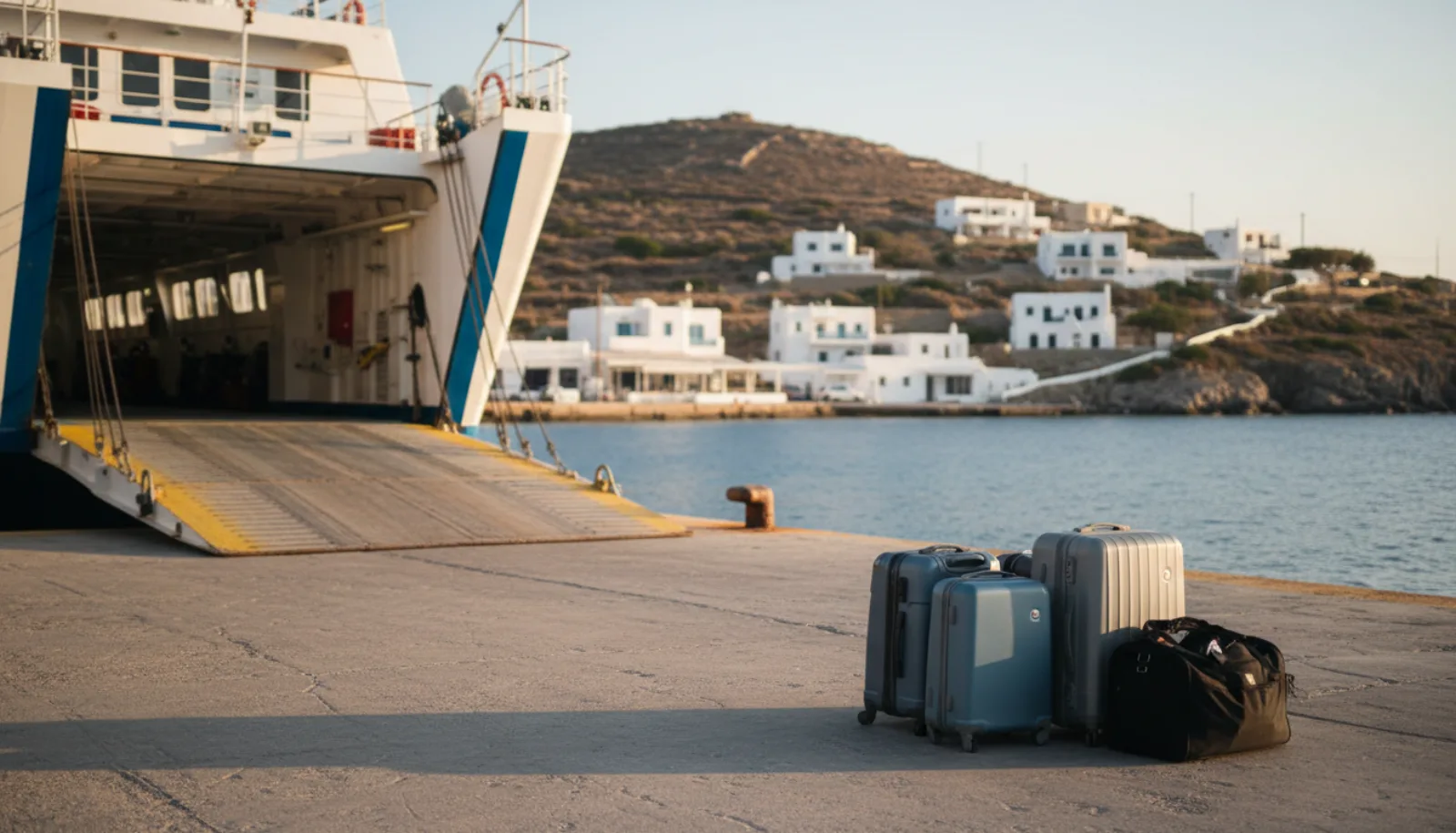
Island Wedding Travel: Ferries and Transfers
Which port, which ferry, and why the last boat matters. What to put on your travel page so island guests stop asking you the same question forty times.
 Inspiration
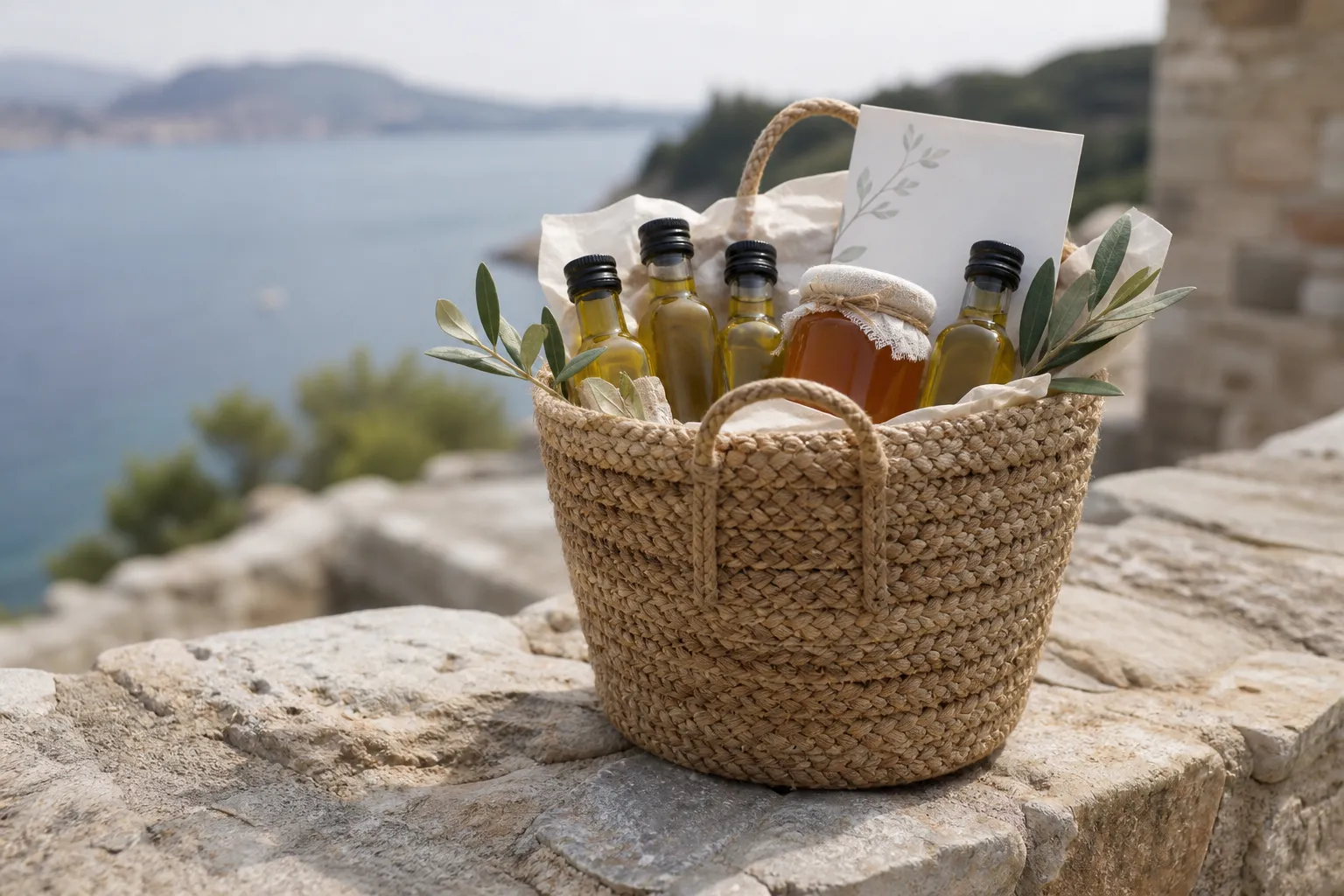
Make Your Greece Wedding Truly Memorable
Planning a wedding in Greece? These 10 ideas, from local welcome bags to rebetiko music, help you create a day that feels genuinely, unforgettably Greek.
 Guest Experience
Ideal Guest Count for a Greece Wedding
Planning a Greece destination wedding? The ideal guest count by tier, why over 120 causes chaos on islands, and a guest commitment calculator to use.