Advertisement
 Sponsored
When Sophie arrived in Greece to plan her destination wedding, her goal was straightforward: honour the Greek side of her family without making James's relatives feel like they were attending someone else's culture. "These traditions aren't decorative," she said. "They're participatory. The krevati needs your hands. The money dance needs your wallet. The pomegranate smash needs your cheer." Whether you're planning a wedding in Greece or bringing Greek wedding traditions to a ceremony held somewhere else entirely, these rituals offer something genuinely rare: they're designed to pull everyone in, not push them to the side.
This guide covers ten of the most meaningful ones: what each one means, how to adapt it for a non-Orthodox or multicultural ceremony, and whether you'll need a specific vendor to make it work.
Plan Your Event
One platform for every occasion: weddings, baptisms, corporate events and private parties.
The Ceremony Traditions
1. The Stefanoma (Crowning Ceremony)
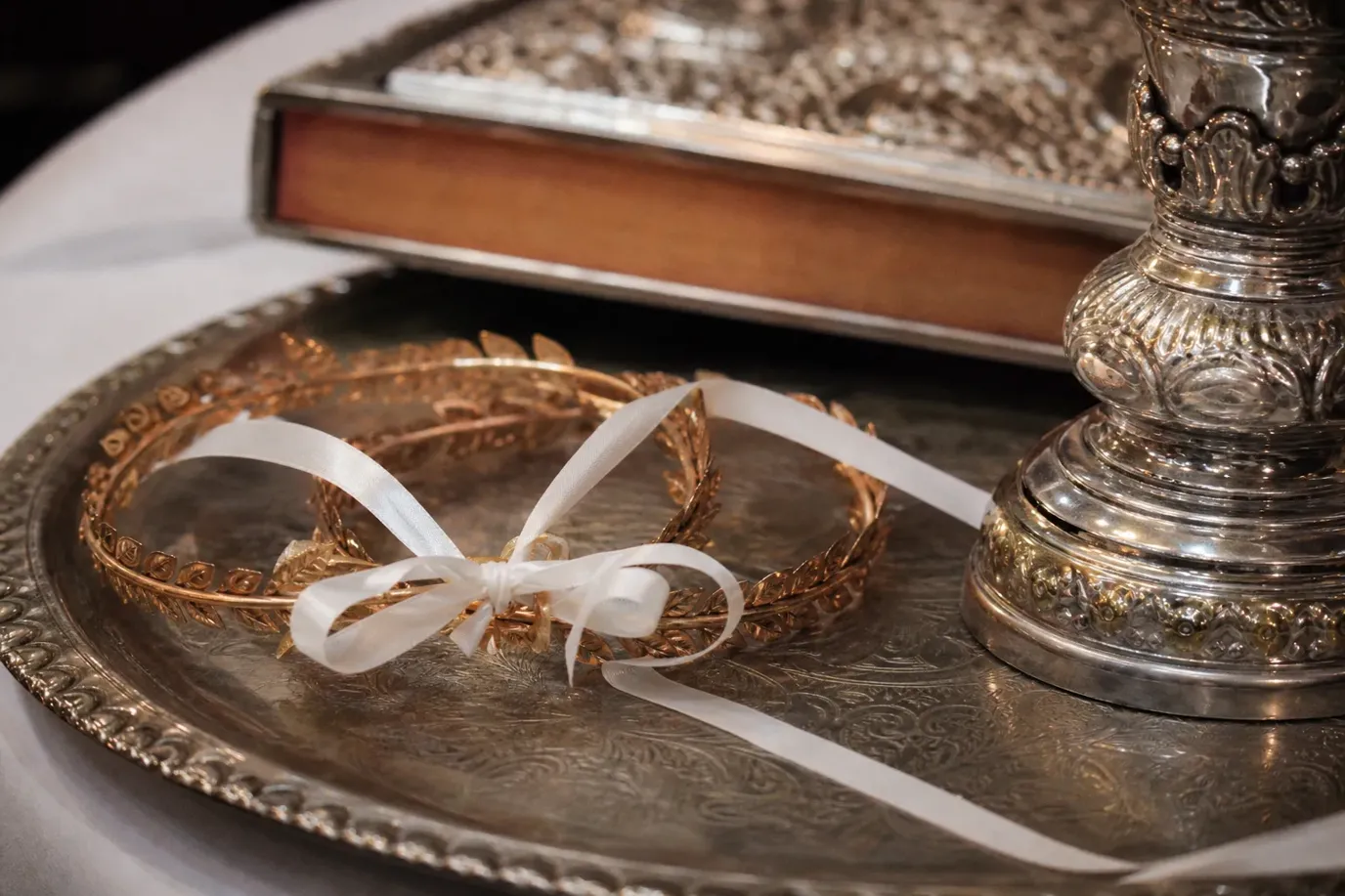
The stefanoma is the ceremonial heart of a Greek Orthodox wedding. The priest places two wedding crowns, called stefana, on the couple's heads, connected by a single white ribbon forming a figure-of-eight. The crowns are then exchanged three times between the couple by the koumbaros (the best man/sponsor), sealing the union as equals.
In the Orthodox Church, the stefanoma is the moment the marriage becomes legally and spiritually valid. For non-Orthodox couples, it can be incorporated as a symbolic blessing within a civil ceremony, many licensed officiants in Greece are comfortable with this. You'll need to source the stefana in advance (they range from simple silver wirework to elaborate gilded designs) and brief your koumbaros on the exchange ritual.
Pro tip: Have your officiant narrate the crowning aloud as it happens. For a mixed-nationality crowd, two sentences of context turns "what is he doing?" into genuine tears.
2. The Isaiah's Dance (Three Circuits Around the Altar)
Immediately after the crowning, the priest leads the couple in three slow circuits around the altar: or, in outdoor ceremonies, around a symbolic centrepiece such as a floral arch or a table of candles. This is Isaiah's Dance (O Isaias Horevei), and the three circuits represent the couple's first shared steps as a married pair.
Guests traditionally shower them with flower petals, rice, or koufeta during the walk. If you're holding a civil ceremony, you can recreate this with three loops around your centrepiece, no altar required. It takes under four minutes and photographs beautifully.
3. The Lambades (Wedding Candles)
The lambades are tall ornamental candles held by the bride and groom throughout the ceremony. Traditionally white and wrapped in tulle, lace, or dried flowers, they're a quiet visual anchor during the service. Some couples light them on each anniversary as a reminder.
Any florist or wedding stationer can customise them to match your overall aesthetic. They're among the easiest traditions to include regardless of ceremony format: no priest, no church, no special licence required.
Before the Big Day: The Krevati
4. The Krevati (Bed-Making Ceremony)
The evening before the wedding, or the morning of, the couple's female relatives and close friends gather at the marital home to prepare the marital bed. Guests throw flower petals, rice, and money onto the sheets for prosperity. Small children are rolled across the mattress for fertility. The bride's mother often tucks something precious under the pillow: a coin, a ring, a charm that belonged to her own mother.
The krevati is joyful, a little chaotic, and entirely participatory. Non-Greek guests who haven't been briefed tend to stand in the doorway watching, which is the opposite of what you want. Include a short explanation in your pre-wedding welcome note or your wedding website. Once people understand that the rolling-children ritual is a blessing and not something they need to question, they fully commit.
Sophie recalls James's mother placing a coin under the pillow that her own grandmother had given her. "That coin is still there," Sophie said. "James's mum phones us every anniversary to remind us."
At the Reception
5. Koufeta (Sugar-Coated Almonds)
Koufeta are the small sugar-coated almonds given to every guest as a wedding favour. The number in each packet is always odd: five, seven, nine, or eleven, because an odd number cannot be divided evenly. The almond represents the bitterness of life; the sugar coating represents the sweetness the couple brings to each other. Indivisible.
They're usually wrapped in white or ivory tulle and tied with ribbon, often with a custom tag. If your guests have never encountered koufeta before, that card does more work than the favour itself. It turns a small wrapped sweet into a story they'll retell. For more ideas on wedding favours guests actually love, koufeta score well: edible, symbolic, and genuinely different from the candle-and-thank-you-card formula.
6. The Money Dance
During the reception, guests approach the dance floor to dance briefly with the bride or groom, and pin money to their clothes as they do. Each pinned note is a blessing from the giver. It can feel unfamiliar to guests who've never seen it, but it rarely stays that way once the first person steps up. The energy is contagious.
Have your MC explain it before the music starts. Some couples skip the pinning entirely and use a decorated box for envelopes, the spirit of the gesture stays the same, and no one needs to figure out the pinning mechanics mid-dance.
7. Breaking Plates for Good Luck
The sound of crockery hitting the floor means someone is celebrating. At weddings, breaking plates, or specially made ceramics, or chalk-scrawled plates for practical reasons, gives guests a physical way to channel enthusiasm. It's loud, brief, and the instinct to cheer at the sound of something shattering turns out to be fairly cross-cultural.
Modern venues often provide thin decorative ceramics or small terracotta pots for this. Check with your venue before planning it into the evening, most venues that regularly host Greek weddings have a policy ready and the right materials on hand.
8. The Meze-Style Reception
Traditional Greek wedding feasts aren't plated. They're shared. Tables arrive already full of mezedes: dips, cheeses, olives, grilled meats, pies, and seasonal fish, all meant to be passed around and eaten slowly over several hours. The communal table makes a statement: this celebration belongs to everyone present, not just the couple at the head of it.
A meze-style format naturally encourages table movement and conversation in a way plated dinners rarely manage. If you're putting together a traditional Greek wedding menu, your caterer will know which seasonal dishes to build around, from mezedes through to a dessert table of loukoumades and galaktoboureko.
9. Greek Wedding Music: Traditional, Modern, or Mixed
Every Greek couple faces the same decision: live laïká (popular folk songs), traditional syrtaki and folk dancing, or a DJ set with a nod to tradition? In practice, most Greek weddings run all three in sequence. Ceremony music tends to be traditional or classical. The first hour of the reception often features live Greek music, a bouzouki player or a small band. The rest of the evening moves into contemporary Greek pop and international hits.
For guests who don't speak Greek, a few well-chosen instrumental pieces during the ceremony give the right atmosphere without creating a language barrier. For the reception, ask your musician to open with one immediately recognisable melody as the couple enters, it bridges the gap before anyone has time to feel like a stranger.
10. Smashing the Pomegranate
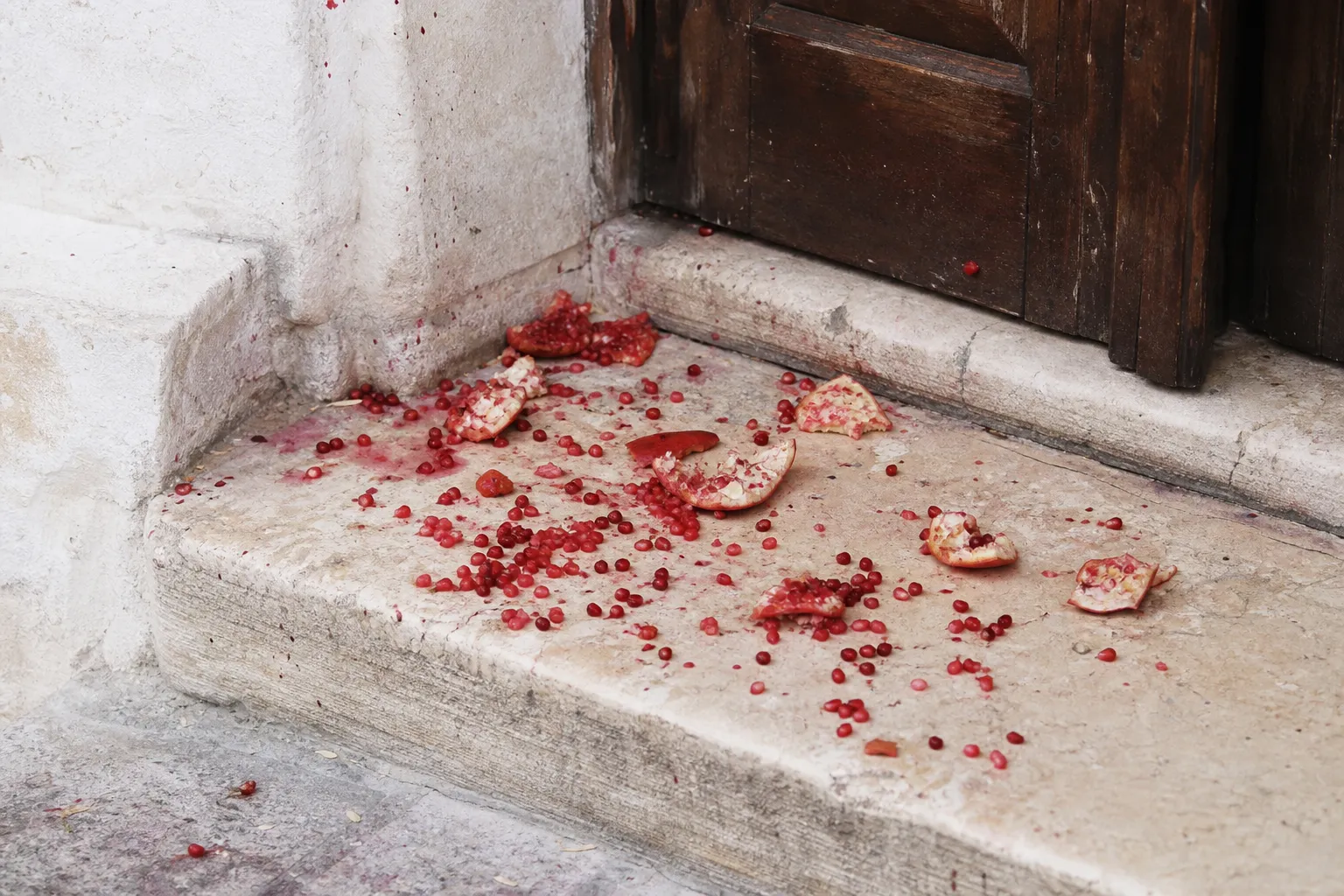
On arriving at the marital home after the reception, the couple smashes a pomegranate on the doorstep. The seeds scatter across the threshold: each one a wish for prosperity, health, or fertility in the years ahead. It's messy, takes about fifteen seconds, and is completely satisfying.
Some couples move this to the venue exit or a designated "doorway" on the grounds, using it as a natural send-off. Guests gather, the couple raises the pomegranate overhead, and the countdown begins.
Mixing Greek Traditions with Other Cultures
If you're planning a multicultural wedding, one Greek partner, one from a different background, the question isn't how many traditions to include, but which ones tell the right story for both of you. A few things that work in practice:
Lead with the visual. Stefana, lambades, and koufeta are immediately beautiful. Non-Greek guests engage with them instinctively before they've had a word of explanation.
Narrate live, not just on paper. Print a programme, yes, but also have your officiant or MC speak briefly to each tradition as it unfolds. Silence during unfamiliar rituals breeds confusion; two sentences removes it entirely.
Make guests participants, not audience. The krevati, the money dance, and the pomegranate smash all require something from the people in the room. When guests act with their hands, they stop feeling like visitors at someone else's story.
Sequence matters. Religious and ceremonial rituals at the ceremony; symbolic and participatory ones at the reception. This pacing gives non-Greek guests time to warm up before they're expected to pin money to the groom's jacket.
A thorough destination wedding checklist will help you sequence vendors, paperwork, and cultural elements so nothing gets left to the week before. And if you want the ceremony to feel genuinely personal, not just Greek-by-the-book, building in personalised ceremony moments that reflect who both of you are is worth the extra planning hour.
Your Guests' Experience on the Day
Greek weddings run long. They're meant to. The reception starts after nine, dancing continues past midnight, and the evening only ends when people have run out of energy. Non-Greek guests expecting a two-hour dinner-and-speeches format need gentle warning, and a clear schedule somewhere they can find it without texting the couple.
For anyone planning a destination wedding in Greece, the guest experience benefits enormously from a single digital hub where guests can check the running order, review travel details, and find the venue without four panicked WhatsApp messages arriving at once.
WhiteClover's experience app gives guests exactly that: one link for the ceremony schedule, venue map, dress code notes, and a private photo feed they can contribute to from their phones. You can add a short "Traditions Guide" section to the wedding website so every guest arrives already knowing what the stefana means, and already looking forward to the pomegranate.
Managing RSVPs, guest communications, and photo sharing across a multinational guest list can pile up fast. WhiteClover brings it into one place, designed for couples who want their guests to feel genuinely included, not just informed. Start building your wedding experience at WhiteClover and give every tradition the context it deserves.
FAQ
Do we need to be Greek Orthodox to include the stefanoma crowning?
No. While the stefanoma is the sacramental centre of the Greek Orthodox marriage rite, many licensed officiants and wedding coordinators now incorporate it as part of a symbolic blessing within a civil ceremony. Discuss it with your officiant early, most who work regularly with destination weddings in Greece have done this many times. For a full Orthodox church ceremony, at least one partner typically needs to be baptised Orthodox, and paperwork usually needs to be filed three to six months in advance.
Can we include koufeta for a non-Greek wedding outside Greece?
Yes, easily. Koufeta are widely available online and from Greek delis in most major cities. The key rule: always an odd number per packet: five, seven, or nine. Include a small card explaining the symbolism; most guests find them far more interesting once they understand what the indivisibility symbol actually means.
What's the most practical way to explain Greek traditions to non-Greek guests?
A short printed card per tradition included with the invitation, or a "Traditions Guide" section on your wedding website, works well. During the ceremony, having your officiant explain each ritual briefly as it unfolds removes any remaining uncertainty. Keep explanations to two sentences, enough to inform, not so much that it interrupts the atmosphere.
Is the money dance awkward for guests who haven't seen it before?
It can feel unusual at first, but it almost never stays that way. Timing matters: introduce it after the reception has warmed up, not as the first dance of the evening. Have your MC explain the gesture before the music starts, and make sure the first few participants are enthusiastic, the energy pulls the rest of the room in.
What if our venue doesn't allow plate smashing?
Most venues that regularly host Greek weddings have a practical solution: chalk-scrawled plates or small terracotta pots designed to break cleanly. Ask the venue coordinator early; it's a five-minute conversation, and the answer is almost never a flat no.
Written by
Marios P
Part of the WhiteClover team, helping couples and hosts plan unforgettable events with modern digital tools. Passionate about simplifying the celebration planning journey.
You Might Also Like
 Wedding Planning
Traditional Wedding Menu: Greek Tastes
Classic Greek dishes, regional flavours and the sweets guests actually remember: how to build a traditional wedding menu for your reception.
 Wedding Planning
How to Create a Personalised Wedding Ceremony
Create a personalised wedding ceremony: vows, readings, music, and meaningful rituals, plus structure, your officiant.
 Checklists
7 Essential steps for your destination wedding checklist
Discover 7 essential tips for couples planning a destination wedding in Greece.