
Advertisement
 Sponsored
Take Laura, a composite bride from Cork (not a real customer) marrying Alexis in Athens with 110 guests. Her inbox will look familiar. In the six weeks before the wedding she wrote down every question a guest sent her. There were 63.
Seventeen were about timing. Eleven were about what to wear, even though the dress code was on her homepage, her details page and her FAQ. Ten were about where to stay. The rest were plus-ones, kids, gifts and how to get from the airport.
None of them were hard, and she could have predicted every one. One Reddit commenter in a 158-comment thread about wedding websites put it bluntly: "Nobody reads them but everyone will ask everything that was on the site."
Below are the questions every wedding guest asks, a ready answer for each that you can copy, and where to put those answers so guests find them, including the relatives who will never scan a QR code.
TL;DR: Write the answers to the same seven questions once, and put them where guests look first.
- Guests ask the same seven questions: time, dress, parking or stay, plus-ones, kids, gifts and transport.
- They don't read your page when you send it. They read it the week they travel.
- Put the answers to the first four where guests look first: the printed card and the opening lines of your message.
- A QR code is a shortcut for those who use it. Print the essentials on paper too.
- Name one person who answers questions on the day, and it shouldn't be you.
Plan Your Event
One platform for every occasion: weddings, baptisms, corporate events and private parties.
The seven questions, and answers you can copy
Here's Laura's list, in the order guests asked, with wording you can adapt. Write yours once and paste the link every time the question comes in.
1. "What time should I be there?"
This is the most asked question by a distance. Give the arrival time as well as the start time.
- "Please arrive by 6:30pm. The ceremony starts at 7pm sharp."
- "The church is a 10 minute walk from the car park. Allow for it."
- "Dinner is served around 10pm, Greek style, so have a late lunch."
2. "What am I wearing?"
Say the venue type and whether jackets are expected. A vague word like "festive" only brings in more messages.
- "Light summer clothes. Linen works, and jackets can stay at the hotel."
- "The ceremony is in a church, so please cover shoulders inside. A shawl is fine."
- "Part of the evening is on grass. Block heels or flats."
3. "Where do I park, or where should I stay?"
For a local wedding it's parking. For a destination wedding it's accommodation and transfers.
- "Free parking at the venue, follow the signs from the main road."
- "We've listed three hotels near the venue, with walking times, on our page."
- "A taxi from Athens airport to the venue takes about an hour. Book ahead in summer."
4. "Can I bring someone?"
Nobody enjoys answering this one, so put the answer on the invitation, by name.
- "We've kept the guest list small, so we can only welcome the people named on your invitation."
- "Your invitation includes a guest. Just add their name when you reply."
Our plus-one etiquette guide has wording for both sides of that conversation.
5. "Are kids invited?"
Say it either way, plainly. Silence is read as yes, especially by Greek families.
- "We love your little ones, but this is an adults-only celebration."
- "Children are very welcome. Let us know how many and their ages when you reply."
If you're still deciding, our post on whether to invite kids to your wedding covers the trade-offs.
6. "What do you want as a gift?"
People ask because they want to get it right. Answer it once, kindly, and move on.
- "Your being there is the gift. If you want to mark the day, a contribution to our honeymoon would mean a lot."
- "There's a card box at the reception for anyone who'd like to leave a note or gift."
7. "How do I get there from the airport, or the port?"
This is the destination wedding question, with the most moving parts. Our guide to questions guests ask at Greek island weddings covers ferries, cash, seasickness and the climb to the chapel in detail.
- "We'll run a shuttle from the port at 5pm and 5:30pm. Details here."
- "Ferries sell out in August. Please book as soon as you can."
Why guests ask anyway
Laura's dress code was on three pages, and she still got eleven questions about it. That's what makes couples feel the wedding website was a waste of time.
The problem is timing. A guest opens your link when it arrives, reads the date, and closes it. Three weeks before the wedding they're packing, they can't remember where the link was, and texting you is faster than searching their inbox.
Three changes help:
- Put the basics where they look first. Time, dress, parking or stay, and plus-ones go on the printed card and in the first lines of your invitation message, with the rest in a FAQ section on your wedding website. A second commenter there suggested exactly those four, plus "one line saying questions on the day go to whoever, with a number".
- Use the same link every time. Laura started replying to every question with the link to her page. After two weeks her Irish cousins were answering each other in the family group chat with it.
- Send it again when it matters. A reminder a week before, with the link, catches the people who are finally reading. A wedding website that keeps one address from invitation to wedding day makes that reminder easy to send.
Pro tip: Anything that might change, like a shuttle time or a rain plan, should only live on your page. If it's printed or in a group chat, the old version will still be circulating on the day.
"But nobody scans QR codes"
You'll hear this, and it's half true.
Laura's aunt in Cork didn't scan the QR code on her invitation. She phoned Laura's mother. Laura's friends in their thirties all scanned it, and almost none of them asked anything. A commenter on the same Reddit thread put the split as "40s and younger will use it, 50s and older most likely won't". That's one person's view, but it matched Laura's experience closely.
So don't build your guest information on the assumption that everyone will scan. Build it in layers:
| Layer | Who it reaches | What goes on it |
| Printed card | Everyone, including the aunt | Date, time, venue address, reply deadline |
| QR code and link | Most guests under 50 | Everything else, kept up to date |
| A text with the link | People who lost the card | The link, a week before |
| One named person | Anyone who won't touch a link | Their phone number |
The QR code is a shortcut for the people who use it, and the named person covers everyone else. In many families that person ends up being a parent anyway, so make it official and give them the link to forward.
If you're curious how guests use the QR on the day itself for photos, our post on the wedding QR code with anonymous login explains how it works without anyone creating an account, once you switch that option on.
The question you should ask them
All of this works far better once you know who's coming. A reply deadline, a single place to answer, and reminders for the people who forget turn "are you coming?" into a number you can give the venue.
That's what online RSVP is for. Guests reply from the same link that answers their questions, so the people who read your page are also the people who tell you their plus-one's name and their meal choice. If you want fewer messages on the day itself, our guide to stopping guest texts on your wedding day picks up from here.
Seven answers, written once
Every wedding guest asks the same handful of questions: when, what to wear, where to park or stay, who they can bring, the kids, the gift and the journey. You can't stop them asking, but you can put the answer one tap away, in the right language, with a printed fallback for those who'll never tap anything.
Put the seven answers where guests actually look, on the card and in the first message, and every question you do get has a link to answer it with.
The best moment to answer all seven is the moment you invite people. Send your invitations with RSVP and the answers attached, so your guests get the details and reply in one go, and you get your evenings back.
Frequently asked questions
What information should be on a wedding website?
At the very top: arrival time, dress code, parking or accommodation, and who is invited. Then kids, gifts, transport, the day's schedule and a named contact for questions on the day.
Do guests actually read wedding websites?
Most read them late, usually the week they travel, and many still ask rather than search. Putting the key answers on the printed card and in your first message, and resending the link a week before, helps.
Do older guests use wedding QR codes?
Many don't. Treat the QR code as a shortcut and print the essentials on the card as well. Give older relatives a named person to call, often a parent, who has the link to forward.
How do I tell guests they can't bring a plus-one?
Name exactly who is invited on the invitation and repeat it on your page: "We can only welcome the people named on your invitation." Be kind and consistent, and don't make exceptions you'll have to explain later.
Who should answer guest questions on the wedding day?
Not the couple. Choose a calm friend, a sibling or your planner, put their number on your page, and tell guests in advance that day-of questions go to them.
Recommended
Written by
Konstantinos P.
Part of the WhiteClover team, helping couples and hosts plan unforgettable events with modern digital tools. Passionate about simplifying the celebration planning journey.
You Might Also Like
 Guest Experience
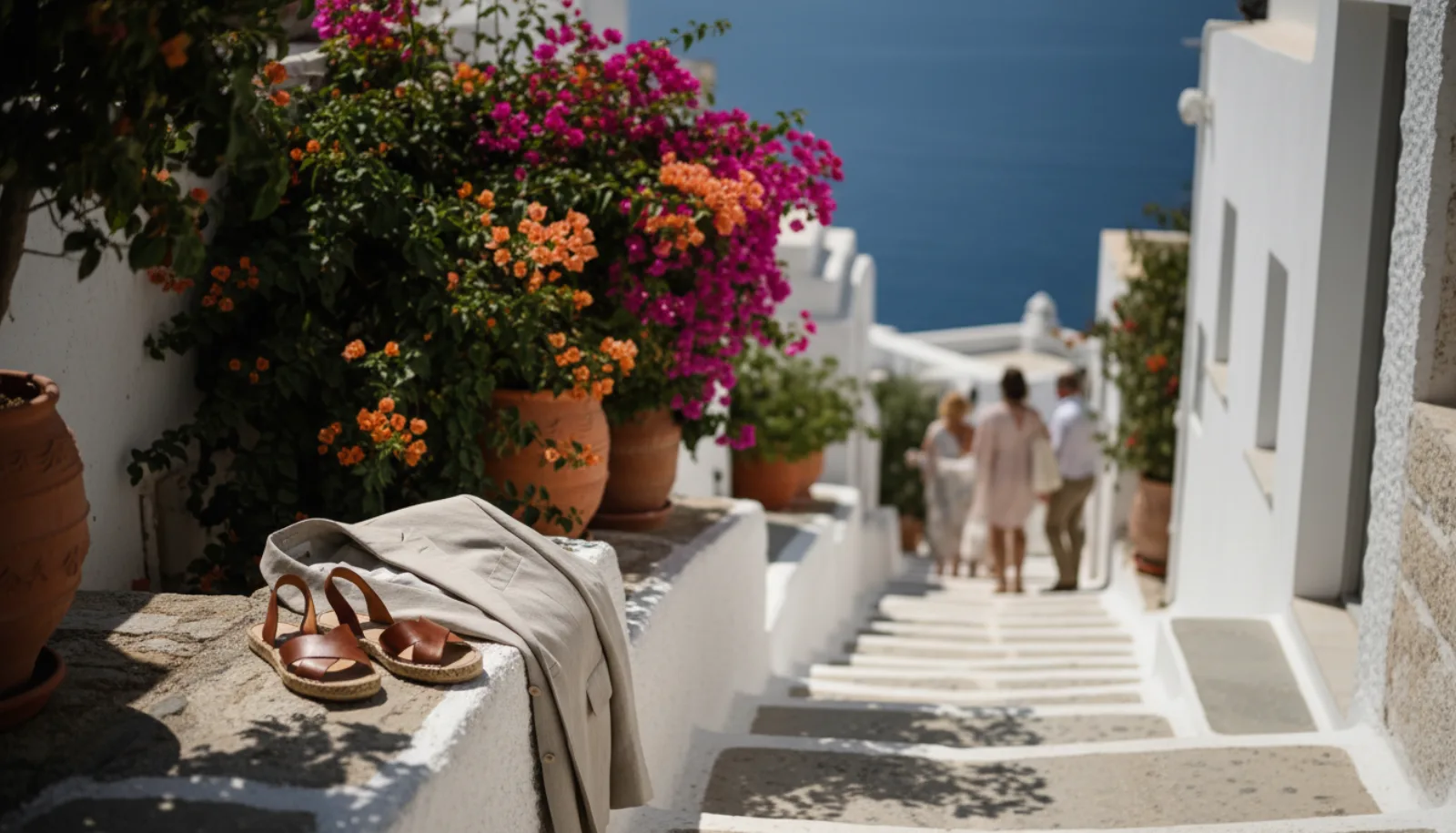
Greek Island Wedding: What Guests Will Ask
Dress code in August heat, cash on small islands, the church up a hill. The questions your guests will ask, answered, so you can send a link instead.
 Guest Experience
Stop Guest Texts on Your Wedding Day
Put the parking address, the timeline and the map where guests will actually look, so your morning is not spent answering "where do I park?" texts.
 Invitations
Wedding Plus One Etiquette: Who Gets One
Wedding plus one etiquette made simple: who should get one, how to word the invitation so nobody has to ask, and polite scripts for saying no.