Advertisement
 Sponsored
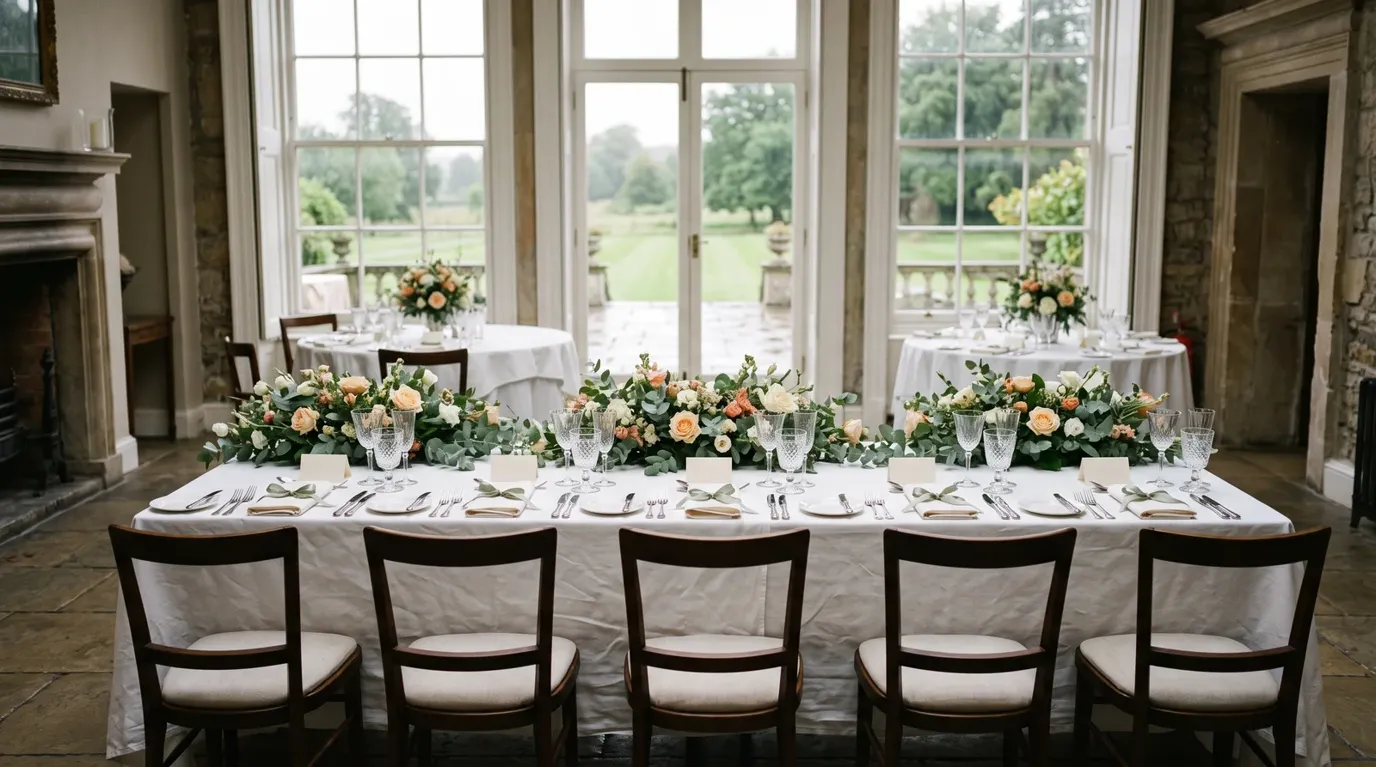
The traditional UK top table seats eight people in a line facing the room. Reading left to right as your guests look at it: chief bridesmaid, father of the groom, mother of the bride, groom, bride, father of the bride, mother of the groom, best man. That's the order the etiquette guide Debrett's gives.
Few families fit it exactly. Below is the traditional plan, the common changes, and how your guests find their own table on the day.
TL;DR:
- Traditional order, left to right from the guests' side: chief bridesmaid, groom's father, bride's mother, groom, bride, bride's father, groom's mother, best man.
- It mixes the families on purpose: each parent sits beside someone from the other side.
- Debrett's says you can drop it altogether, and suggests doing so when parents are divorced.
- Keep the speakers (traditionally the father of the bride, the groom and the best man) at the top table or close to it, so everyone can see and hear them.
- Show guests their table with a table plan at the entrance to the dining room, escort cards, or on their phones.
Plan Your Event
One platform for every occasion: weddings, baptisms, corporate events and private parties.
The traditional order, seat by seat
| Seat (from the guests' left) | Who sits there |
| 1 | Chief bridesmaid |
| 2 | Father of the groom |
| 3 | Mother of the bride |
| 4 | Groom |
| 5 | Bride |
| 6 | Father of the bride |
| 7 | Mother of the groom |
| 8 | Best man |
The plan comes from a time when the bride's parents paid for the wedding and hosted it, so they flank the couple. The two fathers and two mothers are swapped across, which puts each parent next to someone from the other family. The best man and chief bridesmaid sit at the two ends.
It works well for speeches, because everyone in the room can see the people giving them. Debrett's also points out the downside: a long line is formal, not very sociable, and the people on it can feel on display for the whole wedding breakfast.
When the traditional plan doesn't fit
Plenty of couples change something. These are the usual reasons.
Divorced or separated parents
Debrett's suggests that skipping the top table is a good way to avoid the problem entirely. Each parent can have their own table instead, and Debrett's suggests surrounding them with people who make them feel part of the day, such as their new spouse's family, a bridesmaid or an usher.
If you keep a top table, there's no rule that says divorced parents sit side by side, and you don't have to fit new partners on it either. We'd choose a table close to the front, with a clear view, over a squeeze.
Two brides or two grooms
There's no "bride's side" seat to follow, so choose freely. A simple way to keep the spirit of the original is to sit together in the middle, put each of your parents beside the other person's parents, and put your two closest friends at the ends.
Step-parents and grandparents
Add seats or don't. Adding two step-parents and a grandmother takes a table of eight to eleven, which is a long line. Some couples keep the top table to the wedding party and give parents and grandparents their own table directly in front.
Hosting it yourselves
Debrett's notes that many couples now host their own wedding, which takes away the reason the parents sat at the top in the first place. Some couples take a table for two, sometimes called a sweetheart table. Others sit at a round table in the middle of the room with their closest friends.
Pro tip: whatever you choose, tell the venue early and ask whether they have a set spot for the top table. Its length changes how many round tables fit in the room.
Seat the speakers where they can be heard
Traditional speeches are given by the father of the bride, the groom and the best man. Debrett's advice is to seat all three at the same table, or adjacent ones, in a central spot so they can be seen and heard.
If you've dropped the top table, check where the speeches will happen. A best man on Table 9 at the back is fine for the meal and awkward when he stands up with a microphone.
Telling guests their table on the day
The rest of the room needs to know where to sit, too. You have three choices, and you can combine them.
A table plan at the entrance to the dining room. A board or a mirror listing every table and who's on it. Debrett's says it should be clearly displayed at the entrance to the seating area. List names alphabetically by surname, with the table beside each, and the queue moves faster than one sorted by table.
Escort cards. One small card or envelope per guest with their table number, laid out near the door. Easier to change than a board: you rewrite one card, not the whole sign.
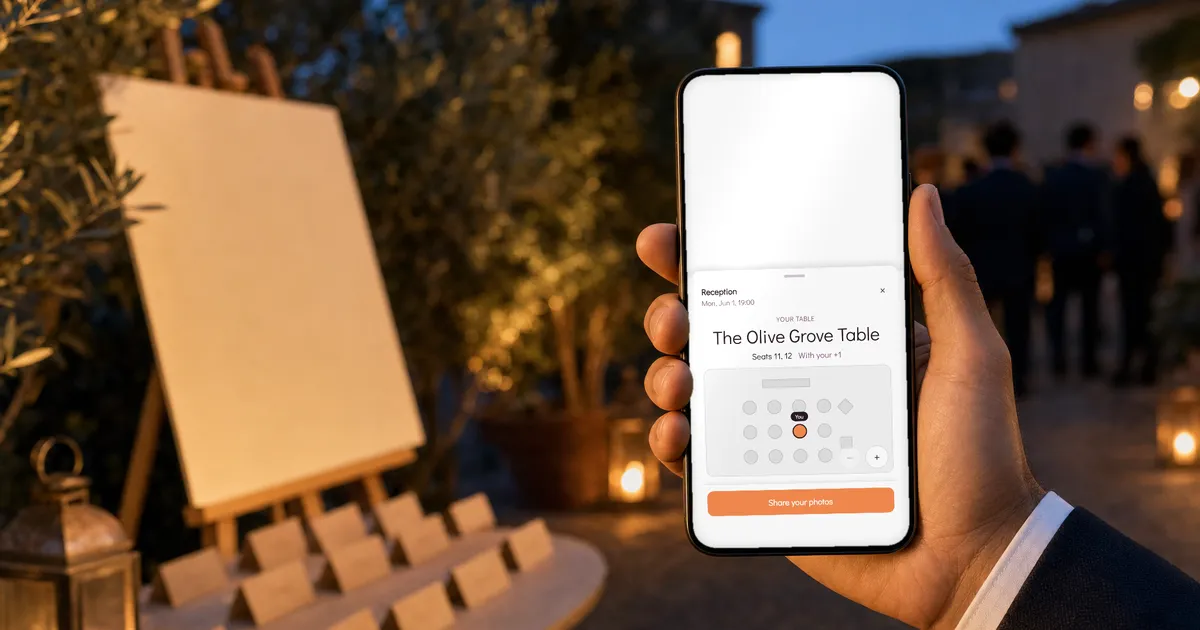
On their phones. Each guest opens the wedding app and sees their own table. It doesn't need reprinting when something changes the night before.
Whichever you pick, your caterer will still want a name card for each place, sorted into an envelope per table. Debrett's also suggests keeping a few spare name cards ready for last-minute changes. Our comparison of the board, cards and phone goes through the trade-offs in more detail.
Evening guests usually don't need a seat at all, because they arrive after the wedding breakfast. Our UK evening guest etiquette guide covers what they do need.
Planning it in WhiteClover
In the WhiteClover seating chart, add the top table as a long table with the number of seats you need, then tap each guest and tap their seat. Partners and plus-ones sit next to each other automatically, so you only fine-tune the order. If you'd like to try a version without the top table as well, you can keep a second plan alongside the first and pick one later. The first plan for each event is free, and extra plans are €3.99, paid once.
Your venue gets one link that always shows your chosen plan, so they see changes without another email. On the day, each guest sees their own table and seat in the guest app from 2 hours before, with a small floor plan that marks where they sit. Nobody sees where anyone else is sitting, which spares you the debate about who ended up near the top table. If you turn on the email, guests get their table by email at the same time. It's free.
If your plan is still a spreadsheet, our guide to building a wedding seating chart spreadsheet shows how to bring the guest list across.
The short version
Start from the traditional eight, left to right: chief bridesmaid, groom's father, bride's mother, groom, bride, bride's father, groom's mother, best man. Change it wherever your family needs something different, keep the speakers in view, and decide early how guests will find their own table.
Frequently asked questions
What is the traditional top table order at a UK wedding?
Left to right as the guests face it: chief bridesmaid, father of the groom, mother of the bride, groom, bride, father of the bride, mother of the groom, best man. That's the order given by Debrett's.
Do you have to have a top table?
No. Debrett's says it's perfectly acceptable to drop it and arrange the seating your own way. Some couples sit at a round table among their guests or at a table for two.
Where do divorced parents sit at a wedding?
Often at separate tables near the front, each with people they're comfortable with. Debrett's suggests dropping the top table altogether when parents are divorced, so nobody has to share a line.
Where should the best man sit?
Traditionally at one end of the top table, beside the mother of the groom. If there's no top table, seat him near the father of the bride and the groom so all three speakers are easy to see.
How do guests know which table they're on?
From a table plan at the entrance to the dining room, from escort cards, or on their phone. You can combine the phone with a printed plan for anyone who doesn't check theirs.
Recommended
Written by
Nicole V.
Part of the WhiteClover team, helping couples and hosts plan unforgettable events with modern digital tools. Passionate about simplifying the celebration planning journey.
You Might Also Like
 Guest Experience
How Guests Find Their Table: Board, Cards or Phone
Seating chart board, escort cards or a digital seating chart on guests' phones: what each costs you on the day, and what happens when a table changes.
 Guest Experience
Evening Wedding Guests: The UK Etiquette Rulebook
Do evening guests RSVP, bring a gift or get food? Straight answers for UK couples, with evening invitation wording to copy and a timing plan for the do.
 Wedding Planning
When to Send Your Seating Chart to the Venue
When does the venue need your wedding seating chart, and what do they need from it? A working-back timeline, and why the printer is the real deadline.