Advertisement
 Sponsored
Hiring a wedding photographer for a Greece wedding is not the same job as hiring one for a London garden ceremony or a Tuscan villa. Aegean light is brutally bright at midday, the best 30 minutes of the day depend on which side of the island you are standing on, drones over Santorini's caldera need a Greek civil aviation paper trail, and ferries break timelines more reliably than rain ever does. The pros who shoot weddings in Greece week after week build their contracts, gear lists and timelines around all of that. The ones who don't are the ones whose work you've already seen on Pinterest with clipped white dresses and grey skies that should have been gold.
This guide is for international couples planning a Greece wedding: and any Greek couple choosing between an Athens-based photographer, an island-based one, or a hybrid team. It's a practical layer on top of our broader how to find the perfect wedding photographer piece, focused only on what actually changes when the venue is Greek.
Planning a wedding in Greece from abroad?
We're not wedding planners. We help you find the right Greek vendors for your date, place and budget, and explain the paperwork. Neutral advice, free.
We only pass your details to a vendor once you say so.
Why Greece Changes the Photography Brief
Three things shift the moment you set the wedding date in Greece.
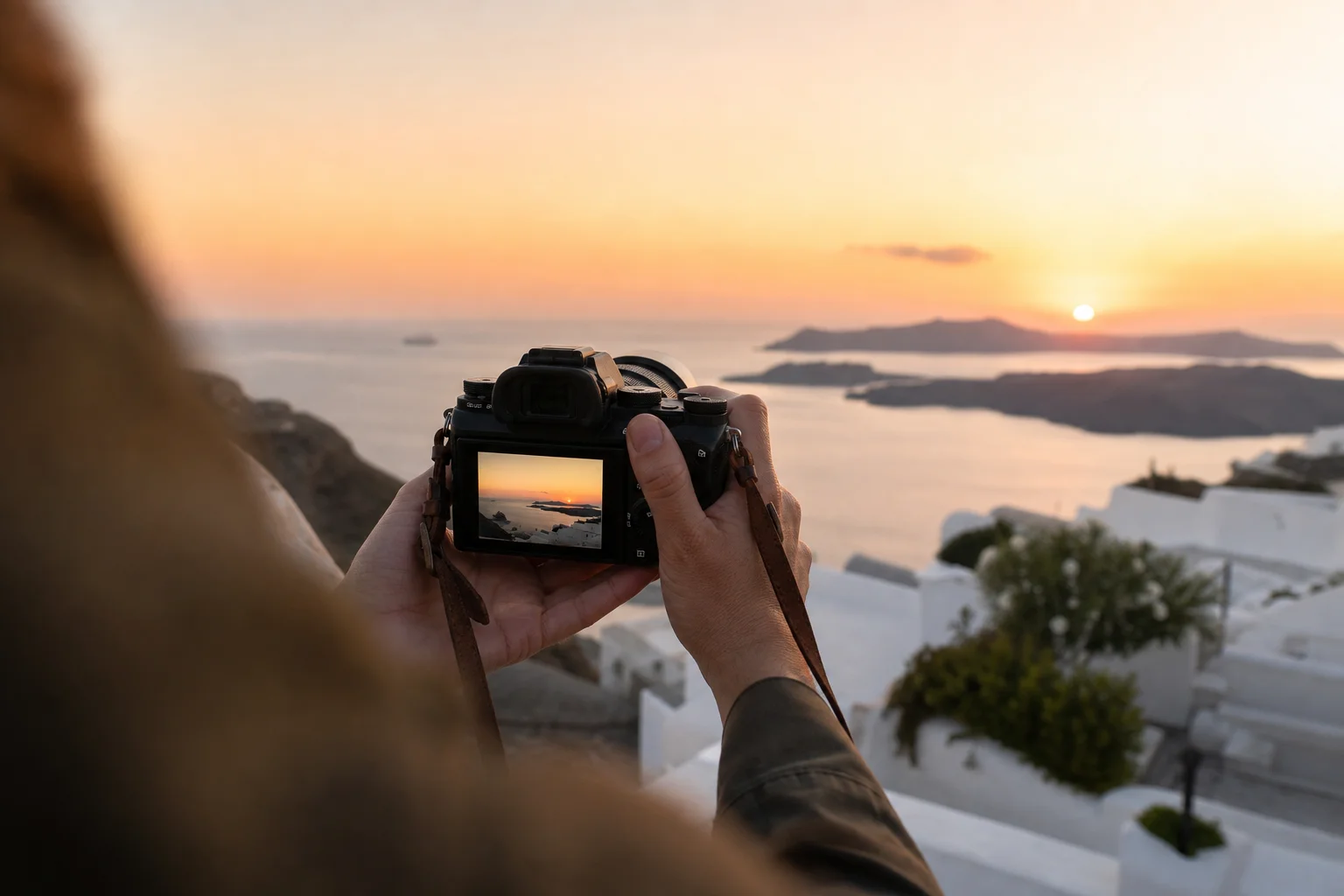
Light intensity. Between roughly 11:00 and 16:00 from May to early September, direct Aegean sun is so bright that white dresses clip to pure white in-camera and bare shoulders pick up red tones in five minutes. A Northern European photographer reading the meter on their first Cycladic afternoon often loses an entire portrait set this way. Local pros plan around it: portraits before 10:30 or after 18:00, shaded ceremony spots, fill-flash even outdoors.
Logistics. Photographers travelling to Greek islands lose at least one full working day to ferries or domestic flights, and the meltemi wind routinely cancels Aegean ferries from mid-July to late August. A single contract clause about "travel day rate" and "weather-cancelled ferry contingency" prevents the awkward conversation when a UK-based shooter arrives in Folegandros twelve hours after the rehearsal dinner.
Drone regulation. Greece enforces the EU drone framework through ΥΠΑ (Hellenic Civil Aviation Authority): every operator must register, every flight near a populated area or airport requires authorisation, and there are permanent no-fly zones around Santorini and Mykonos airports plus most archaeological sites. A photographer who promises "caldera drone shots" without mentioning permits has either skipped the paperwork or never read it.
Portfolio Red Flags Specific to Greece
A clean Pinterest grid is meaningless on its own. When you ask for two or three full galleries from the same season and a similar island to your wedding, you're hunting for these signals:
- Clipped highlights on the dress in midday outdoor portraits, means the photographer can't meter for hard Aegean sun
- Grey or muddy skies in cliff-top frames where you'd expect pastel sunset, usually a timeline failure (ceremony scheduled too late, or portraits squeezed into bad light)
- Identical compositions across different couples: fine-art is fine, but if every couple is leaning on the same blue door in Oia, you're buying a template
- Skin tones that go orange or red under tavern fairy lights, the dinner edit is where many photographers lose control of colour
- No reception coverage past 23:00: Greek wedding receptions run late; if the gallery ends at 21:30, you're paying for half a day
Pro tip: Ask specifically: "Show me a full gallery from a wedding on [your island] in [your month]." If they don't have one, that's information.
Contract Specifics for Greece
A standard wedding photography contract assumes your photographer drives to the venue. A Greece contract has to cover several extras. Make sure all of these are written in:
| Clause | What it should say |
| Travel day(s) | Whether the photographer charges for the ferry or flight day, and what counts as "in transit" |
| Ferry/flight cancellation | What happens if meltemi winds cancel the ferry or weather grounds a flight, usually a named local backup photographer |
| Drone operations | Confirmation that drone work is registered with ΥΠΑ, no-fly zones acknowledged, and an alternative deliverable if permission is denied |
| Weather backup | Rain or wind plan for outdoor portraits and ceremony, specific indoor location named, not just "we'll figure it out" |
| Gear backup | At minimum two camera bodies and duplicate memory card writing on site (every body should have dual card slots) |
| Coverage hours | Greek receptions often run past 02:00. Confirm end time, overtime rate, and whether the photographer leaves before or after the cake |
| RAW file delivery | Most pros do not deliver RAWs; if you want them, negotiate up front and expect a higher fee |
| Edited delivery turnaround | Usually 6 to 12 weeks for a full Greece wedding; sneak peeks within 7 to 10 days |
| Album and print rights | Personal use yes, commercial reproduction usually no, read carefully if you plan to print an album yourself |
If a contract draft doesn't mention ferries or drone permits, that's a contract written for a different country. Push back.
Light and Weather, Season by Island
Greek light is not one thing. Briefing your photographer with the specific season and venue matters more than asking for a style.
- April to May, Cyclades: soft, low-angle light; greens still present; ceremonies can run later (golden hour around 19:30). Drone-friendly weather most days.
- June to July, Santorini & Mykonos: harsh midday, very long days, golden hour 20:30 to 21:00. Heavy crowds at sunset spots, Oia caldera viewpoints are unusable for portraits between 19:30 and sunset. Local pros book private terraces or shoot the alternate side of the island.
- July to August, Aegean generally: meltemi season. Plan ferry travel with at least a 24-hour buffer. Hair-and-makeup outdoor portraits are a coin flip.
- September, Crete & Peloponnese: the best month for almost every type of coverage. Light is rich, crowds thin, ferries reliable.
- October, mainland Greece (Athens, Halkidiki): moodier light, shorter days, photographers love it for editorial work. Some venue lighting falls apart in rain, confirm indoor backup.
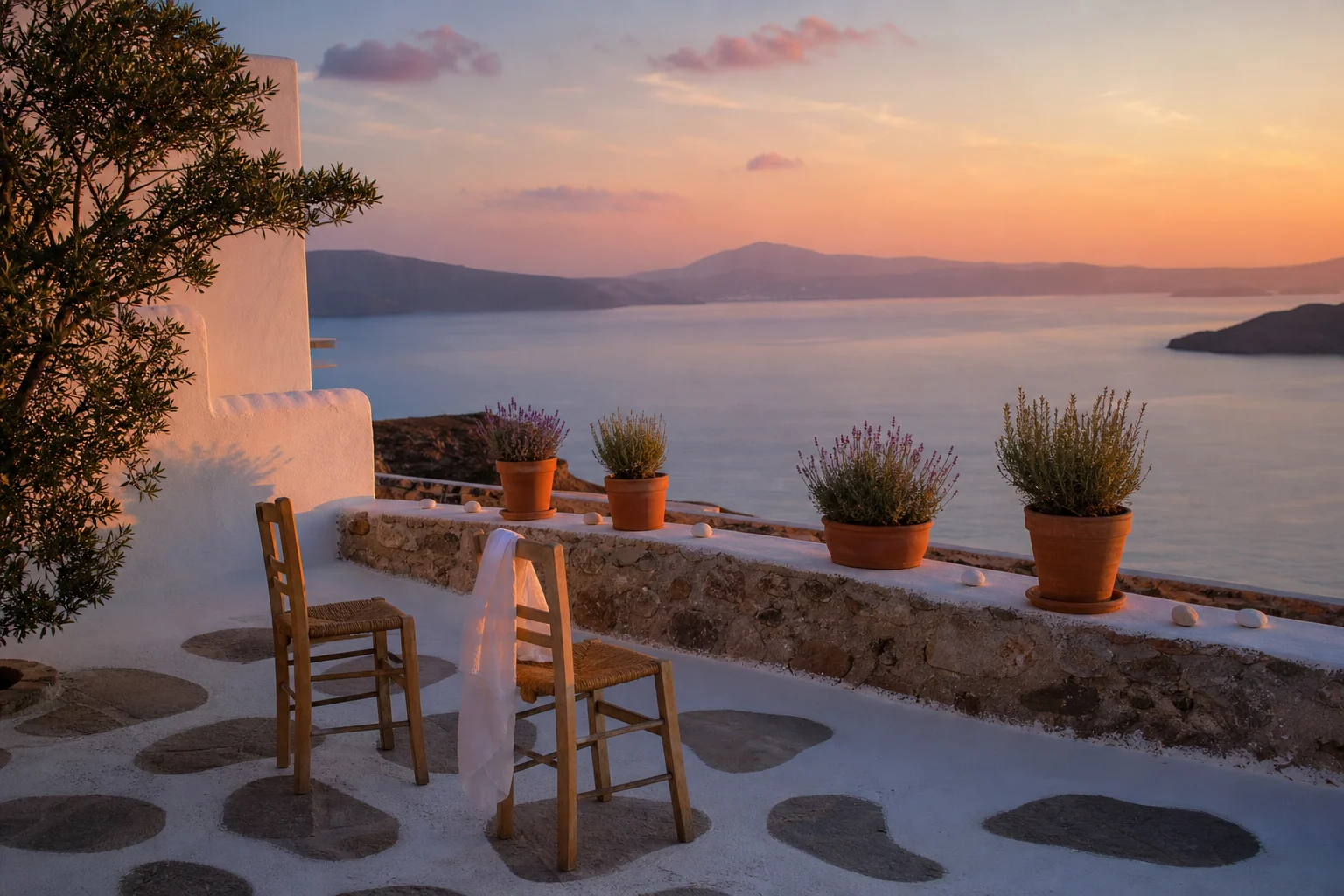
Pro tip: White dresses photograph best between 17:30 and sunset on most Greek islands in summer. If your ceremony is at 14:00 with no shade, your photographer should be telling you to move it.
Hybrid Teams: Local + International
The cleanest cost/coverage equation for many international couples is a hybrid team: keep your favourite international photographer as the lead (style match, you've followed them for years), and hire a Greek-based associate or second shooter who handles light scouting, drone permits, vendor relationships and the long Greek reception. Here's the working comparison:
| Local Greek photographer | International (flying in) | Hybrid team (lead + local 2nd) | |
| Cost band (full day) | €1,400 to €4,500 | £3,500 to £7,500 + travel + accommodation | €4,800 to €8,500 total |
| Language | English near-fluent in island wedding scene; Greek with vendors | Native English; Greek vendor coordination weak | Lead handles couple in English; local handles vendors in Greek |
| Local light/venue knowledge | Strong | Variable; first-time visit risk | Strong via local |
| Drone permit handling | Routine | Often unaware of ΥΠΑ rules | Local handles paperwork |
| Schedule flexibility | Can extend hours, late nights | Tied to flight schedule | High, local covers if lead leaves |
| Best for | Greek couples; budget-conscious; mainland | International couples wanting their photographer's exact look | International couples on islands or destination weddings with mixed guest origins |
The 30 to 40% saving versus shipping in a full international team usually buys you better drone coverage, a longer reception edit, and a backup body of work if a flight is cancelled. For more on Greek-specific destination logistics, our companion guide on what to know before planning a Greece wedding goes deeper.
Briefing a Non-Greek-Speaking Photographer
If your lead photographer doesn't speak Greek, two things help.
- Send a venue document in advance with the exact addresses (in Greek script), the timeline, the venue contact's WhatsApp, and the names of the planner, hairstylist and DJ. Photographers who ask for this document are the ones who actually use it.
- Plan the vendor handoff in advance. Most Greek venues prefer Greek-language coordination on the day. A local second shooter or your wedding planner usually fills this gap; some couples bring in a planner via hiring a Greece wedding planner precisely because they speak both languages.
Photographers who have shot in Greece several times will already have standing relationships with Cycladic venues, hairstylists and florists. Ask them to name a few in your call. The answers tell you almost everything you need to know.
Post-Production Turnaround
Greek wedding photographers are usually busiest June through October. Realistic turnaround:
- Sneak peek (8 to 15 images): within 7 to 10 days
- Full gallery: 6 to 12 weeks; longer in peak season
- Album design (if booked): another 4 to 8 weeks after gallery delivery
If a photographer promises "two weeks for everything" in August, they are either deferring the actual edit to a junior, or stretching the truth. Slow, careful edits, especially for fine-art-style colour work, protect your final look.
Pair the Pro Photos With Guest Photos
Your photographer captures the spine of the day: ceremony, family formals, first dance, golden hour portraits. Guests capture the loose middle: cousins giggling at the reception, the dance floor at 01:30, the pre-ceremony champagne. Both matter, and they shouldn't fight each other.
A private wedding photo album, built around a QR code that guests scan instead of texting you photos, is the cleanest way to collect everything. WhiteClover's Experience App handles guest photo and video collection in high quality, "Photos of You" face-detection so each guest finds themselves easily, and a private feed that stays off public social media. You walk away with the pro album from your photographer and a complete guest-side archive, no chasing WhatsApp threads. For wider context on documentary versus editorial coverage, our piece on capturing timeless wedding moments sits well alongside this practical hire guide.
If you're still choosing the venue, how to choose the perfect Greece wedding venue pairs naturally with this article, venue and photographer should be briefed together, not separately.
Conclusion
A great Greece wedding photographer is not the one with the most followers. It's the one whose contract handles ferries, whose timeline respects Aegean light, whose drone paperwork is already in motion, and whose work looks consistent across full galleries, not just sunset highlights. Whether you go local, international, or hybrid, the boring details (gear backup, weather plan, RAW policy, turnaround) decide whether the album you receive twelve weeks later actually matches the wedding you remember.
Choosing among talented photographers across Athens, the Cyclades, Crete and beyond can feel overwhelming when you're also juggling guest travel, venue contracts and a thousand small decisions. The article above narrows the brief to the things that actually break in Greece: light, logistics, regulation and contracts. WhiteClover keeps your vendor shortlists, contracts, timelines and your guest-facing photo gallery in one calm planning space, explore WhiteClover or open your dashboard at app.whiteclover.io.
Frequently Asked Questions
Do I really need a drone permit for a Greece wedding shoot?
Yes. Any drone over a populated area, near an airport, or above an archaeological site requires registration with ΥΠΑ (Hellenic Civil Aviation Authority) and, for many island venues, an authorised flight category. A photographer who promises "caldera drone shots" without addressing this is taking on legal risk on your wedding day. Local Greek photographers handle the paperwork as a matter of routine.
Should I fly in my favourite international photographer or hire local?
Both can work. Flying in an international photographer makes sense if their style is unique to your taste and their contract explicitly handles travel days, weather cancellations and Greek drone rules. For most island weddings, a hybrid team (international lead plus Greek-based associate) gives the same look at 30 to 40% less total cost, and protects you against ferry cancellations.
What's a fair price for a Greece wedding photographer?
In 2026 Greek pricing, expect €700 to €1,200 for budget mainland coverage, €1,400 to €2,200 for mid-market full-day, and €2,200 to €4,500 for the top island-based fine-art shooters. International photographers flying in typically quote £3,500 to £7,500 plus travel, accommodation and ferry or flight days.
How much extra time does island travel really add?
Plan at least one full travel day each direction for any Cycladic island, plus a 24-hour buffer in July and August because of meltemi winds cancelling ferries. Photographers who don't build that into the contract are quietly assuming nothing will go wrong.
Can guest photos really replace a second shooter?
Not for ceremony, family formals or first dance, those need a pro. But for the dance floor at 01:30, the cousins around the buffet, and the spontaneous moments your couple-portraits brain will never get to, a guest photo app catches what no second shooter can be in five places to catch. The two coverages complement each other, they don't compete.
Written by
Dimitris S
Part of the WhiteClover team, helping couples and hosts plan unforgettable events with modern digital tools. Passionate about simplifying the celebration planning journey.
You Might Also Like
 Vendor Tips
How to Find the Perfect Wedding Photographer
Find the perfect wedding photographer: full galleries, clear packages, personality fit, contracts, backup plans, and timeline tips for your venue.
 Vendor Tips
Wedding Photography & Videography
Your wedding photos and videos will capture precious memories for a lifetime.
 Wedding Planning
How to Choose Your Greece Wedding Venue
Choosing a Greece wedding venue? Compare 7 venue types, use our 12-question checklist, and learn how to do a virtual tour from anywhere in the world.