
Advertisement
 Sponsored
How can you avoid unexpected costs when planning your wedding? The short answer is to treat surprises as normal, not personal failures: build a contingency buffer, read vendor contracts for hidden lines, keep guest numbers tied to deposits, and track spending in one place so nothing slips past you. Below is a practical map of where “extra zeros” usually appear, and how to stay ahead of them without losing the joy of planning.
Most couples do not blow the budget on one lavish choice. The pain tends to come from dozens of small lines nobody wrote down the first time, or from assumptions (“surely that’s included”) that contracts do not actually support. A little structure early turns those moments from shocks into choices.
Plan Your Event
One platform for every occasion: weddings, baptisms, corporate events and private parties.
Start With a Real Contingency, Not a Hope
Unexpected wedding costs are less frightening when you have already named them in your plan. Before you fall in love with a venue or a photographer, set aside 10 to 15% of your total budget as a contingency: not for upgrades, but for the boring stuff: extra hours, tax differences, postage, alterations, last-minute guest changes.
If your tool lets you, create a dedicated “contingency” category next to venue, catering, and attire so the buffer is visible, not invisible padding. For help building the first version of your numbers, see step-by-step wedding budget creation made simple.
Pro tip: If someone says “we’re definitely under budget,” ask which spreadsheet row proves it, warm feelings are not a ledger.
Hunt Hidden Fees in Contracts Before You Sign
Vendor quotes often show the headline number; contracts show what happens when the day runs long, when guest counts move, or when you need an extra assistant. Before you commit, scan for:
- Service charges, corkage, cake-cutting, and overtime (especially bands, DJs, and venues).
- Minimum spends that force you to add food or drink you did not plan.
- Travel and accommodation for suppliers coming from outside your area.
- Cancellation and postponement terms, know what you would owe if dates shift.
If anything is vague (“as required on the day”), ask for it in writing with a maximum or a per-hour rate. Our wedding vendor checklist walks through the kinds of clauses worth a second read.
Guest Count Drift Is a Budget Leak
Catering and hire quotes are built on headcounts. When RSVPs creep up, or plus-ones appear late, your per-person costs move with them. Avoid unexpected costs here by:
- Setting a firm invitation list before you lock big deposits.
- Using one wedding guest list as your source of truth so you are not reconciling three versions the week before the wedding.
- Confirming final numbers and deadlines with caterers in writing.
Tools that combine RSVP with your list help you see movement early. For more on keeping counts accurate, read guest list automation benefits.
Rush Fees, Postage, and “Small” Line Items Add Up
Stationery, postage, gifts, beauty trials, transport, and tips rarely get the same attention as the venue, but they can consume thousands when rushed. Rush production on invitations or attire is expensive precisely because it is last minute.
Build a miscellaneous category in your budget for:
- Postage and assembly for save the dates and invitations, a line item that disappears entirely if you send digital wedding invitations instead.
- Hair and makeup trials, accessories, and emergency kit items.
- Parking, tolls, and guest transport you end up subsidising.
- Thank-you gifts and vendor gratuities (where customary).
Seeing these lines in advance turns them from surprises into planned spends.
Use One Tracker You Will Actually Open
Spreadsheets work if you both use them. Whatever you choose, the winning habit is weekly or fortnightly check-ins: what is committed, what is paid, what is still quoted. If you are comparing dedicated tools, which apps track wedding expenses outlines common options and what to look for.
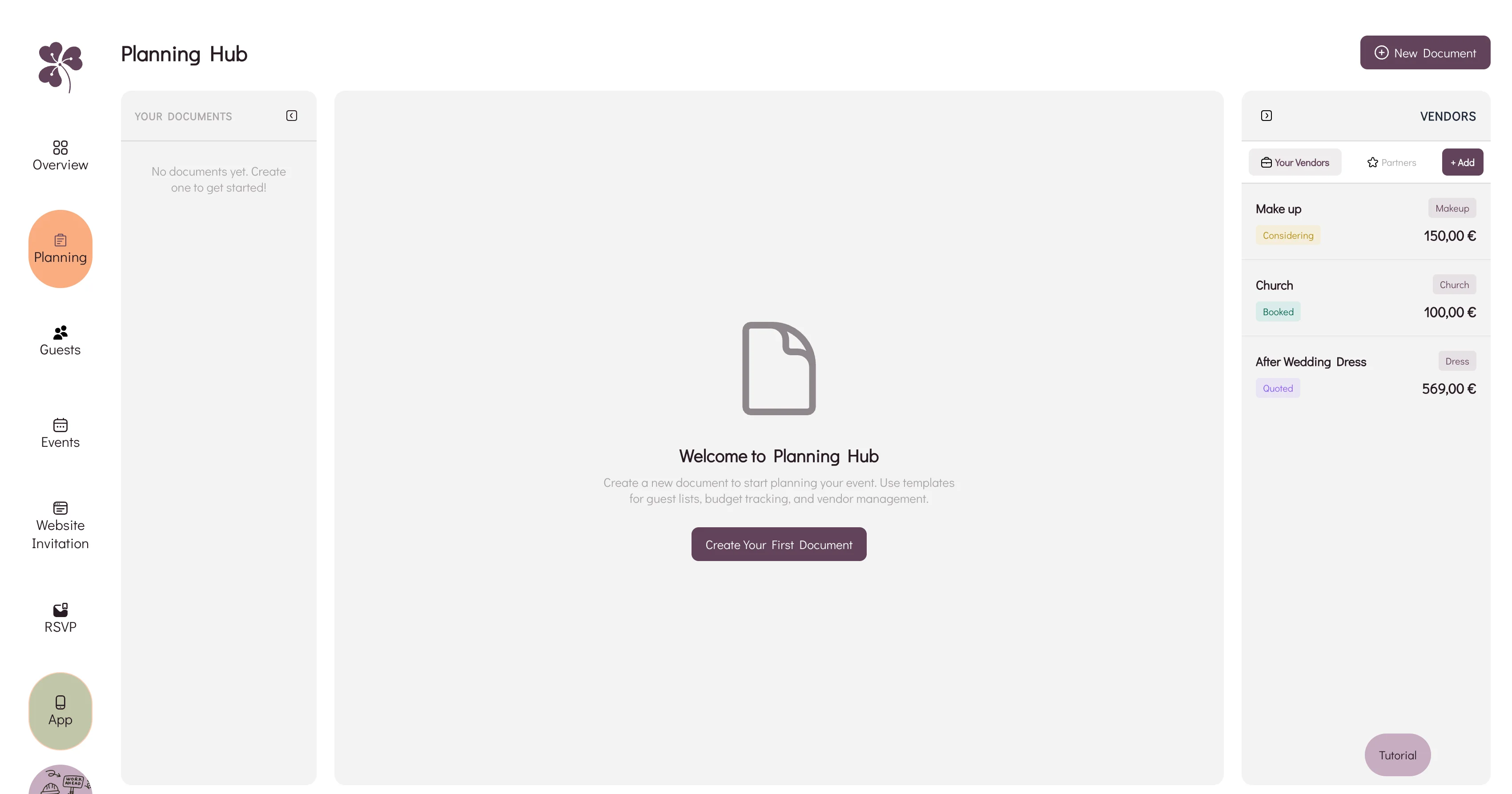
Platforms such as WhiteClover bring budget, vendors, and notes together in the Planning Hub so you are not hunting for “that email with the revised quote” three months later. For how that fits alongside other software, see wedding Planning Hub budget and vendor management.
Conclusion
Avoiding unexpected wedding costs is not about saying no to everything you love: it is about seeing the full picture early, buffering for reality, and catching drift before it becomes an invoice. Contracts, headcounts, and small recurring lines are where most “surprises” actually live.
When financial clarity feels as important as florals and playlists, you are in good company. This guide highlighted contingency planning, contract discipline, guest-count discipline, and centralised tracking as the levers that keep surprises small. Discover how WhiteClover’s Planning Hub helps you organise budget, vendors, and deadlines in one calm workspace, designed for modern couples who want your kind of story without spreadsheet chaos. Start planning with confidence at WhiteClover or open your dashboard at app.whiteclover.io.
Frequently Asked Questions
What percentage should I set aside for unexpected wedding costs?
Many planners suggest 10 to 15% of your total budget as a contingency for fees, headcount changes, and last-minute needs, not for optional upgrades.
What wedding costs catch couples off guard most often?
Common surprises include service charges and overtime, alterations and rush fees, postage and stationery, extra guests after deposits, and transport or accommodation for suppliers or family.
How do vendor contracts help avoid hidden fees?
They force payment schedules, minimums, overtime rules, and cancellation terms into the open. Ask for written clarification on anything vague before you sign.
Can digital tools really prevent budget surprises?
They help when you log quotes and payments consistently and review them together, tools do not replace habits, but they make drift visible earlier.
Is it worth paying for a wedding planning platform just for budgeting?
If you also need guest lists, RSVPs, websites, or vendor notes, an all-in-one approach often pays for itself in time and missed fees; compare features against a simple spreadsheet for your situation.
Written by
Dimitris S
Part of the WhiteClover team, helping couples and hosts plan unforgettable events with modern digital tools. Passionate about simplifying the celebration planning journey.
You Might Also Like
 Budget & Tools
Best Wedding Budget Apps: Track Every Expense [2026]
Which wedding budget app should you use? We compare dedicated planners, spreadsheets and Notion on vendor payments, due dates and shared access.
 Budget & Tools
Wedding Planning Hub: Budget & Vendors
Why a spreadsheet, an inbox and a notes app stop agreeing with each other, and how WhiteClover's Planning Hub keeps budget and vendors in one view.
 Wedding Planning
Wedding Mistakes Nobody Talks About
Shadow work, the notification gap and hiring a friend as your vendor: five wedding planning mistakes that are emotional and technical, not logistical.