
Advertisement
 Sponsored
The best way to manage your wedding timeline is not to write a minute-by-minute script and hope everyone follows it. Real weddings breathe. Hair runs ten minutes late, a shuttle circles the wrong entrance, grandparents need a slower walk to the ceremony space, and someone always asks where to leave a gift. A good wedding day schedule gives those moments somewhere to go without pulling you away from the people you love.
Think of your timeline as a calm operating system for the day: clear enough for vendors, light enough for guests, and flexible enough to protect the feeling of the celebration. The goal is not military precision. The goal is a day where the ceremony starts on time, dinner does not go cold, the photographer gets the light they need, and you are not answering 40 messages while getting ready.
Plan Your Event
One platform for every occasion: weddings, baptisms, corporate events and private parties.
Start with the story of the day, not the spreadsheet
Before you open a template, write the wedding day in plain language. What do you want it to feel like for you, your families, and your guests?
For one couple, the story might be: "A slow morning with family, a short seaside ceremony, long golden-hour photos, dinner under lights, then dancing until late." For another, it might be: "A city wedding with tight transfers, a church ceremony, formal family portraits, a hotel reception, and an after-party nearby."
Those two days need different timeline decisions. The first needs breathing room around photography and sunset. The second needs sharper transport control and clearer family instructions.
Ask these questions before assigning times:
- Which moments matter most emotionally?
- Which moments are fixed by the venue, ceremony, caterer, or local rules?
- Where will guests be waiting if something runs late?
- Which people must never be rushed?
- Which parts can be shortened if needed?
This story-first approach keeps the timeline human. It also stops you from copying a generic wedding schedule that was designed for a completely different day.

Use a 3-layer timeline model
Most timeline problems happen because couples put every detail into one long list. The florist setup, the bridesmaids' breakfast, the coach departure, the ceremony music cue, the cake cut, and the after-party taxi numbers all sit beside each other with equal weight. That looks organised, but it becomes hard to use when the day is moving quickly.
A stronger model is to separate the day into three layers.
Layer 1: Fixed moments
These are the times that hold the whole day together:
- ceremony start
- legal appointment or church service
- dinner service
- speeches
- first dance
- venue curfew
- final shuttle or after-party transfer
Fixed moments are not always impossible to move, but changing them affects many people at once. Treat them as anchors.
Layer 2: Operational moments
These are the moving parts that vendors and your support team need:
- hair and makeup start times
- photographer arrival
- flowers and decor setup
- couple portraits
- family photos
- transport loading
- soundcheck
- catering handover
- room turnaround
Operational moments need clear owners. Guests do not need most of this detail, but your planner, photographer, venue manager, DJ, celebrant, and transport lead do.
Layer 3: Guest moments
These are the details guests actually need:
- when to arrive
- where to park or meet the shuttle
- what happens between ceremony and reception
- when dinner begins
- whether there is an after-party
- dress code, weather notes, and walking distances
Guests should not receive the full operational schedule. They need a simple version that answers their real questions. If you are already fielding repeated guest messages, this guide on reducing wedding-day text chaos pairs well with your timeline planning.
Build backwards from two anchor times
Once you have the story and layers, choose two anchor times:
- ceremony start time
- dinner or main reception start time
These two moments usually control the rhythm of the day. Work backwards from the ceremony for preparation, portraits, transport, and family arrival. Work backwards from dinner for cocktail hour, reception entrance, photos, and any venue transition.
For example, if the ceremony is at 5:00pm, do not simply write "guests arrive at 4:45pm". Ask what must happen before that:
- guests find parking or shuttle drop-off
- ushers guide them to the ceremony area
- musicians or audio team are ready
- close family is seated
- wedding party is hidden from guest view
- celebrant confirms the couple is ready
That might mean guests need to be invited for 4:30pm, with VIP family due at 4:15pm and the couple fully tucked away by 4:20pm.
If your wedding spans a welcome dinner, ceremony day, recovery brunch, or more than one location, use the same anchor method for every event. This multi-event planning guide is useful when the celebration stretches across a full weekend.
Make timing decisions with real durations
Wedding timelines often go wrong because durations are guessed politely. "Family photos: 20 minutes" sounds neat, but it may be unrealistic if you have divorced parents, young children, elderly relatives, a large wedding party, or a ceremony space that guests cannot easily clear.
Use practical ranges instead:
- Hair and makeup: 30-45 minutes per person, plus setup and touch-ups
- Getting dressed: 20-30 minutes for the couple, longer for complex outfits
- First look: 15-25 minutes including movement and privacy
- Couple portraits: 30-45 minutes, more if changing locations
- Immediate family photos: 20-35 minutes depending on group count
- Full wedding party photos: 20-30 minutes
- Guest movement from ceremony to cocktail hour: 10-20 minutes
- Dinner seating: 15-25 minutes for medium to large weddings
- Speeches: planned length plus a small overrun allowance
Pro tip: Ask each vendor for the time they genuinely need, not the fastest time they can survive. Your photographer, caterer, hairstylist, venue manager, and transport provider have seen where delays happen.
Keep a notes column for assumptions. "Ceremony and reception in same venue" is very different from "guests walk six minutes on cobblestones to another terrace".
Add strategic buffers, not random extra time
Buffer time works best when it is placed where delays are likely. Adding five spare minutes to every line makes the whole schedule feel padded and confusing. Instead, create intentional breathing points.
Useful buffers include:
- +20 minutes before ceremony guest arrival
- +15 minutes before the couple or wedding party needs to leave for the ceremony
- +10 minutes after large group photo blocks
- +15 minutes before reception entrance
- +10 minutes before speeches
- one central 25-30 minute contingency block that can absorb the day’s biggest delay
The central block is especially useful. It might sit between ceremony photos and reception entrance, or between cocktail hour and dinner. If everything runs perfectly, it becomes relaxed mingling time. If something slips, it protects dinner service and the evening programme.
Destination weddings need more buffer than single-venue local weddings. A short drive on paper can become longer with island roads, old town access, heat, parking restrictions, or a shuttle that cannot turn around near the venue. If Greece is part of your wedding story, the Destination Wedding Greece page is a helpful place to think through travel, guests, and local coordination.
Assign an owner and fallback for every important block
The couple should not be the default project managers on the wedding day. For every important timeline block, define three things:
- who owns it
- what starts it
- what happens if it is delayed
For example:
| Timeline block | Owner | Trigger | If delayed |
| Guests board shuttle | Transport lead | Driver arrives at hotel | Send second reminder, call VIP contact |
| Family photos begin | Photographer + family helper | Ceremony ends | Start with available groups, move missing people later |
| Dinner seating | Venue manager | Cocktail hour closes | Open doors in waves, prioritise elderly guests |
| Speeches begin | MC | Main course cleared | Cut one optional toast or move it after cake |
The fallback matters because delays become stressful when nobody knows what decision to make. A simple plan B gives your team permission to act without interrupting you.
Choose owners who are actually present. A maid of honour can help with family, but she may also be in photos. A best man can move guests, but not if he is giving a speech. A professional planner or day coordinator is ideal, but if you are planning without one, assign practical roles to people who are calm under pressure.
Keep guests informed without overwhelming them
Guests do not want a production document. They want confidence. They want to know when to leave, what to wear, where to go, and what happens next.
Create a guest-facing schedule that includes:
- arrival time, not ceremony start only
- exact venue address and map link
- shuttle pickup time and meeting point
- dress code notes connected to the venue
- meal timing if there is a long gap
- after-party or next-day information
- who to contact for practical questions
This is where a wedding website earns its place. Instead of sending new PDFs every time something changes, you can keep the latest schedule, travel notes, RSVP details, and guest instructions in one place. WhiteClover’s wedding website builder is built for this kind of living information, especially when guests are travelling or events span more than one day.
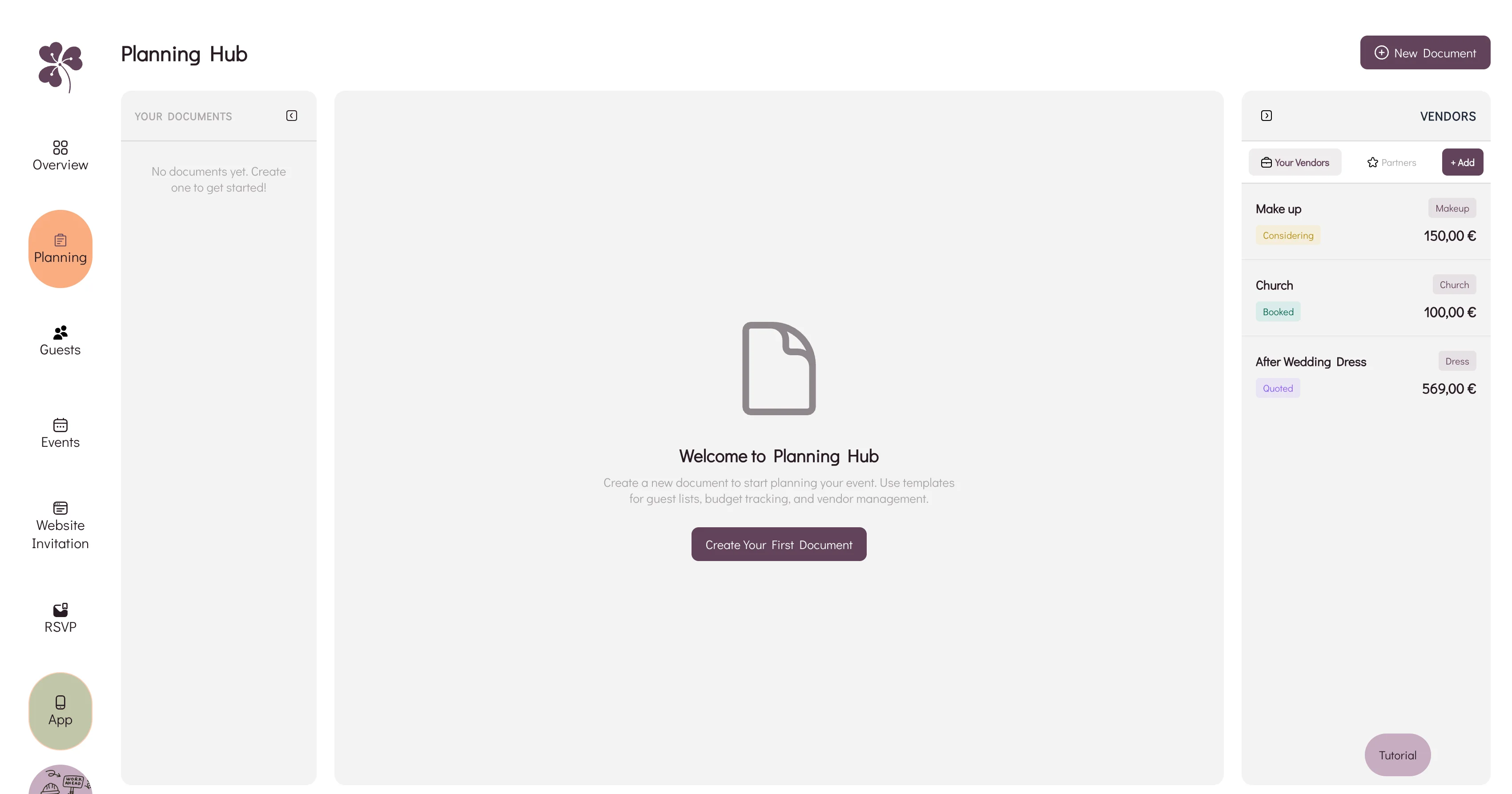
For the full planning side, keep timeline, vendors, and tasks together in WhiteClover’s Planning Hub. That gives you one source of truth for the people running the day, while guests see only the version they need.
Run weekly timeline reviews in the final 6 weeks
The last six weeks are when the timeline becomes real. RSVPs are clearer, vendors ask sharper questions, and small decisions start affecting each other.
Set a 20-minute weekly review with whoever is helping you plan. Keep it focused:
- What changed since last week?
- Which guest details are still missing?
- Which vendor needs a decision?
- Which timeline block carries the highest delay risk?
- What do guests need to know now?
- What can wait?
Pair this with wedding budget tracking, because timeline changes often affect overtime, transport, staffing, and late-night food. A decision that feels small, such as extending cocktail hour by 30 minutes, may change bar costs, photographer coverage, shuttle timing, and venue staffing.
By the final two weeks, your reviews should become lighter. The goal is not to keep rebuilding the day. It is to close open loops.
Create two final versions
Seven to ten days before the wedding, freeze the timeline into two versions.
The operational timeline
This is for your planner, venue, vendors, immediate family helpers, and anyone with a role. It should include:
- setup and arrival times
- vendor contacts
- full transport details
- ceremony cues
- photo lists
- meal and speech timings
- payment or tip notes if relevant
- emergency contacts
- fallback decisions
The guest timeline
This is shorter and warmer. It should feel like a helpful note, not an instruction manual:
- "Please arrive from 4:30pm"
- "Shuttles leave the hotel lobby at 3:50pm"
- "Cocktail hour follows the ceremony on the upper terrace"
- "Dinner begins around 7:30pm"
- "The after-party is a five-minute walk from the reception"
Do not send guests the operational timeline. It creates more questions than it solves.
What a calm wedding timeline looks like
A strong wedding timeline has a few quiet qualities. It is specific where precision matters and relaxed where the day needs warmth. It names owners. It protects guest experience. It gives vendors the information they need before they ask. It does not depend on the couple noticing every small issue.
Here is a simple structure you can adapt:
| Time | Moment | Owner | Notes |
| 10:00 | Hair and makeup begins | Beauty lead | Breakfast delivered before glam starts |
| 13:30 | Photographer arrives | Photographer | Detail shots first |
| 15:15 | Couple portraits | Photographer | Keep water and flats nearby |
| 16:15 | VIP family arrival | Family helper | Seat grandparents early |
| 16:30 | Guest arrival | Ushers | Music begins |
| 17:00 | Ceremony | Celebrant | Rings with best man |
| 17:40 | Cocktail hour | Venue manager | Family photos immediately after ceremony |
| 19:15 | Reception entrance | MC | Buffer available if photos run late |
| 19:30 | Dinner | Catering lead | Speeches after main course |
| 21:15 | First dance | DJ | Photographer coverage confirmed |
| 00:30 | Final shuttle | Transport lead | Driver contact shared with coordinator |
Use this as a starting point, not a rule. A lunch wedding, Orthodox ceremony, island venue, city hall wedding, or multicultural celebration will each need its own rhythm.
Frequently Asked Questions
How detailed should a wedding timeline be?
Your operational wedding timeline should be detailed enough that your core team can run the day without repeatedly asking you for decisions. Include owners, contacts, locations, and fallback notes. Your guest timeline should be much simpler and only include what guests need to arrive prepared.
When should the final wedding timeline be locked?
Aim to lock the final timeline 7-10 days before the wedding. After that, only make changes that protect the day: weather adjustments, vendor constraints, transport updates, or genuine guest needs. If you keep editing until the night before, people will work from different versions.
How much buffer time should we add to a wedding day schedule?
Most weddings need 10-20 minutes around key transitions and one larger 25-30 minute contingency block. Add more for destination weddings, split venues, difficult parking, formal religious ceremonies, or large guest counts. Put buffer where delays are likely, not everywhere.
Should guests see the full wedding timeline?
No. Guests should receive a clear, friendly schedule with arrival times, addresses, transport notes, dress code, meal expectations, and after-party details. Keep vendor setup, photo lists, cue times, and fallback plans internal.
Who should manage the timeline on the wedding day?
If you have a planner or coordinator, they should own the full timeline. If not, assign a calm friend or family member to each practical area: family photos, transport, guest questions, and vendor arrivals. Do not make yourselves the main point of contact.
A good timeline does not make the day feel strict. It makes it feel held. When the anchors, buffers, owners, and guest updates are clear, you can stop checking the clock and stay inside the moment: the walk down the aisle, the first hug after the ceremony, the dinner table full of people who came to celebrate your story.
Written by
Ioanna V.
Part of the WhiteClover team, helping couples and hosts plan unforgettable events with modern digital tools. Passionate about simplifying the celebration planning journey.
You Might Also Like
 Wedding Planning
Manage Multiple Wedding Events in One Place
Manage multiple wedding events in one place: welcome dinner, ceremony, reception, brunch.
 Budget & Tools
Wedding Planning Hub: Budget & Vendors
Why a spreadsheet, an inbox and a notes app stop agreeing with each other, and how WhiteClover's Planning Hub keeps budget and vendors in one view.
 Budget & Tools
Best Wedding Budget Apps: Track Every Expense [2026]
Which wedding budget app should you use? We compare dedicated planners, spreadsheets and Notion on vendor payments, due dates and shared access.