Advertisement
 Sponsored
Combined Wedding and Baptism 2026: A Complete Planning Guide
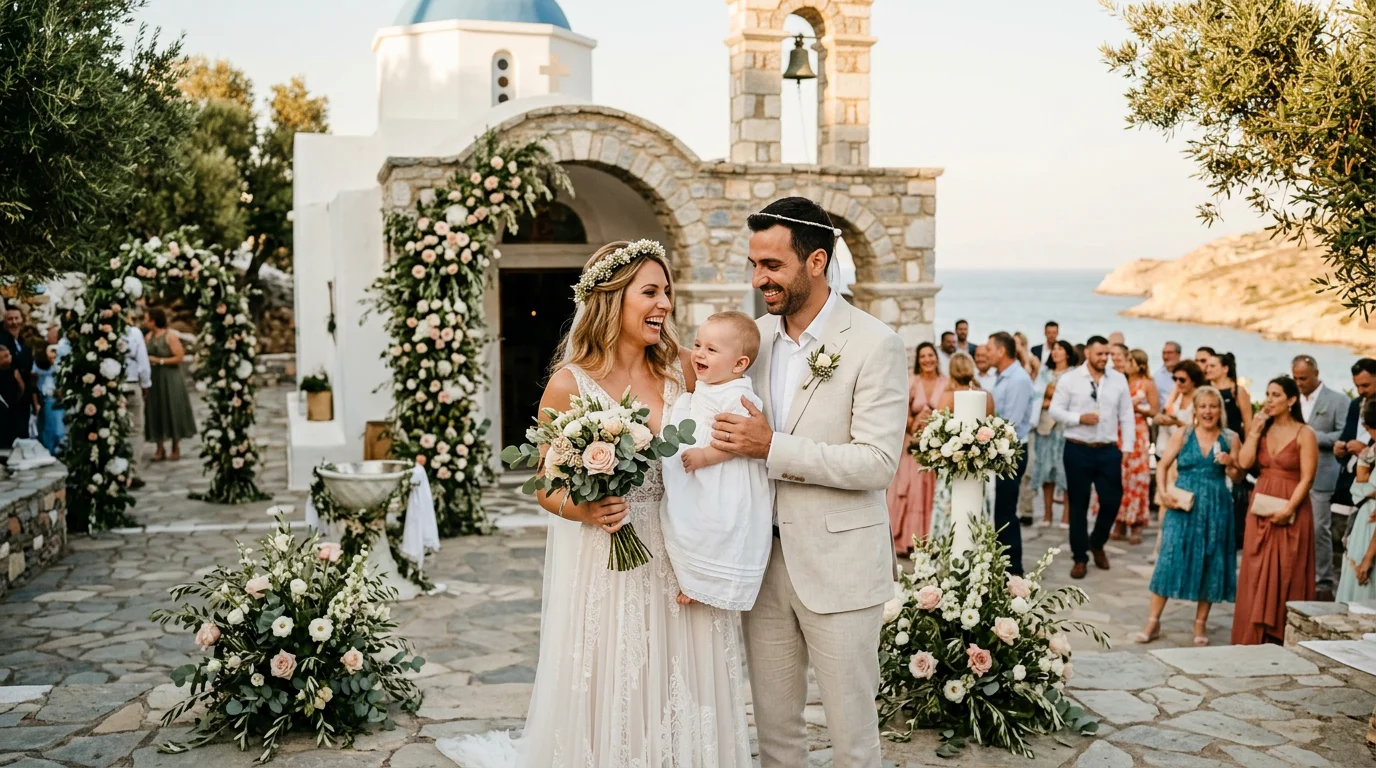
A combined wedding and baptism: marriage and your child’s christening in one celebration, is one of the most cherished traditions for many Greek families. Instead of two separate events, each with its own bills, invitations, and stress, you host one day that marks both milestones. The trade-off is coordination: two sacraments, overlapping guest circles, and a reception that must work for godparents, cousins, and friends alike.
This guide walks you through a practical 12-month roadmap, how to manage dual guest lists, what to ask church and venue, realistic budget ranges, and common mistakes, so you can enjoy the day instead of firefighting details.
Plan Your Event
One platform for every occasion: weddings, baptisms, corporate events and private parties.
Why couples choose a same-day wedding and baptism
In practice, the priest celebrates the marriage first in most dioceses, then the baptism, followed by a shared reception. Couples and parents often choose this path because:
- Economy: One reception venue, one catering contract, one core vendor team. Savings versus two standalone events often fall in the €3,000 to €8,000 range, depending on scale and location.
- Guest convenience: Much of the list is shared: family, close friends, koumbaroi and godparents. One date, one map link, one story.
- Family meaning: The baptism gathers generations; the wedding seals the new household. Together, the emotional weight is unforgettable.
- Timing with young children: Many parents do not want years between legal marriage, baptism, and a big celebration; one day resolves the sequence.
Pro tip: Confirm order of services and any diocese rules with your priest early. Some jurisdictions require marriage before baptism; others allow flexibility, never assume.
12-month planning timeline
Start 10 to 12 months ahead if you can. A combined day needs slightly more lead time than a wedding alone.
12 to 10 months
- Set a date (avoid major fasts and peak feast days if the church restricts sacraments).
- Book the priest and clarify it is a combined celebration.
- Begin venue search, you need space for a christening table or corner as well as wedding décor.
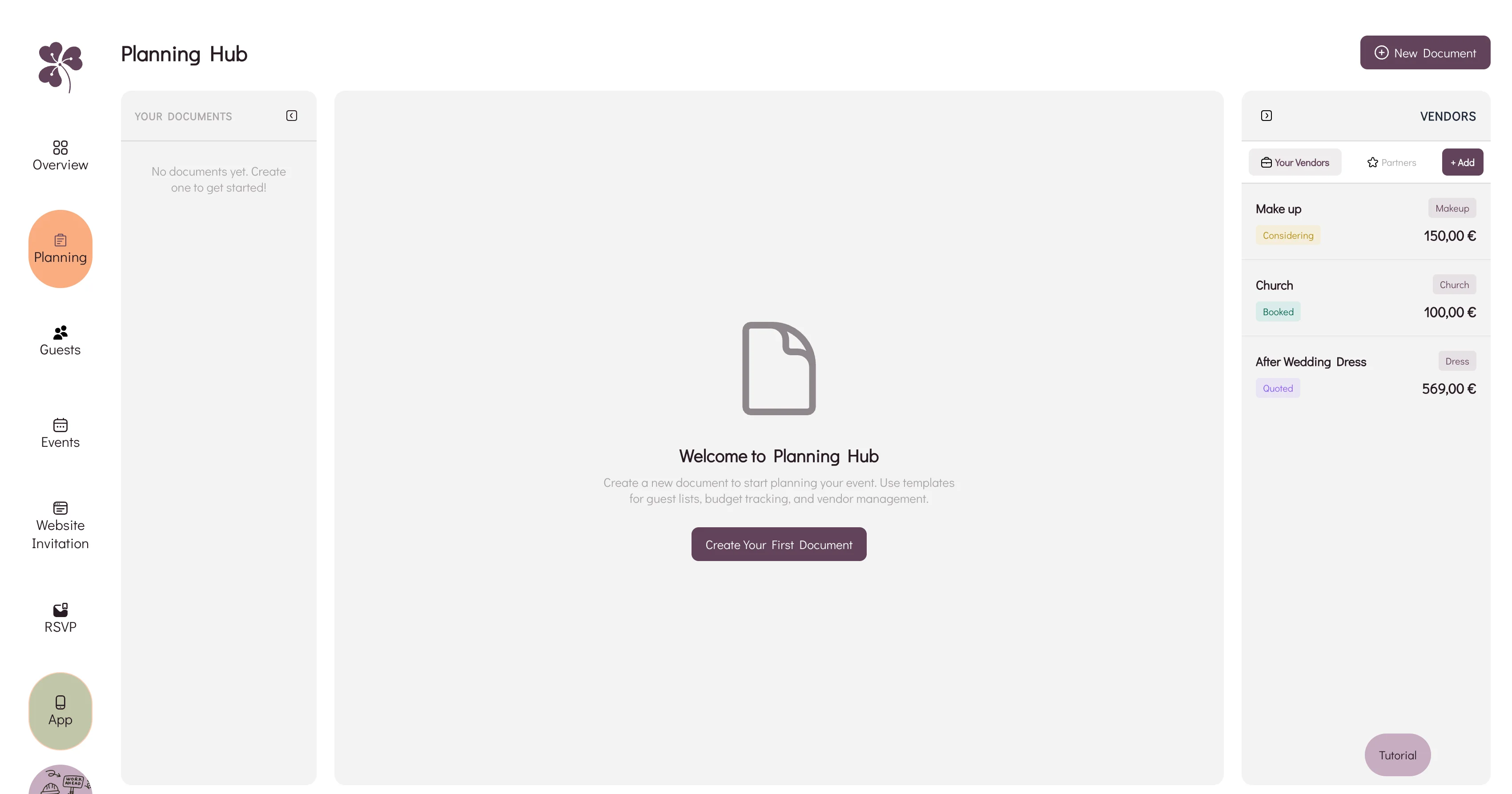
- Open your planning hub budget and split lines for wedding vs baptism costs in one view.
9 to 7 months
- Confirm the reception venue.
- Book photographer, videographer, and music.
- Build your guest list: tag who is both, wedding-only, baptism-only, or ceremony-only.
- Confirm koumbaros/koumbara and godparent(s); sometimes it is the same person, which simplifies logistics.
6 to 4 months
- Order invitations (print or digital) stating both ceremonies clearly.
- Outfits: bridal, groom, christening gown or suit, candles, oil set.
- Florist for church and venue, one supplier can unify the look.
- Favours: traditional wedding koufeta and baptism keepsakes can be separate or one unified design.
3 to 1 months
- Catering tasting and final headcount to the venue.
- Finalise your seating chart if some guests attend church only.
- Align priest, godparents, and koumbaroi on processional order and timing.
- Send reminders via SMS or digital nudges so nobody misses the longer church block.
Pro tip: A single wedding website with one timeline: church arrival, marriage, baptism, reception, cuts confusion. Guests bookmark one link for maps, dress code, and parking.
Managing two guest lists (without losing your mind)
Overlap is often 60 to 80%, but exceptions always appear: friends of the couple with no baptism tie; the godparent’s own circle; neighbours invited only to church.
| Guest type | Example | What they get |
| Both ceremonies + reception | Close family, koumbaroi | Full invitation, table seat |
| Wedding + reception only | Friends not tied to baptism | Wedding wording, reception seat |
| Baptism + reception | Godparent’s guests | Baptism wording, reception if agreed |
| Church only | Acquaintances | Ceremony details, no meal |
Digital tools that support multi-event lists let you tag each person and avoid wrong favours or missing seats. WhiteClover’s wedding and baptism flow is built exactly for this: one project, multiple events, shared data.
Pro tip: Ask godparents for their list by month six. Late names wreck seating counts and catering guarantees.
Venue and church checklist
Church: Confirm font availability, typical duration (often 1.5 to 2 hours total), and photography rules.
Reception: You need a christening corner: candles, oil set, witness ribbons, possibly a small display. If many toddlers attend, a kids’ corner or animator buys parents a calmer meal.
| Venue style | Strengths | Watch-outs |
| Estate / garden | Space, photos, atmosphere | Weather backup |
| Hotel | Service, rooms, parking | Less rustic character |
| Coastal | Sunset, “destination” feel | Wind, premium pricing |
| Banquet hall | Capacity, climate control | Less outdoor drama |
Budget snapshot (Greece, 2026)
A realistic total range for a medium-scale combined day is often €18,000 to €45,000, heavily driven by guest count and region. The win is one venue hire, one photo team, and one floral concept versus two full weddings.
| Category | Share (typical) | Notes |
| Venue + catering | 40 to 50% | Per-head drives everything |
| Photo / video | 8 to 12% | One long day, one team |
| Music | 5 to 8% | DJ vs live band |
| Flowers | 5 to 7% | Church + tables |
| Attire (all) | 5 to 8% | Bridal + christening outfit |
| Christening items | 3 to 5% | Candles, oil linen, cross |
| Favours (both) | 3 to 5% | Split or unified |
| Stationery + misc. | 10 to 15% | Transport, cake, extras |
Track estimates, deposits, and balances in your planning hub so christening lines do not get “forgotten” inside the wedding total.
Mistakes to avoid
- Not asking the priest first: Diocese rules beat Pinterest.
- Underestimating ceremony length: Warn guests with small children; offer water and shade where possible.
- Mixed lists without tags: Wrong invitation tier creates hurt feelings and catering errors.
- Favour confusion: Decide who receives wedding koufeta, baptism mementos, or a hybrid.
- Christening costs left out of budget: Candles, oil set, outfit, and cross add up; book them like any vendor line.
Day-of flow (typical)
Most often: marriage first (~45 minutes), baptism next (~30 to 40 minutes), congratulations and photos at church, then reception. If koumbaros and godparent are the same person, rehearse who holds what and when.
Digital invitations for two sacraments
Paper suites can get cramped; a digital journey can show clear sections per ceremony and let guests RSVP per event if needed. That pairs naturally with online RSVP and your central guest list.
FAQ
How long is the church portion? Usually 1.5 to 2 hours including both rites and transitions.
Can the koumbaros be the godparent? Very common; confirm with your priest.
Separate favours? Traditionally yes; many couples now design one elegant favour that nods to both.
How do I handle “baptism only” guests? Use per-event RSVP so you know exactly who attends what.
Closing
A combined wedding and baptism is demanding on paper and magical in person. Start early, tag your guests ruthlessly, and let one digital home carry the timeline, RSVPs, and budget. Explore how wedding and baptism tools on WhiteClover keep multi-event celebrations in one calm workspace, from the first save the date to the last thank-you.
Written by
Katerina K
Part of the WhiteClover team, helping couples and hosts plan unforgettable events with modern digital tools. Passionate about simplifying the celebration planning journey.
You Might Also Like
 Invitations
Multi-Event Save the Date for Weddings and Baptisms
Announce a wedding and a baptism in one save the date, so guests see every ceremony in the right order without chasing links or separate messages.
 Wedding Planning
Manage Multiple Wedding Events in One Place
Manage multiple wedding events in one place: welcome dinner, ceremony, reception, brunch.
 Budget & Tools
Wedding Planning Hub: Budget & Vendors
Why a spreadsheet, an inbox and a notes app stop agreeing with each other, and how WhiteClover's Planning Hub keeps budget and vendors in one view.