
Advertisement
 Sponsored
Planning an eco-friendly wedding in 2026 is not about proving a point or stripping the day of beauty. It is about making better choices where they matter most: fewer wasted materials, smarter transport, seasonal food, thoughtful suppliers, and communication that does not create a mountain of paper. A sustainable wedding can still feel generous, elegant, and deeply personal. In many cases, it feels calmer because every decision has a reason.
The mistake many couples make is trying to make every single detail "green" at once. That gets tiring quickly. A better approach is to choose the areas with the biggest impact, plan them early, and let the rest of the wedding follow those priorities. You do not need a perfect eco wedding. You need a wedding that reflects your values without adding pressure to an already busy season of life.
Plan Your Event
One platform for every occasion: weddings, baptisms, corporate events and private parties.
Start with your sustainability priorities
Before you choose flowers, favours, stationery, or menu cards, decide what sustainability means for your wedding. For one couple, it may mean reducing single-use waste. For another, it may mean choosing local food and suppliers. For a destination wedding, guest travel may be the biggest issue. For a small city wedding, the focus may be reusing decor and avoiding unnecessary printing.
Pick three priorities. Not ten. Three is enough to guide decisions without turning planning into a moral audit.
Strong priority areas include:
- reducing printed materials
- choosing seasonal food and flowers
- minimising guest transport emissions
- avoiding single-use decor
- reducing food waste
- renting instead of buying
- working with local vendors
- choosing meaningful favours, or skipping them
Once you have the three priorities, write them somewhere visible in your planning notes. When a new idea appears, ask: does this support one of our priorities, or is it just another thing to manage?
Pro tip: If you are planning as a couple, each of you should choose one eco priority independently. Compare answers before you discuss budget. It reveals what you both care about before supplier prices start influencing the conversation.

Build an eco budget, not just a wedding budget
Most wedding budgets track cost. An eco wedding budget should track cost and waste risk. That sounds formal, but it can be simple.
For each decision, add four notes:
- total cost
- can it be reused, rented, donated, or resold?
- how much waste could it create?
- does it support one of your top three priorities?
This keeps sustainability practical. A rented linen napkin may cost more than a paper napkin, but it supports a low-waste table. A local seasonal menu may cost the same as a more complicated imported menu, while reducing transport and spoilage. A digital RSVP flow may save printing costs and also reduce last-minute chasing.
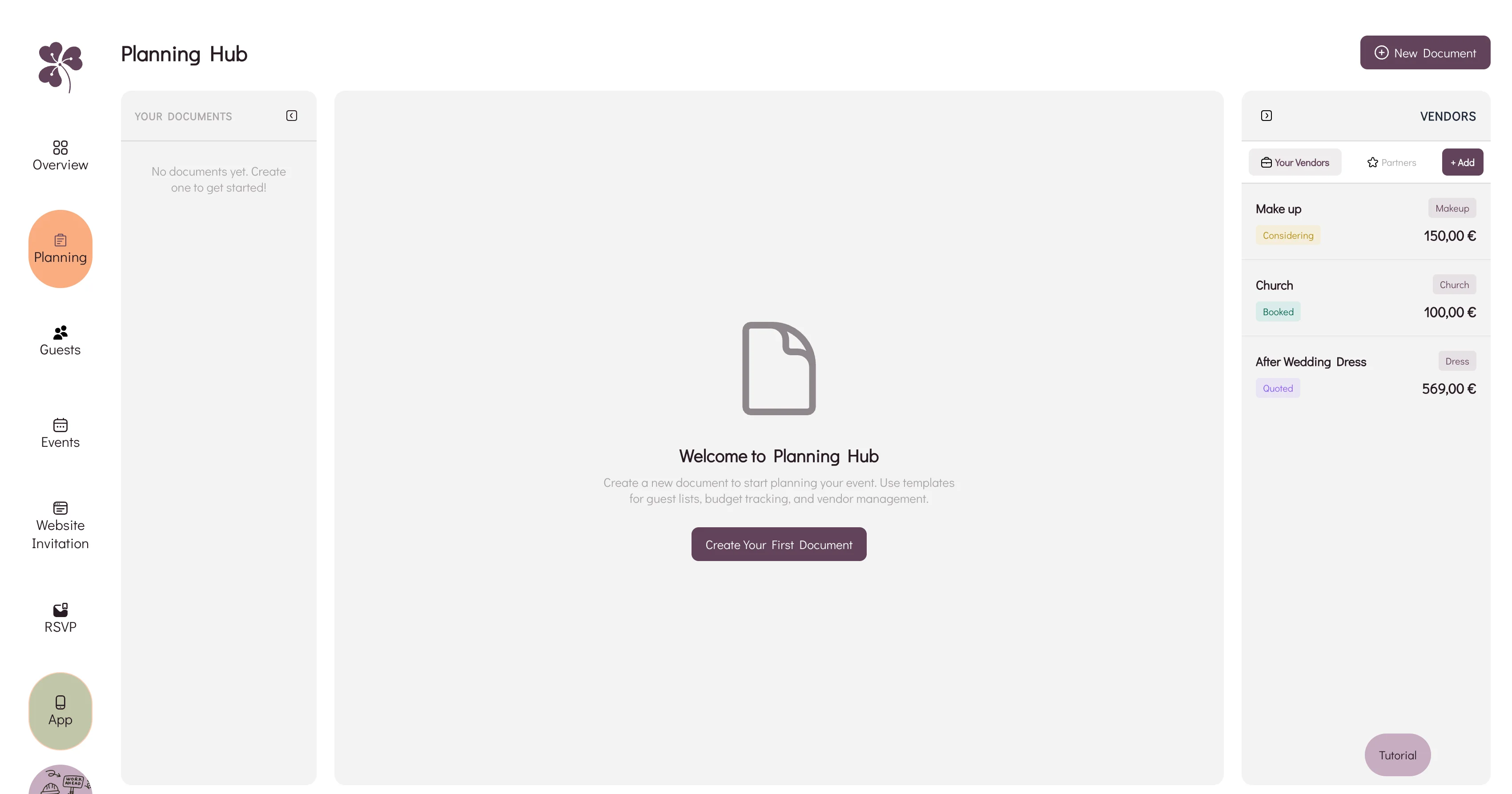
Pair this with a clear wedding budget tracking workflow so eco choices are not treated as extras. They become part of the real budget conversation.
Choose a venue that reduces extra work
Your venue is one of the highest-impact sustainability decisions because it shapes transport, catering, decor, energy use, and logistics. A venue that already has good infrastructure can quietly reduce waste before you make any decorative choices.
When comparing venues, ask:
Is it easy for guests to reach?
A beautiful remote venue may be perfect for your story, but it can create extra transport needs. If you love the venue, plan shared transport early. If many guests are staying in one area, a shuttle can reduce individual car journeys and make the night easier for everyone.
Does the venue work with local suppliers?
Venues with trusted local caterers, florists, rental companies, and planners often reduce delivery distances and repeated setup trips. They also know what works in the space, which prevents over-ordering.
Can ceremony and reception happen in one place?
One-location weddings reduce travel and simplify the day. Guests settle in, suppliers spend less time moving items, and your timeline is easier to protect.
What is already included?
Tables, chairs, lighting, linens, signage stands, glassware, and sound equipment matter. The more useful items already exist on site, the less you need to rent, transport, or buy.
This is where a practical venue checklist helps. If you are still comparing options, read what to look for in an event venue with sustainability in mind.
Go digital-first for invitations and guest updates
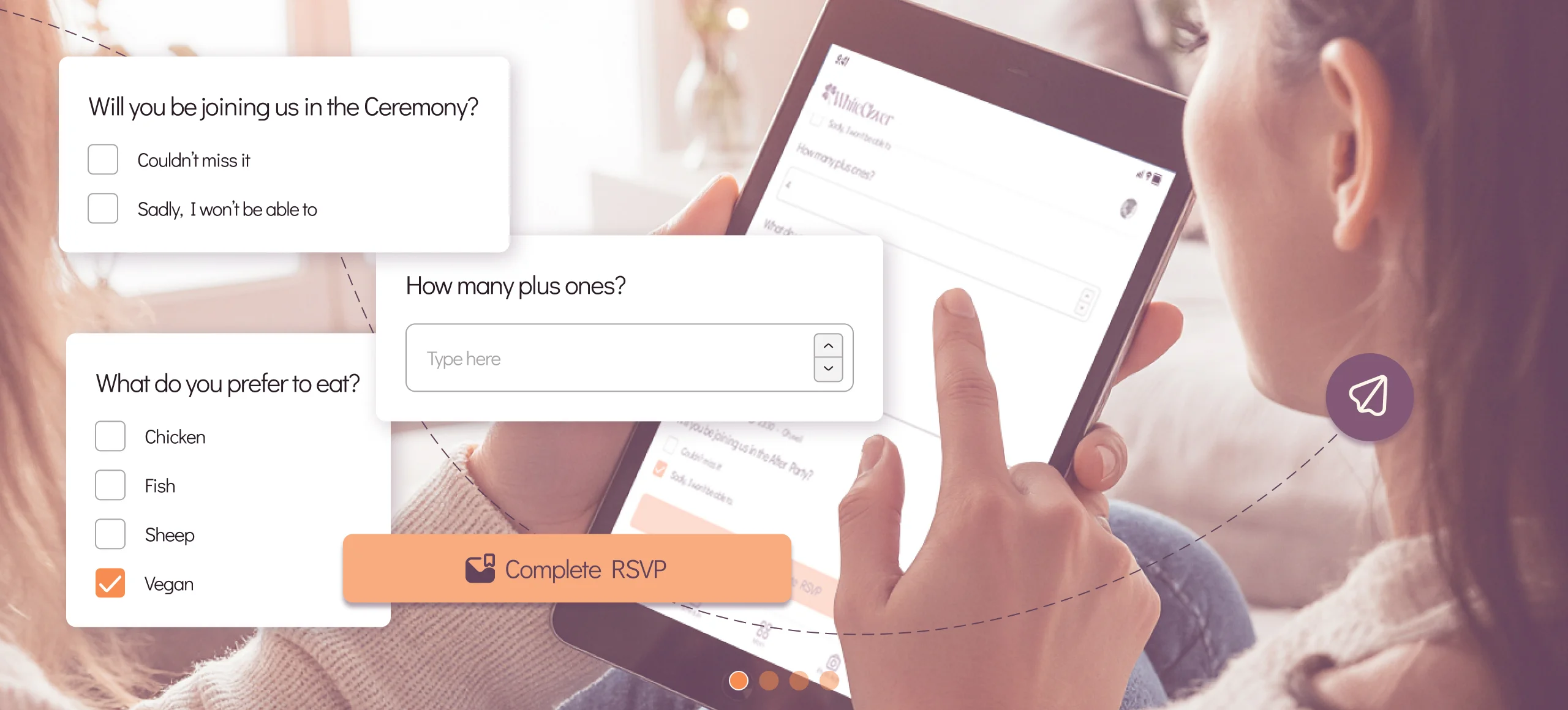
Stationery is emotional. Nobody is saying you cannot have a printed invitation. But paper waste grows quickly when every update, menu choice, RSVP reminder, and map gets printed separately. Moving the invitation itself online is the single biggest cut you can make: digital wedding invitations carry the RSVP, the menu choice and the map inside the same message, so a changed detail costs an edit rather than a reprint.
A digital-first approach can include:
- a printed invitation for keepsake value
- a QR code or short link for RSVP
- digital save the dates
- one wedding website for travel notes and timing
- final updates sent online instead of reprinted
This is one of the easiest eco-friendly wedding changes because it also makes planning easier. A central online RSVP invitation flow reduces paper rounds, improves response tracking, and keeps guests from searching through old messages. It also fits couples planning a modern wedding who want the day to reflect their own priorities rather than a traditional paper-first script.
If you still want print, make it count. Choose recycled or FSC-certified paper, avoid plastic coatings, print fewer inserts, and place live details online. One beautiful card with a clear QR code is often better than five pieces of paper in one envelope.
Serve food that fits the season and the place
Food is one of the most memorable parts of a wedding, and one of the easiest places to make thoughtful eco choices without making the day feel restricted.
Start with seasonality. Local, seasonal ingredients usually taste better because they are at their best, and they often require less transport and storage. Ask your caterer which dishes they would recommend for your date and region instead of arriving with a fixed menu copied from another wedding.
Then talk about quantities. Couples often over-order because they are afraid of seeming ungenerous. A good caterer can help you plan portions based on guest count, service style, timing, and whether there will be late-night food. The goal is not to make the meal feel small. The goal is to avoid trays of untouched food at the end.
Useful questions for your caterer:
- Which ingredients are local and seasonal for our wedding month?
- Can we design a menu with fewer imported items?
- How do you estimate quantities?
- What happens to safe leftover food?
- Can we avoid individually wrapped items?
- Can water be served in jugs or refill stations instead of plastic bottles?
For Greek or Mediterranean weddings, this can be a joy rather than a compromise: seasonal salads, local cheeses, olive oil, herbs, grilled vegetables, regional wines, and fruit-based desserts already fit a generous table.
Rethink flowers and decor
Eco-friendly decor is not about bare tables. It is about using materials with intention.
Fresh flowers can still be part of the wedding, but ask your florist what is seasonal, what is locally available, and what can be reused from ceremony to reception. A ceremony arrangement can move to the sweetheart table. Aisle flowers can become bar decor. Bridesmaid bouquets can sit in vases during dinner.
Consider:
- potted plants or herbs
- locally grown flowers
- dried elements used sparingly
- rented candle holders and vases
- fabric signage instead of foam boards
- table numbers that can be reused or resold
- fewer, larger arrangements instead of many small disposable pieces
Avoid anything that creates mess without meaning: plastic confetti, single-use props, low-quality favours, and decor bought only because it looked good in a photo. If an item will be in the room for four hours and then go straight to a bin, it deserves a second thought.
Choose favours guests will actually use
Wedding favours are one of the easiest places to reduce waste. Many guests forget them, leave them behind, or take them home out of politeness. If you love favours, choose something edible, local, practical, or personal.
Better options include:
- local honey or olive oil in small reusable jars
- seed packets suited to your climate
- handmade sweets from a local producer
- a donation note for a cause you genuinely support
- a shared photo gallery instead of a physical item
- no favour at all, with more budget for food, music, or guest comfort
The most sustainable favour is often the one people do not throw away. If you are unsure, skip it. Guests remember the welcome, the food, the music, and how easy the day felt more than a small object on the plate.
Make transport part of the guest experience
Guest transport can have a large footprint, especially for destination weddings or venues outside city centres. It is also one of the areas guests appreciate when it is handled well.
You can reduce unnecessary travel by:
- choosing accommodation near the venue
- grouping guests by hotel or neighbourhood
- arranging shuttles for key routes
- sharing taxi information in advance
- encouraging car sharing where appropriate
- keeping ceremony and reception close together
- providing clear maps so drivers do not circle the area
This does not need to feel like an environmental lecture. Frame it as hospitality. "We have arranged a shuttle from the hotel at 17:00" is helpful, calm, and better for the planet.
If transport is a major part of your wedding, add related questions to the RSVP: "Will you need shuttle transport?" or "Where will you be staying?" That gives you real numbers before you book.
Work with vendors through one clear brief
Eco-friendly planning falls apart when every supplier hears a different version of the plan. A florist hears "seasonal", the caterer hears "low waste", the venue hears nothing, and the planner is left connecting the dots.
Create a one-page sustainability brief and send it to the vendors who need it. Keep it short:
- your three sustainability priorities
- what you want to avoid
- what you are happy to rent or reuse
- how you want leftovers or materials handled
- who approves changes
- final review date
This is not about policing vendors. It is about giving them a clear direction so they can suggest better options. Good vendors often know practical swaps you would never find on your own.
WhiteClover's Planning Hub is useful here because you can keep vendor notes, budget decisions, and planning tasks in one place instead of spreading eco decisions across email threads and screenshots.
Use the 5-step eco execution model
Use this simple model to keep the plan moving.
1. Measure
Set your non-negotiables and identify the decisions with the biggest impact: transport, food, printing, decor, and supplier location.
2. Reduce
Remove low-value extras before replacing them. The greenest version of an item may be not having the item at all.
3. Replace
Where something is needed, switch disposable to reusable, imported to local where possible, and printed to digital where it makes sense.
4. Brief
Tell vendors what matters. A short brief prevents assumptions and saves repeated explanations.
5. Review
Two weeks before the wedding, check transport, catering quantities, decor reuse, signage, guest updates, and waste handling.
Final-week eco checklist
Use this in the last stretch when everyone is busy and small details can slip.
- Are transport times and pickup points clear?
- Has the caterer confirmed final numbers and leftover handling?
- Are ceremony flowers assigned for reuse at reception?
- Are printed items final, or can updates be sent digitally?
- Are bins, recycling points, or cleanup rules clear with the venue?
- Have guests received the latest schedule and map?
- Does each vendor know your sustainability priorities?
- Are rented items labelled or tracked for return?
If those points are covered, your wedding is already greener than many events, not because every detail is perfect, but because the big systems are working.
Frequently Asked Questions
Is an eco-friendly wedding always more expensive?
No. Some sustainable choices cost more, such as certain rentals or specialist suppliers, but many reduce costs. Digital invitations, fewer printed inserts, seasonal menus, rented decor, and skipping low-value favours can all save money. The key is to compare total cost, not just item price.
What is the easiest first step for a sustainable wedding?
Start with digital-first communication. Use online RSVP, a wedding website, and digital updates so you reduce printing and avoid repeated guest messages. It is simple, visible, and useful for the whole planning process.
Do we need to remove all imported flowers or foods?
No. A realistic eco wedding is about better choices, not purity. Prioritise local and seasonal items where they make sense, then use imported elements selectively if they matter to your design or menu.
How can we reduce wedding food waste?
Choose a caterer who plans quantities carefully, confirm guest numbers on time, collect dietary needs accurately, and ask what happens to safe leftovers. Avoid adding too many food stations simply because they look generous.
How do we get vendors aligned without sounding difficult?
Send one clear, friendly sustainability brief. Explain your priorities, ask for practical suggestions, and make it clear that you value their expertise. Most vendors appreciate specific direction more than vague requests to "make it eco".
A thoughtful wedding, not a perfect one
An eco-friendly wedding is not about perfection. It is about choosing better trade-offs, spending money with intention, and designing a day that feels good before, during, and after the celebration. The most meaningful changes are often the ones guests barely notice because everything simply works: clear updates, sensible transport, beautiful seasonal food, decor that has a second life, and less waste at the end of the night.
If you want to keep those decisions visible as the guest list, vendors, budget, and timeline evolve, WhiteClover gives you one place to organise the moving parts. Bring your eco priorities into your planning workflow early, and your wedding can feel generous, personal, and responsible without turning the process into another full-time job.
Written by
Katerina K
Part of the WhiteClover team, helping couples and hosts plan unforgettable events with modern digital tools. Passionate about simplifying the celebration planning journey.
You Might Also Like
 Budget & Tools
Best Wedding Budget Apps: Track Every Expense [2026]
Which wedding budget app should you use? We compare dedicated planners, spreadsheets and Notion on vendor payments, due dates and shared access.
 Checklists
7 Steps for a Seamless Wedding Planning Checklist 2026
Discover the essential wedding planning checklist 2026 with 7 expert steps for engaged couples seeking effortless, eco-friendly event management in Greece.
 Budget & Tools
Wedding Planning Hub: Budget & Vendors
Why a spreadsheet, an inbox and a notes app stop agreeing with each other, and how WhiteClover's Planning Hub keeps budget and vendors in one view.