
Advertisement
 Sponsored
Can I Plan My Wedding Without a Coordinator?
Yes, you can plan your own wedding without a coordinator. Many couples do. The honest answer is not "you absolutely need a planner" or "just make a spreadsheet and relax". It depends on the type of wedding, the number of moving parts, your available time, and whether you can separate planning from enjoying the day itself.
The couples who do it well are not necessarily the most organised people in the room. They are the ones who make responsibilities visible early. They know who owns the budget, who speaks to vendors, who answers guest questions, and who is not allowed to become the wedding-day help desk.
Most DIY wedding planning advice says the same three things: set a budget, make a checklist, and book vendors early. That is useful, but incomplete. The missing piece is ownership. A wedding without a coordinator can still run calmly if every practical area has a named person, a clear deadline, and one place where the latest information lives.
Plan Your Event
One platform for every occasion: weddings, baptisms, corporate events and private parties.
First, Be Clear About What A Coordinator Does
A wedding coordinator is not only someone holding a clipboard on the day. Depending on the service, they may:
- build or check the wedding timeline
- confirm vendors and arrival times
- manage setup details with the venue
- answer practical questions from family and guests
- move people at the right moments
- protect the couple from last-minute decisions
- solve small problems before they reach you
If you do not hire one, those jobs do not disappear. They move to you, your partner, your venue manager, your family, or a trusted friend. That can work, but it should be intentional.
Pro tip: Do not ask one person to "keep an eye on everything". Give people smaller roles, such as family photo wrangler, transport contact, vendor arrival contact, or guest information lead.
If you are still comparing professional support, this guide on questions to ask a wedding planner can help you understand what you may need to replace if you plan without one.
When Planning Without A Coordinator Works Well
Planning your own wedding is more realistic when the wedding has a simple structure. For example:
- one main venue for ceremony and reception
- a guest count you can comfortably manage
- vendors who are used to weddings and communicate clearly
- no complex room turnaround between ceremony and dinner
- limited transport needs
- a family dynamic that will not require constant mediation
- enough time each week for planning decisions
It can also work for destination weddings, but only if you build a stronger communication system. International guests need travel details, accommodation notes, arrival windows, local transport, dress code guidance, and backup information. If half your guest list is flying in, guest communication becomes part of the planning job, not an afterthought.
For a destination wedding in Greece, for instance, you may be dealing with a seaside ceremony, narrow island roads, vendor calls in another language, sunset timing, and guests who have never visited the area. You can still self-plan, but you need written confirmations, phone numbers, maps, and a day-of contact who is physically present.
When You Should Seriously Consider Help
You may not need a full-service planner, but some weddings benefit from at least month-of coordination or day-of support.
Consider professional help if:
- the wedding has more than one location
- you have 100+ guests
- vendors need access or setup decisions before you arrive
- your venue does not provide a hands-on event manager
- your family expects you to manage many traditions
- you are planning from another country
- the timeline includes shuttles, ferries, room changes, or late-night transport
- you feel anxious because no one else knows the full plan
The issue is not whether you are capable. It is whether you want to be responsible for operational decisions while getting married.
There is a middle ground. You can plan the wedding yourselves, then hire a month-of coordinator to review contracts, build the final timeline, confirm vendors, and run the day. This often gives couples control over the creative and budget decisions while protecting the final stretch.
The DIY Planning System That Actually Helps
If you want to plan without a coordinator, do not start with decor. Start with a working system.
1. Build A Master Decision List
Create one list of every meaningful decision, not every tiny task. Include:
- venue and ceremony type
- guest count range
- catering style
- photographer and videographer
- music
- flowers and decor
- transport
- accommodation notes
- digital wedding invitations and RSVP
- legal paperwork if needed
- final timeline
Next to each decision, add an owner, due date, budget range, and status. "Discuss flowers" is vague. "Katerina to request two floral quotes by 20 June" is useful.
2. Keep Vendor Information In One Place
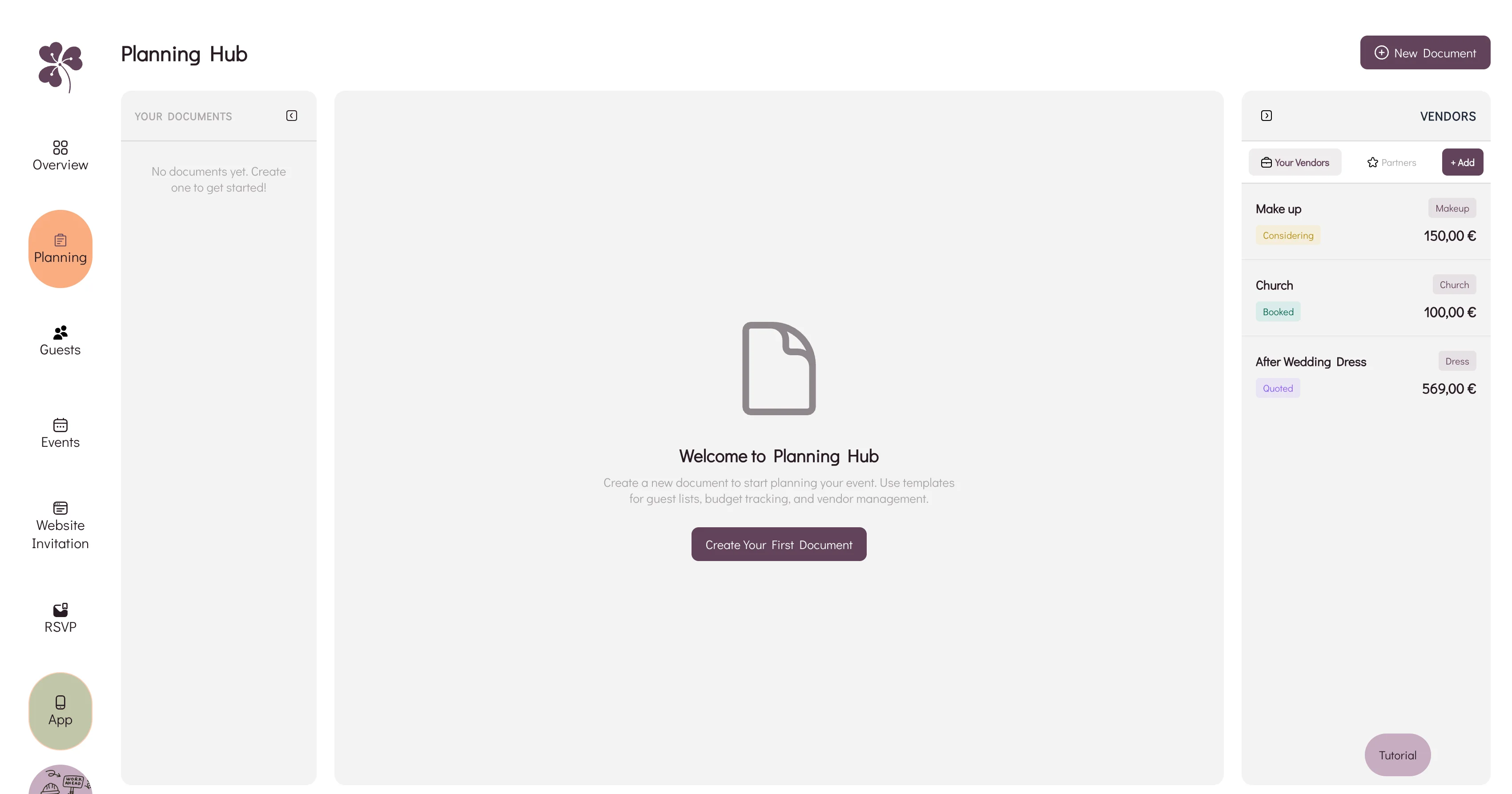
Every vendor should have a single record with contact details, quote, deposit, balance due, arrival time, setup needs, cancellation terms, and the latest agreed version of the service.
This is where couples lose hours. One detail sits in WhatsApp, another in email, one quote is a PDF, and the final payment date is in someone's notes app. A tool like WhiteClover's Planning Hub helps because your budget, vendor notes, and planning documents can live together instead of being rebuilt from scattered messages.
3. Write A Guest Communication Plan
Guest questions are not small when they arrive in batches. Before invitations go out, decide where guests will find:
- the schedule
- the wedding RSVP form
- venue address and map
- travel and accommodation suggestions
- dress code
- dietary questions
- plus-one rules
- photo sharing instructions
- contact person for urgent questions
If guests keep texting you for the same details, the information is either missing, hard to find, or spread across too many places. This guide on stopping guests from texting you questions on the wedding day is useful before the final month.
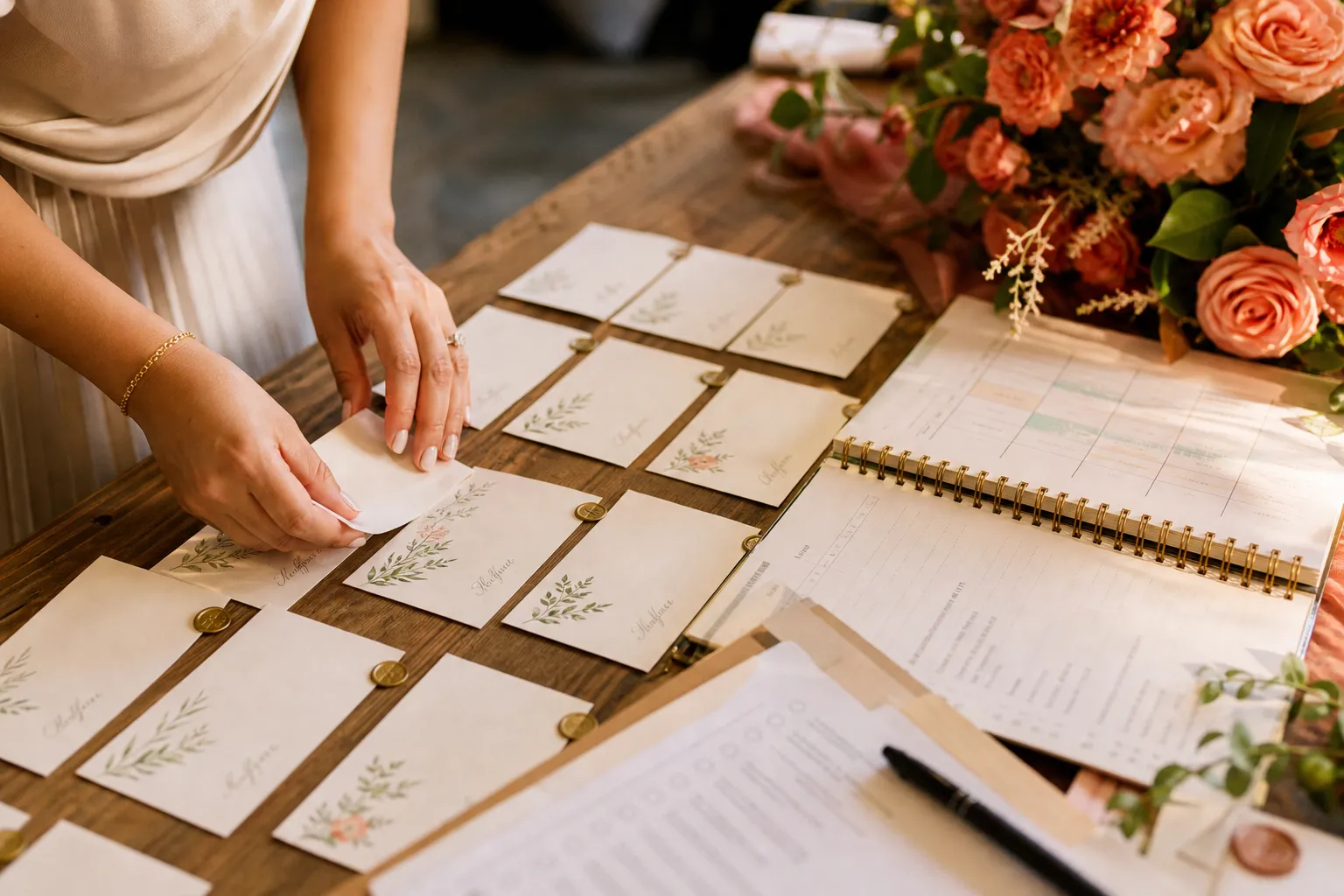
4. Create A Real Wedding Timeline
Your timeline should not be a pretty schedule for guests. It should be a working document for the people running the day.
Include:
- vendor arrival windows
- setup deadlines
- family photo list and owner
- ceremony start and guest arrival time
- transport timings
- dinner service start
- speeches
- music cues
- cake cut or dessert
- final shuttle or venue close
Add buffers. Hair and makeup run late. Family photos take longer when people wander off. Guests need time to move, park, greet each other, and find seats. A realistic timeline is one of the biggest differences between DIY planning and DIY chaos. For a deeper structure, use this wedding timeline guide.
Who Should Own What On The Day?
If you do not have a coordinator, avoid making your maid of honour, best man, sibling, or parent responsible for everything. They are part of the wedding too.
Instead, split responsibilities:
| Area | Good owner | What they handle |
| Vendor arrivals | Venue manager or practical friend | Calls, access, setup questions |
| Family photos | Sibling, cousin, or close friend | Gathering relatives from a written list |
| Transport | Best man, usher, or travel-savvy guest | Shuttle timing and driver contact |
| Guest questions | One calm friend | Directions, schedule, urgent queries |
| Payments and tips | Trusted family member | Envelopes, receipts, final balances |
| Emergency kit | Bridesmaid or groomsman | Pins, tissues, water, plasters, phone charger |
Give each person a one-page brief. Include only what they need. Do not send a 20-page planning document to everyone and hope they read it.
The Budget Question: Does DIY Planning Save Money?
Usually, yes, but not always in the way couples expect.
You may save on planner fees, but you may spend more time researching, comparing quotes, chasing replies, and correcting avoidable mistakes. You may also miss local context, such as realistic transport timing, seasonal price changes, or which rentals a venue already includes.
DIY planning saves money when you:
- know your priorities before asking for quotes
- compare like with like
- track deposits and balances properly
- keep a contingency fund
- avoid last-minute upgrades because decisions were delayed
- ask vendors clear questions before signing
It becomes expensive when "we will figure it out later" turns into rushed bookings, duplicate rentals, unclear guest numbers, or overtime charges.
If budget control is one of your main reasons for self-planning, use a dedicated tracker from the beginning. The post on wedding budget tracking apps can help you choose the level of structure you need.
A Practical Decision Rule
Here is the simplest way to decide.
You can probably plan without a coordinator if:
- your wedding is simple enough to explain in five minutes
- you have time every week for planning admin
- at least one vendor or venue contact is reliable and responsive
- you are comfortable making decisions without constant reassurance
- you have assigned day-of roles to people who are not you
You should consider help if:
- the wedding has many locations, cultures, languages, or transport steps
- the guest list includes many people who need extra guidance
- family expectations are already creating pressure
- you are planning from abroad and cannot visit easily
- you want to be fully off-duty on the wedding day
The goal is not to prove you can do everything alone. The goal is to protect the experience. Your wedding is not a project management exam.
FAQ
Can I plan a wedding without a wedding planner?
Yes. You can plan without a wedding planner if you have a clear checklist, realistic budget, strong vendor tracking, and named people to help on the day. The more complex the wedding, the more useful partial or month-of support becomes.
Do I need a day-of coordinator?
Not always, but someone needs to own the wedding-day details. If your venue manager only handles the venue, you still need someone for family photos, vendor calls, transport, guest questions, and timing.
Is a venue coordinator the same as a wedding coordinator?
No. A venue coordinator usually focuses on the venue's operations. A wedding coordinator represents the couple across the whole event, including vendors, timeline, family, guest movement, and unexpected problems.
How far in advance should I start planning my own wedding?
For a medium or destination wedding, 12 months is comfortable. Smaller weddings can be planned faster, but major vendors, venues, accommodation, and travel details should still be handled early.
What is the biggest mistake couples make when planning alone?
They keep too much information in their heads. A calm DIY wedding needs visible decisions, shared documents, written confirmations, and clear owners for the final week.
Final Thoughts
Planning your own wedding without a coordinator is possible. It can even feel personal and satisfying when the structure is right. But self-planning should not mean self-sacrifice. If you are the only person who knows the plan, the plan is too fragile.
Keep the essentials visible: budget, vendors, guest information, timeline, and day-of roles. Then decide honestly where you want human help. A trusted friend can handle one area. A venue manager can handle venue setup. A month-of coordinator can protect the final stretch. The best version is the one that lets you be present.
WhiteClover was built for couples who want control without carrying every detail alone. With planning documents, vendor notes, budget tracking, guest communication, RSVP, and wedding website tools in one place, you can plan your wedding with more clarity and fewer scattered messages. See how it works in the Planning Hub and build a planning system that supports the day you actually want to live.
Written by
Katerina K
Part of the WhiteClover team, helping couples and hosts plan unforgettable events with modern digital tools. Passionate about simplifying the celebration planning journey.
You Might Also Like
 Vendor Tips
Questions to Ask a Wedding Planner
Hiring a wedding planner? Ask these practical questions about fees, communication, vendors, budget control, and wedding-day responsibility first.
 Wedding Planning
Best Way to Manage Your Wedding Timeline
Learn a practical wedding timeline system with smart buffers, clear owners, and communication checkpoints so your day runs calmly and on time.
 Budget & Tools
Wedding Planning Hub: Budget & Vendors
Why a spreadsheet, an inbox and a notes app stop agreeing with each other, and how WhiteClover's Planning Hub keeps budget and vendors in one view.