Advertisement
 Sponsored
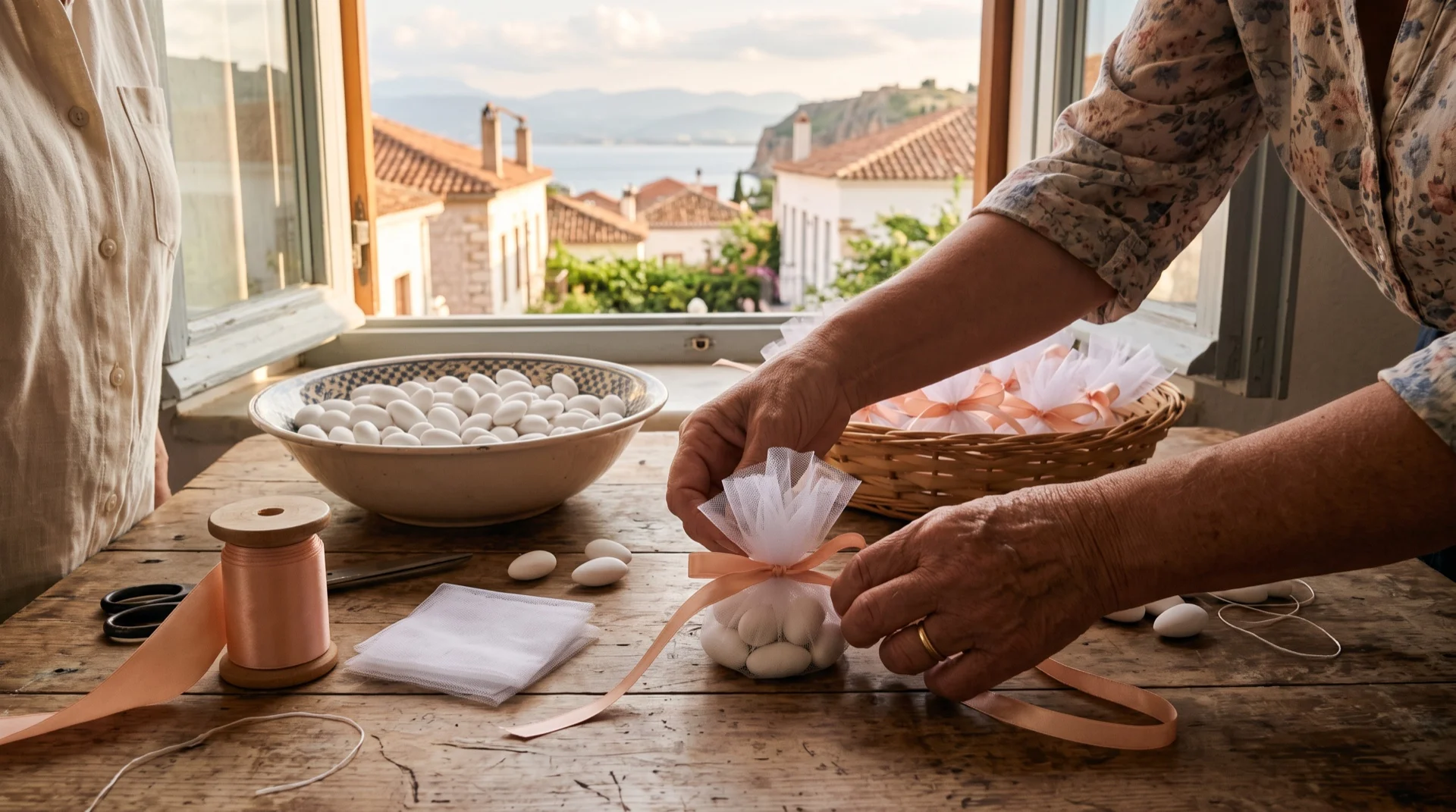
Picture a kitchen table in Nafplio, a week before the wedding. A Canadian bride counts six sugared almonds into the first little tulle bag. Her future mother-in-law takes one out, adds two more and ties the ribbon. Seven. Never an even number.
That's koufeta in one scene. They are the white sugar-coated almonds in every Greek wedding favour, and they come with rules nobody writes down. How many koufeta per guest? Five or seven in each favour is the classic choice, always an odd number. The harder question is how many kilos to buy, because a kilo can hold anything from about 115 to 360 pieces depending on the type.
This guide explains what koufeta mean, how many to put in each bag, and gives you a table that turns your guest count into kilos.
TL;DR: Five or seven per favour, one favour per household, buy one or two kilos extra.
- Always an odd number: 5 or 7 is classic, 9 or 11 in a fuller tulle bag, 3 in a small box.
- Count favours, not guests. One per household cuts the number a lot.
- Check the pieces per kilo on the box. One classic almond koufeto is listed at 240 to 260 a kilo, but another shop's guide says about 150.
- Shops listed classic almond koufeta at about €11 a kilo in October 2026, premium ranges at €22 to €24.
Plan Your Event
One platform for every occasion: weddings, baptisms, corporate events and private parties.
What koufeta are, and why guests get them
Koufeta (κουφέτα) are whole roasted almonds with a hard sugar shell. At a Greek wedding they go into the bomboniera, the small favour every guest takes home, and onto a tray at the church during the ceremony.
The usual explanation is simple. The almond is a little bitter, the sugar is sweet, and married life has both. The number is odd because an odd number can't be split into two equal halves, just like the couple. Liebequeen, a Greek favour shop, adds the meanings people attach to each number: three for the Holy Trinity, five as "the most classic number for a wedding", seven for the sacraments of the church.
For more on the wider tradition, see our guide to Greek wedding traditions.
Pro tip: Tie a small tag to each favour explaining what koufeta are. Your non-Greek guests will otherwise treat them like soft sweets, and there's a whole almond in there.
How many koufeta per favour
| Style of favour | Usual number |
| Classic tulle bag or pouch | 7, 9 or 11 |
| Small box, tube or minimal packaging | 3 or 5 |
| Baptism favour | 3, 5, or at most 7 |
| The church tray | An odd number from 7 to 15, white |
The tulle numbers and the box numbers come from Liebequeen's June 2026 guide. The church tray figures come from the Greek wedding magazine Yes I Do.
Honestly, five or seven covers almost every wedding. Nine and eleven look generous in a big tulle bag, but in a modern box they just rattle.
How many kilos of koufeta do you need
The maths is simple: favours × koufeta per favour ÷ pieces per kilo, rounded up.
The catch is the middle number, the pieces per kilo, which varies a lot. A Greek shop listing for Hatziyiannakis classic almond koufeta gives 240 to 260 pieces a kilo. Liebequeen's guide puts classic almonds at about 150 a kilo and flavoured ones at about 115. So two shops disagree by almost 100 pieces a kilo for what both call a classic almond, and we can't tell you which box Liebequeen counted. Liebequeen also gives about 250 for chocolate koufeta and 360 for the light, crispy cereal ones. Always read the box.
Here's a quick table. The first number in each cell assumes about 240 pieces a kilo, a typical classic almond. The number in brackets assumes about 150, Liebequeen's figure for classic almonds. If your box says something else, redo the sum.
| Favours | 5 per favour | 7 per favour | 9 per favour |
| 50 | 2 kg (2 kg) | 2 kg (3 kg) | 2 kg (3 kg) |
| 100 | 3 kg (4 kg) | 3 kg (5 kg) | 4 kg (6 kg) |
| 150 | 4 kg (5 kg) | 5 kg (7 kg) | 6 kg (9 kg) |
| 200 | 5 kg (7 kg) | 6 kg (10 kg) | 8 kg (12 kg) |
| 250 | 6 kg (9 kg) | 8 kg (12 kg) | 10 kg (15 kg) |
| 300 | 7 kg (10 kg) | 9 kg (14 kg) | 12 kg (18 kg) |
Then add one or two kilos. Liebequeen recommends exactly that, for the church tray and for the house. We'd add: for the favours you'll inevitably redo at midnight.
Count favours, not guests
This is where it's easy to overbuy. Take a wedding with 90 guests but only 52 households. Give one favour per couple or family, plus one to each guest who comes alone, and you might end up with 60 favours. Seven almonds each makes 420 almonds. At roughly 240 a kilo that's two kilos, so buy three. Spare almonds are never wasted at a Greek wedding.
The easiest way to get that number right is from your replies, not your first draft of the list. Our guide to wedding favours guests actually love has more on matching quantities to real replies, and on favour ideas beyond koufeta.
What koufeta cost
Prices we found on Greek shop listings in October 2026:
| Type | Price per kilo | Pieces per kilo |
| Hatziyiannakis classic almond | about €11 | about 240 to 260 |
| Hatziyiannakis Chocoalmond | about €22 | about 220 |
| Hatziyiannakis Bijoux Supreme | about €23 to €24 | about 300 to 310 |
So 60 favours of seven classic koufeta costs roughly €22 to €33 in almonds. The tulle, the ribbon and the little tags will cost you more than the almonds.
The church tray and the pillow custom
During the ceremony, a tray of white koufeta sits near the altar. According to Yes I Do, after the service the priest traditionally slips the tray's koufeta into the groom's pocket. These days, the same source says, unmarried guests tend to go up and take a few themselves.
Why? An old custom says that if a single woman sleeps with wedding koufeta under her pillow for three nights in a row, she'll dream of the person she'll marry. Your international guests will love this, so tell them. If you're preparing a ceremony explainer, our Greek Orthodox wedding guide for guests covers the rest of the service.
For guests: what to do with your koufeta
If you're a guest and someone hands you a little bag of sugared almonds: take it home, it's a thank you from the couple. Eat them slowly, they're hard. And if you're single, now you know what the pillow is for.
Before you tie the first bag
Favours are one of those jobs that look small and quietly eat a weekend, especially when the numbers keep changing. The fastest way to know how many to tie is to know who's actually coming, household by household.
In WhiteClover you can link partners and children into one household on your wedding guest list, and one reply from a phone covers everyone in it. Count the households that said yes, and that's the number to take to the sweet shop.
FAQ
How many koufeta go in a Greek wedding favour?
Five or seven is the classic choice. Liebequeen suggests seven, nine or eleven for a fuller tulle bag, and three or five for a small modern box. It's always an odd number.
Why are koufeta always an odd number?
An odd number can't be divided into two equal parts, which stands for a couple that stays together. Some shops also link the numbers to faith: three for the Holy Trinity, seven for the sacraments.
How many koufeta are in a kilo?
It depends on the type. A classic Hatziyiannakis almond koufeto is listed at about 240 to 260 a kilo, Liebequeen gives about 150 for classic and 115 for flavoured almonds, and around 360 for crispy cereal ones. Read the box you're buying.
Do baptism favours use koufeta too?
Yes, and fewer of them: Liebequeen suggests three, five or at most seven, often chocolate or crispy ones. Liebequeen keeps to odd numbers, while El Deco's blog says even numbers for baptisms, so ask your family.
Can I make koufeta favours myself?
Yes. It's mostly counting and tying. Order the almonds early, buy a kilo or two extra, and get a few relatives round the kitchen table for an evening.
Recommended
Written by
Katerina K
Part of the WhiteClover team, helping couples and hosts plan unforgettable events with modern digital tools. Passionate about simplifying the celebration planning journey.
You Might Also Like
 Inspiration
Wedding Favours Guests Will Actually Keep
Discover wedding favours guests truly appreciate with a practical matrix on usefulness, budget, and logistics for stress-free gifting decisions.
 Inspiration
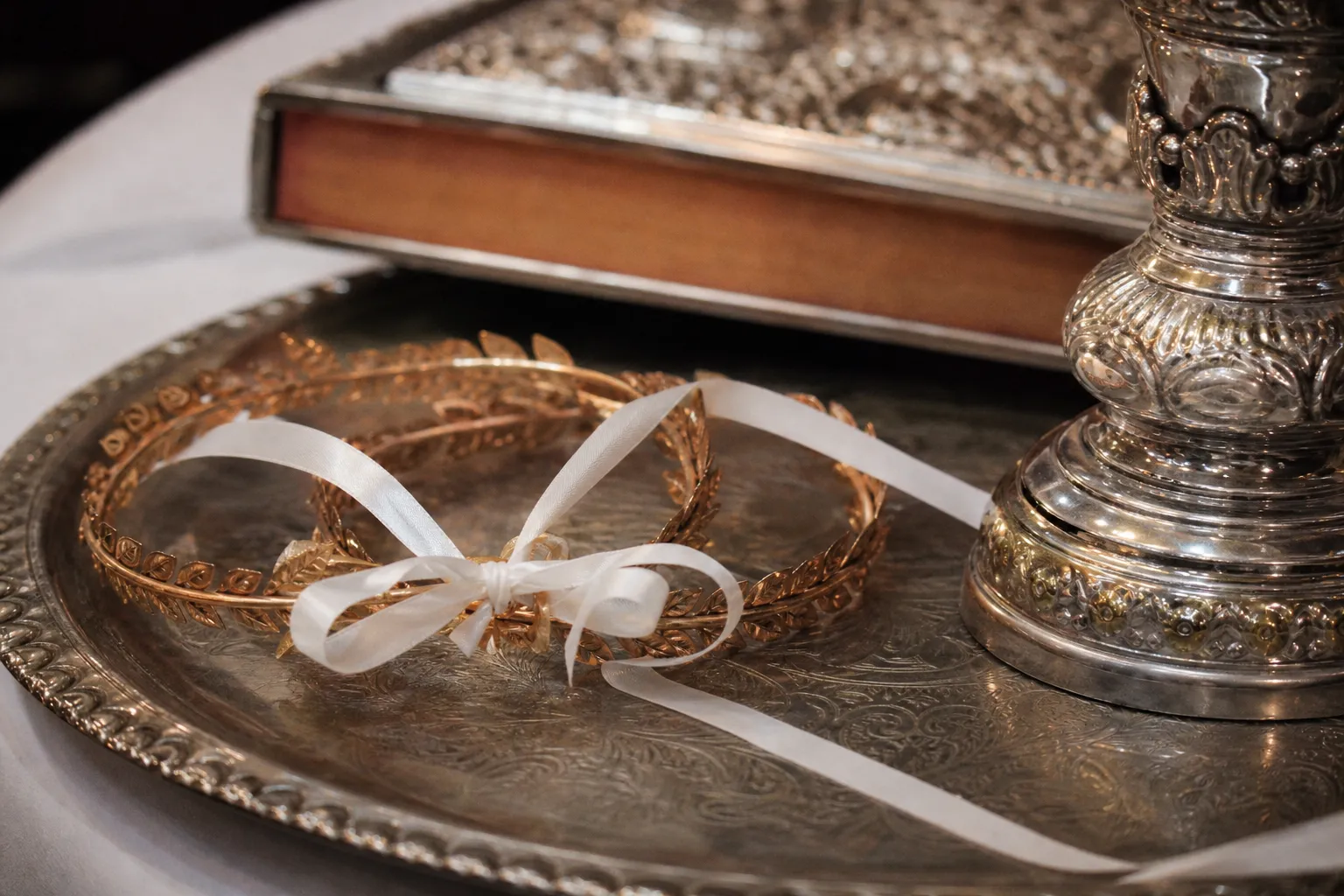
Greek Wedding Traditions: A Complete Guide
From the stefanoma crowning to koufeta favours, 10 authentic Greek wedding traditions every couple, Greek or not, can weave into their big day.
 Guest Experience
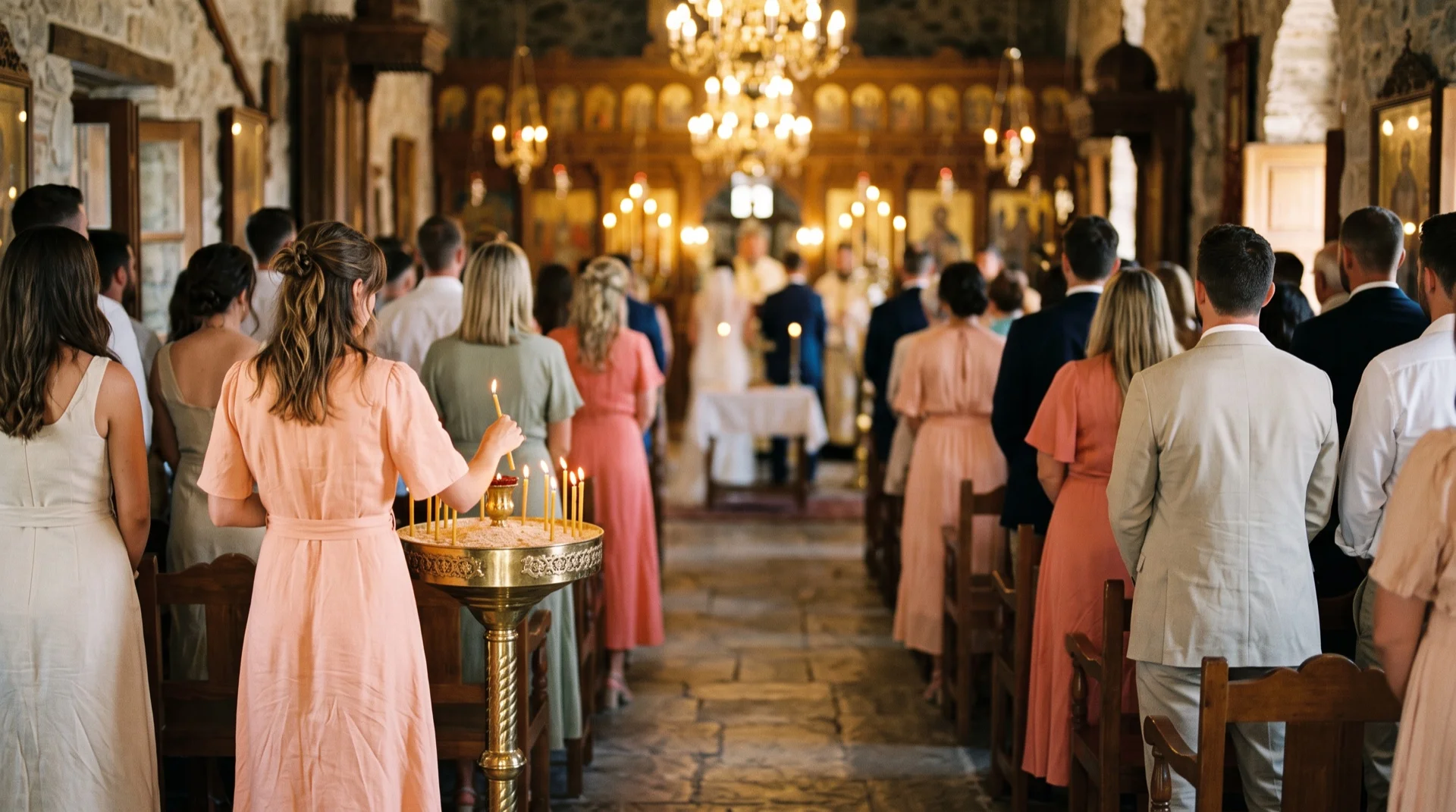
Greek Orthodox Wedding: A Guide for Guests
Your first Greek Orthodox wedding? How long it lasts, when to stand, what the crowns mean, when the rice flies and why dinner starts at ten. A guest's guide.