Advertisement
 Sponsored
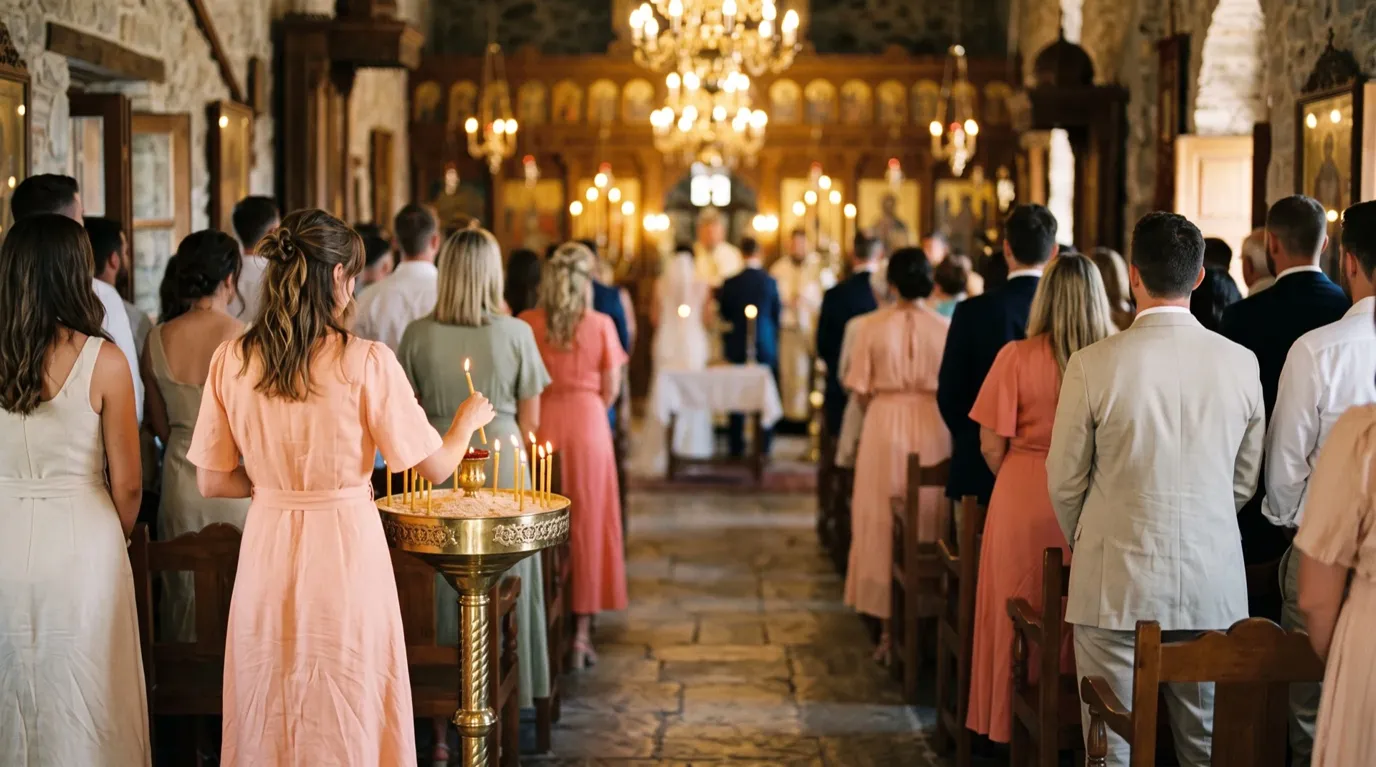
Let's invent a guest called Hannah and fly her from Manchester to Nafplio for her university friend Dimitra's wedding. She isn't real, but her evening is a very common one. It was her first Greek Orthodox wedding, and within ten minutes she had decided everyone around her was being rude. People were chatting by the door. Some had only just arrived. Half the guests were standing outside in the shade.
Nobody was being rude. That is simply how a Greek Orthodox wedding works, and nobody had told her.
This guide is the note Hannah wishes she had been sent. It walks through the ceremony in the order it happens, tells you what is expected of you as a guest (very little), and covers the practical things that actually catch first timers out: the rice, the heat, the queue afterwards and the very late dinner.
TL;DR:
- The church service usually lasts about an hour, sometimes longer. You are not expected to follow the words.
- The crowning is the heart of the service, not the rings. Do not leave before it.
- Rice is thrown during the walk around the table. Pick up a cone at the door if one is offered.
- After the service comes a congratulations line. With 250 guests it can take as long as the ceremony.
- Dinner often starts after 10pm. Eat something in the afternoon.
Plan Your Event
One platform for every occasion: weddings, baptisms, corporate events and private parties.
Before you arrive: the time on the invitation is a guideline
If the invitation says 7pm, the couple will usually arrive a little after. Greek guests know this and time their arrival accordingly. Some come in during the service, which is completely normal.
Our advice for a first timer is still to be there on time. You will get a seat or a decent standing spot, you will see the groom waiting outside with the bouquet (he hands it to the bride when she arrives), and you will not be the person squeezing past an aunt mid hymn.
Many island and village churches are small. Expect a good share of guests to stand outside for the whole service, often listening through an open door. Nobody minds. It's where the shade is.
The ceremony, step by step
The Orthodox wedding has two parts that run straight into each other: the betrothal and the crowning. A priest leads it, a chanter sings much of it, and the couple's sponsor, the koumbaros or koumbara, does the important handling of rings and crowns.
1. The candles
As the service begins, the couple are each handed a tall decorated candle, the lambada. They hold them for most of the service.
2. The betrothal and the rings
The priest blesses the rings and touches them to the couple's foreheads. The koumbaros then swaps the rings between the couple's fingers three times. Three comes up again and again in this service.
This is where the British couple next to Hannah decided it was all over and slipped out for a drink of water. They missed the crowns. Do not be that guest.
3. The crowning, the real climax
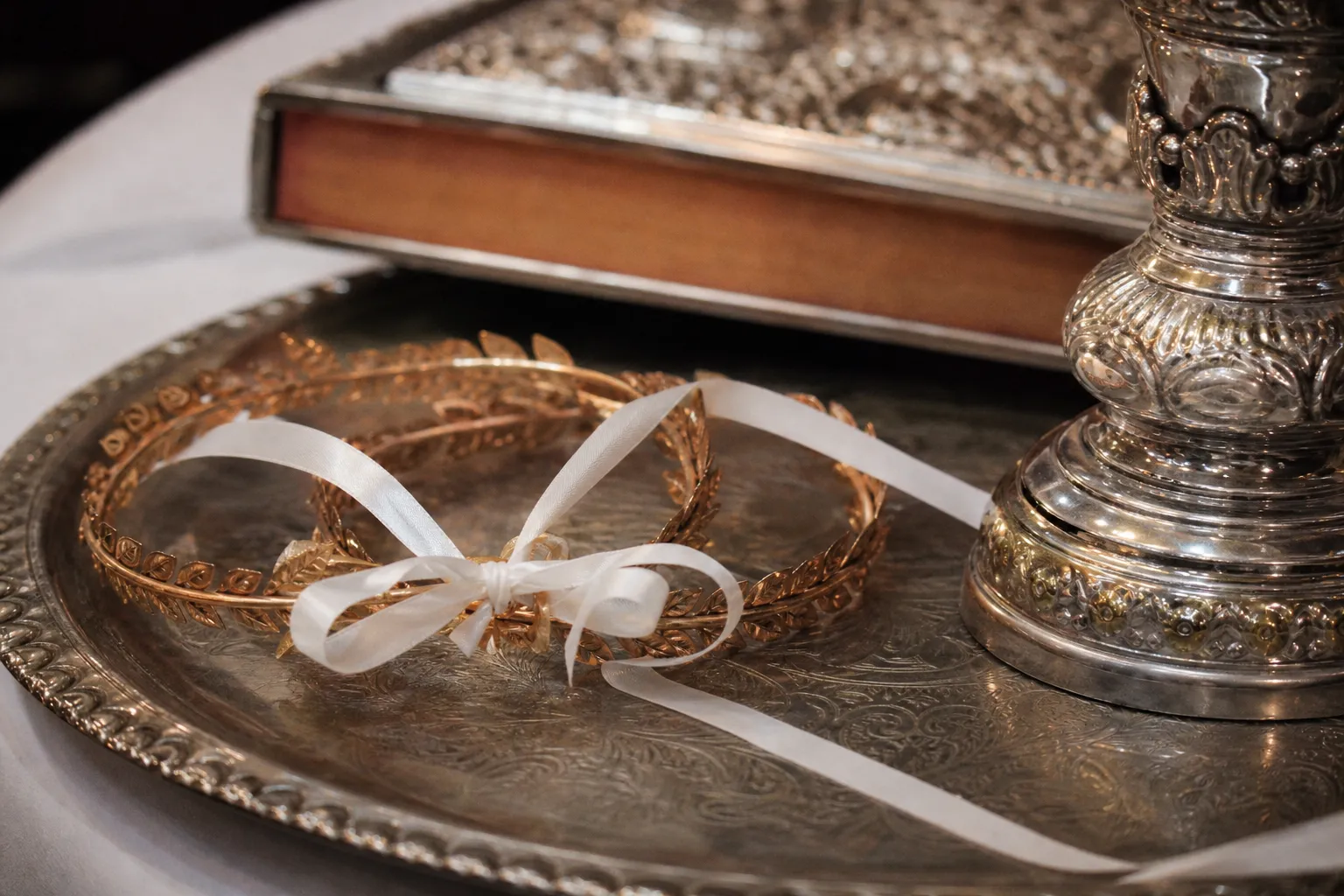
Two crowns joined by a ribbon, the stefana, are placed on the couple's heads and swapped between them three times by the koumbaros. This is the moment the marriage is sealed in the church's eyes. If you want one photo from your seat, this is it, and only if you can take it without standing up.
4. The readings
Two readings follow. During the Epistle, at the line asking the wife to respect her husband, watch the bride. In many weddings she steps on the groom's foot, the crowd laughs, and sometimes the groom gets in first. It is a joke everyone in the room is waiting for.
5. The common cup
The couple sip wine from one cup, three times each. It stands for the life they will now share.
6. The walk around the table, and the rice
The priest leads the couple three times around the small table in front of them, with the koumbaros following and holding the ribbon. The chanter sings a hymn that begins "Isaiah, dance", which is why Greeks call this moment "Isaiah horeve".
This is when the rice comes. Guests throw rice, often mixed with rose petals, at the couple as they pass. Many couples leave small cones of it at the church door. Take one on the way in. If you are near the front, keep your eyes down for a second. Hannah took a handful in the face.
Customs vary by region. In some places the rice comes at the exit instead, so follow the people around you.
7. Removing the crowns and the blessing
The priest removes the crowns, blesses the couple and the service ends.
Pro tip: If you do one thing, learn the phrase "Na zisete" (may you live long and happily). Written Να ζήσετε, it is what everyone says to the couple in the line afterwards (to the parents, Να σας ζήσουν), and saying it in Greek gets a smile every time.
What guests actually do during the service
Very little, which is the good news.
- Sitting and standing. There is no call and response for guests. Sit if there is a seat. If people near you stand, stand too.
- Talking. Quiet conversation at the back and outside is normal. Near the front, keep it down.
- Phones. Photos are usually fine, but stay in your place. The aisle belongs to the photographer and the priest, and parishes generally ask that photography never distracts from the service. Check if the couple have asked for an unplugged ceremony.
- Crossing yourself. Orthodox guests will cross themselves at certain moments. Nobody expects you to if it is not your tradition.
- Leaving and coming back. If you feel faint in the heat, step outside. People do it all the time.
After the service: the line, the favours and the long evening
When the service ends, the couple, their parents and the koumbaros stand at the front or in the churchyard and every guest files past to congratulate them. With 250 guests, Hannah's line took about 40 minutes.
On the way out you will often be handed a bomboniera, a small favour with an odd number of sugared almonds, the koufeta. Keep it. Unmarried guests are sometimes told to put it under their pillow to dream of the person they will marry.
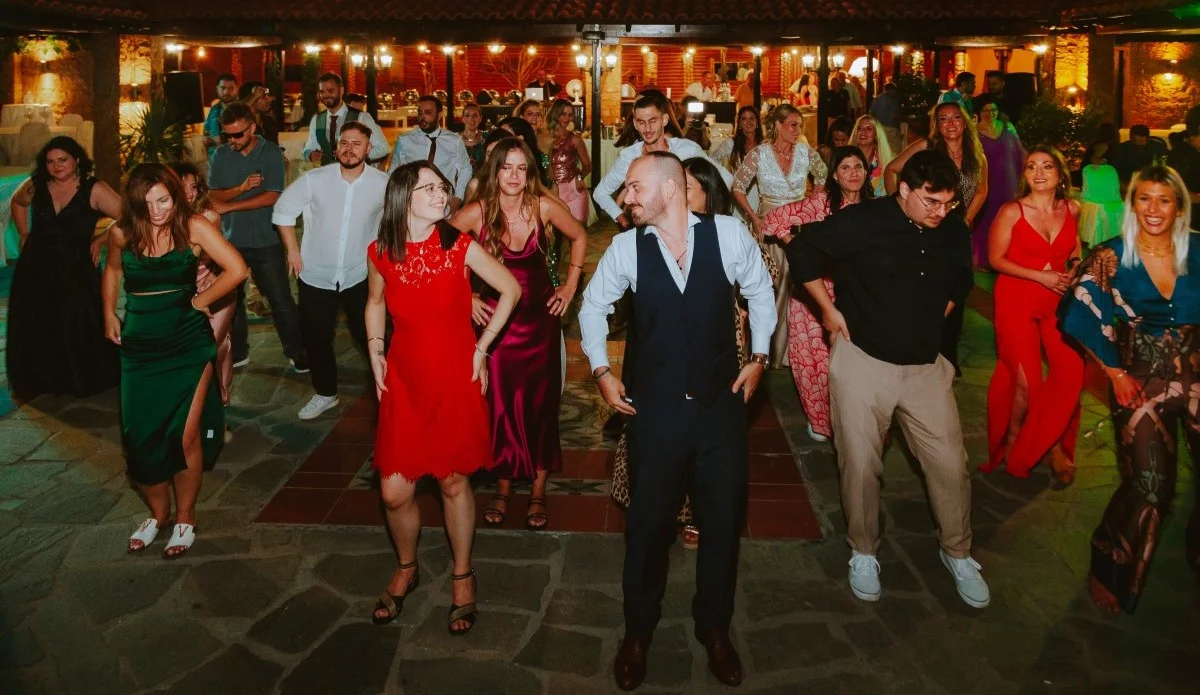
Then the reception. Hannah's service started at 7:15, she reached the venue at 9:30 and dinner arrived after 10. Greek receptions run late and the dancing often goes past 2am. Eat in the afternoon and pace yourself.
A one-page note couples can send their guests
If you are the couple reading this, your foreign guests do not want a translation of the liturgy. They want to know three things. When to arrive, when the rice happens and how long until dinner.
Dimitra's sister spent an hour writing one page in English for the foreign guests and put it on the couple's wedding website. The three guests who read it were the only foreigners who weren't lost. Add one small touch at the church door, a basket of rice cones with a card reading "Isaiah horeve = throw now", and nobody gets caught out.
That page can live in two languages on the same site, which we cover in our guide to a bilingual Greek and English wedding website, and the rest of a two-language wedding day, from speeches to signs, has its own guide. If you want the meaning behind each custom in more depth, our guide to Greek wedding traditions goes further, and couples deciding between the church and the town hall can compare the two in civil vs religious weddings in Greece.
Practical things nobody mentions
- Heat. Summer weddings start in the early evening because of the heat, but a 6pm churchyard in July is still hot. Bring water and a fan.
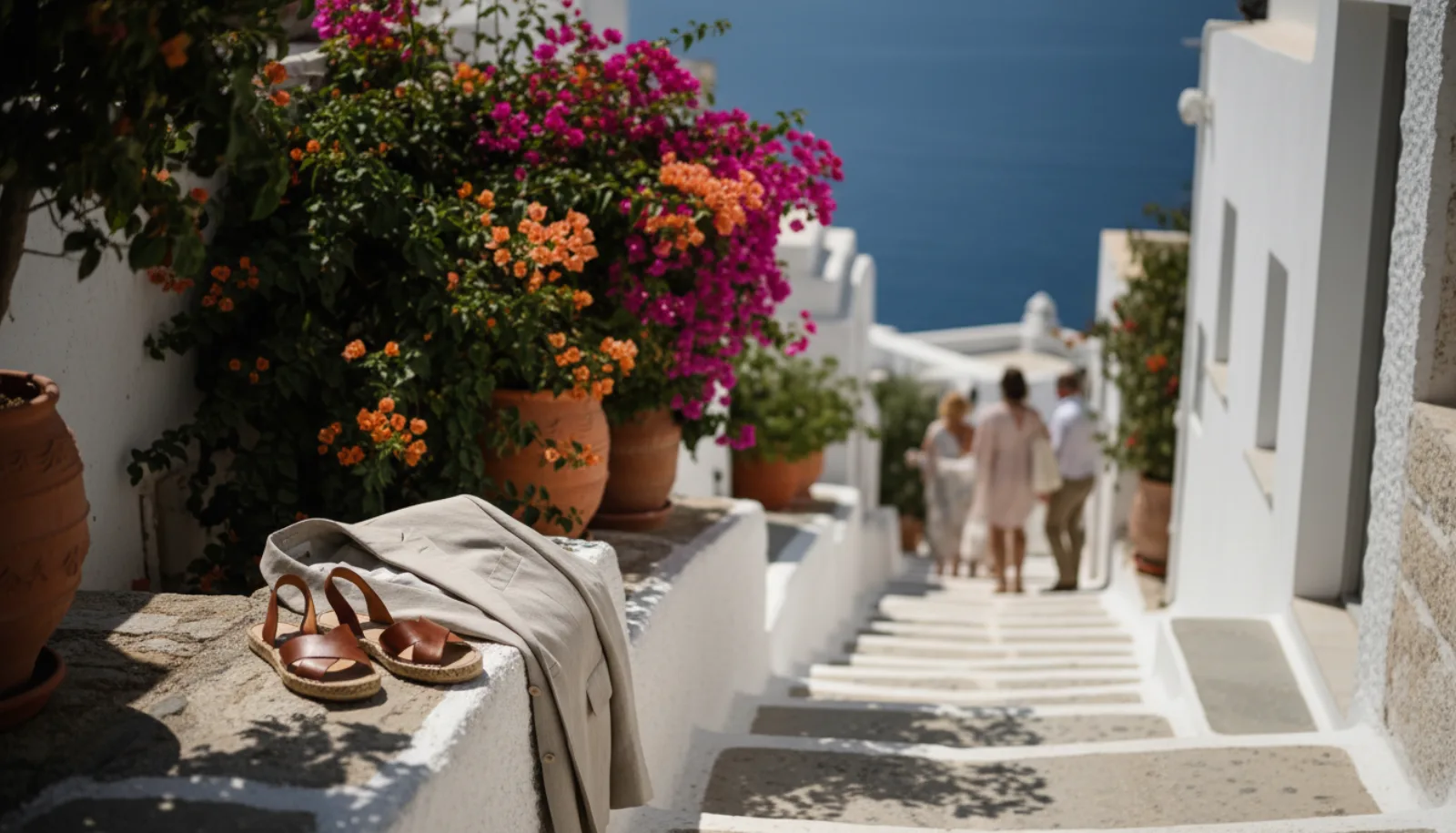
- Shoes. Village squares and island lanes tend to be all cobbles and steps. Heels sink and slip. More on that in our post on questions guests ask at Greek island weddings.
- Covering up. Shoulders are best covered inside the church. A light shawl solves it.
Before you leave the hotel
A Greek Orthodox wedding asks almost nothing of its guests except patience and an appetite. Know that the crowns matter more than the rings, keep a cone of rice in your hand, say "Na zisete" in the line, and eat before you leave the hotel.
For couples, the biggest favour you can do guests from abroad is to explain the day before they arrive. Your foreign guests will spend the service wondering what is going on unless someone tells them. A short note, sent with the invitation and linked again the day before, means they spend it watching you instead.
Inviting guests from more than one country? Send a digital invitation that links to your ceremony note, so everyone opens the same page and arrives knowing when to throw the rice.
Frequently asked questions
How long is a Greek Orthodox wedding ceremony?
The service itself usually takes about an hour, sometimes longer, depending on the priest and the parish. Allow extra time for the congratulations line afterwards, which can take as long again at a large wedding.
Can non-Orthodox guests attend a Greek Orthodox wedding?
Yes. Anyone can attend and nobody is asked about their faith. Guests are not expected to cross themselves, sing or take part, only to be respectful.
When do you throw rice at a Greek wedding?
Usually during the "Isaiah horeve", when the priest leads the couple three times around the table near the end of the service. In some regions it happens as the couple leave the church instead. Follow the guests around you.
Can I take photos during a Greek Orthodox wedding?
Usually yes, from your place and without flash if you can avoid it. Do not step into the aisle, which belongs to the priest and the photographer. If the couple have asked for an unplugged ceremony, keep your phone away.
What do I say to the couple after the ceremony?
"Na zisete", meaning may you live long and happily. To the parents you can say "Na sas zisoun", may they live long for you. Both work in the line after the service.
Recommended
Written by
Marios P
Part of the WhiteClover team, helping couples and hosts plan unforgettable events with modern digital tools. Passionate about simplifying the celebration planning journey.
You Might Also Like
 Inspiration
Greek Wedding Traditions: A Complete Guide
From the stefanoma crowning to koufeta favours, 10 authentic Greek wedding traditions every couple, Greek or not, can weave into their big day.
 Guest Experience
Greek Island Wedding: What Guests Will Ask
Dress code in August heat, cash on small islands, the church up a hill. The questions your guests will ask, answered, so you can send a link instead.
 Digital Tools
One Wedding Site, Greek and English Guests
Half your guest list needs Greek and half needs English. Why two separate sites break, and how to run one that serves both without maintaining it twice.