Advertisement
 Sponsored
Emma and Kostas below are an illustrative couple, built from situations that come up again and again at destination weddings in Greece.
A destination wedding seating chart has a problem a hometown wedding doesn't. At home, most tables fill themselves: school friends, the office, the cousins. When 70 people fly to Crete, a large part of the room has never met, some of them don't share a language, and the people who do know each other came on the same flight and will want to sit together.
So the usual advice ("mix people up so they make new friends") needs adjusting. This is how to seat a wedding abroad so that nobody spends four hours smiling politely at strangers.
Plan Your Event
One platform for every occasion: weddings, baptisms, corporate events and private parties.
Start from travel groups
At a hometown wedding you sort by bride's side and groom's side. Abroad, the more useful unit is the travel group: the people who booked the same villa, shared a hire car from the airport, or flew out together from Manchester.
They have already spent two days together by the time the reception starts. Splitting them up to "mix things up" usually backfires, because the one person they know is now three tables away.
Take Emma, from Leeds, and Kostas, from Chania. They had 72 guests: 31 from the UK, 34 from Greece and 7 friends from their years in Amsterdam. The first draft sorted guests by country and produced a British half of the terrace, a Greek half and an orphan table of Dutch friends. The second draft started from travel groups and built outwards. Every table ended up with at least two people who already knew each other, and most had people from two countries.
Pro tip: Make sure your guest list records who travels with whom before you seat anyone. If couples, families and plus ones are already grouped as one party, they stay together when you move them, and you only make decisions about the mix between parties.
Language bridges: one per mixed table
Mixing nationalities works when every table has someone who can switch languages. Call them bridges: the bilingual cousin, the British friend who lived in Thessaloniki for three years, the Greek colleague who speaks perfect English.
Give each mixed table one or two bridges. With more than that, the bridges end up talking to each other.
Never strand a guest who speaks one language at a table where nobody shares it. A grandmother from Rethymno who only speaks Greek sits with Greek speakers, full stop. Seat her near the dance floor and she'll have the best night of anyone.
Put the bridges in the middle of the table, where they can reach both ends of the conversation.
The speeches and the MC are a separate question, and our guide to a two-language wedding day in Greek and English covers them. For the seating chart, the bridges are what matter.
Long tables or rounds?
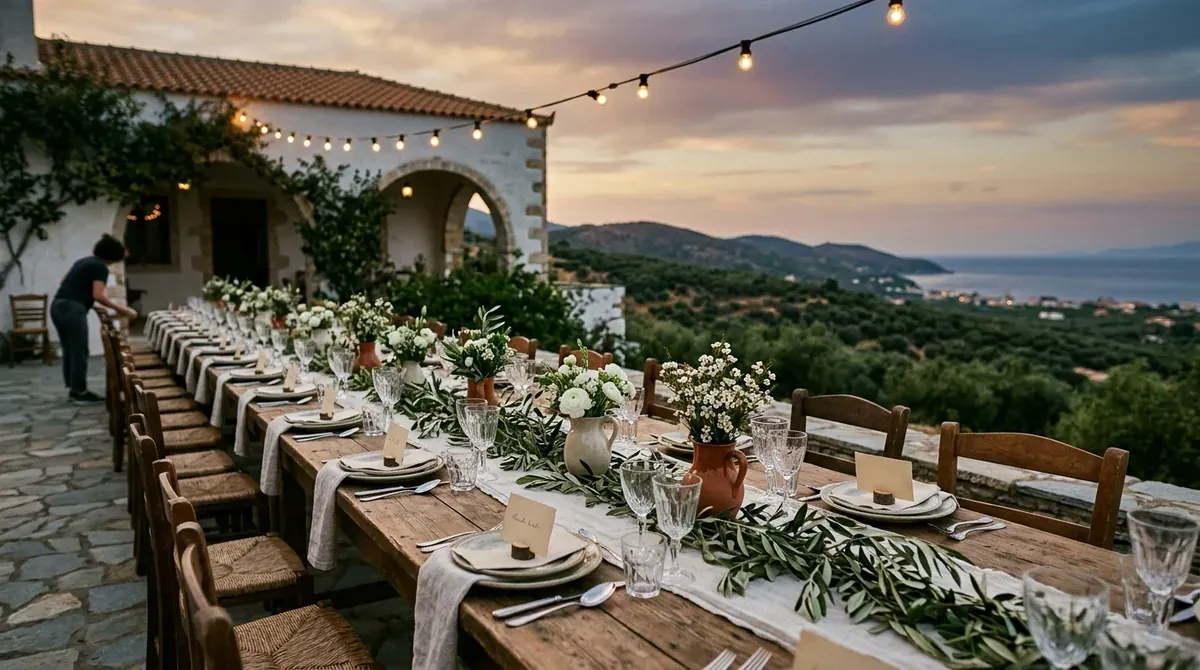
Many venues in Greece, villas, tavernas and island terraces especially, are set up for long tables. Hotels and larger κτήματα usually offer rounds. For a destination wedding of 40 to 80 guests, the shape changes how you seat people.
| Long tables | Round tables | |
| Who you talk to | The three or four people around you | Most of the table |
| Good for | Families, travel groups who already know each other | Mixing guests who have just met |
| Where bridges go | Spaced along the length, one every five or six seats | One or two per table |
| Seating the couple | Middle of the main table, facing the view | A sweetheart table or a small head table |
With long tables, think in clusters of six rather than in whole tables. Emma and Kostas had three long tables of 24. Each one was planned as four clusters, and each cluster had a bridge.
Welcome dinner and reception: two different plans
Most destination weddings have more than one meal with the same guests: a welcome dinner the night before, the wedding itself, sometimes a beach lunch the day after.
We'd leave the welcome dinner unassigned and seat the reception properly. The welcome dinner is where strangers meet. Let them sit where they like and watch who gets on. You will learn more about your seating chart in one evening at a taverna than in a month of guessing.
Then rework the reception plan the next morning. Emma noticed that her Amsterdam friends and Kostas's football friends spent the whole welcome dinner together, so she moved two of them onto the same table for the wedding.
If your planning tool treats each event separately, this is easy. In WhiteClover, the welcome dinner, the reception and the next day's lunch each get their own seating, and you pick which one you are working on from "Seating for" at the top. Adding more than one plan to the same event, a draft next to the real one, costs €3.99 once for that event. The first plan is free.
Where the Greek family sits
If one of you is Greek, a few things tend to matter to the family more than the guest list suggests:
- The κουμπάροι (the wedding sponsors) are usually seated close to the couple, often at the main table or the one right next to it.
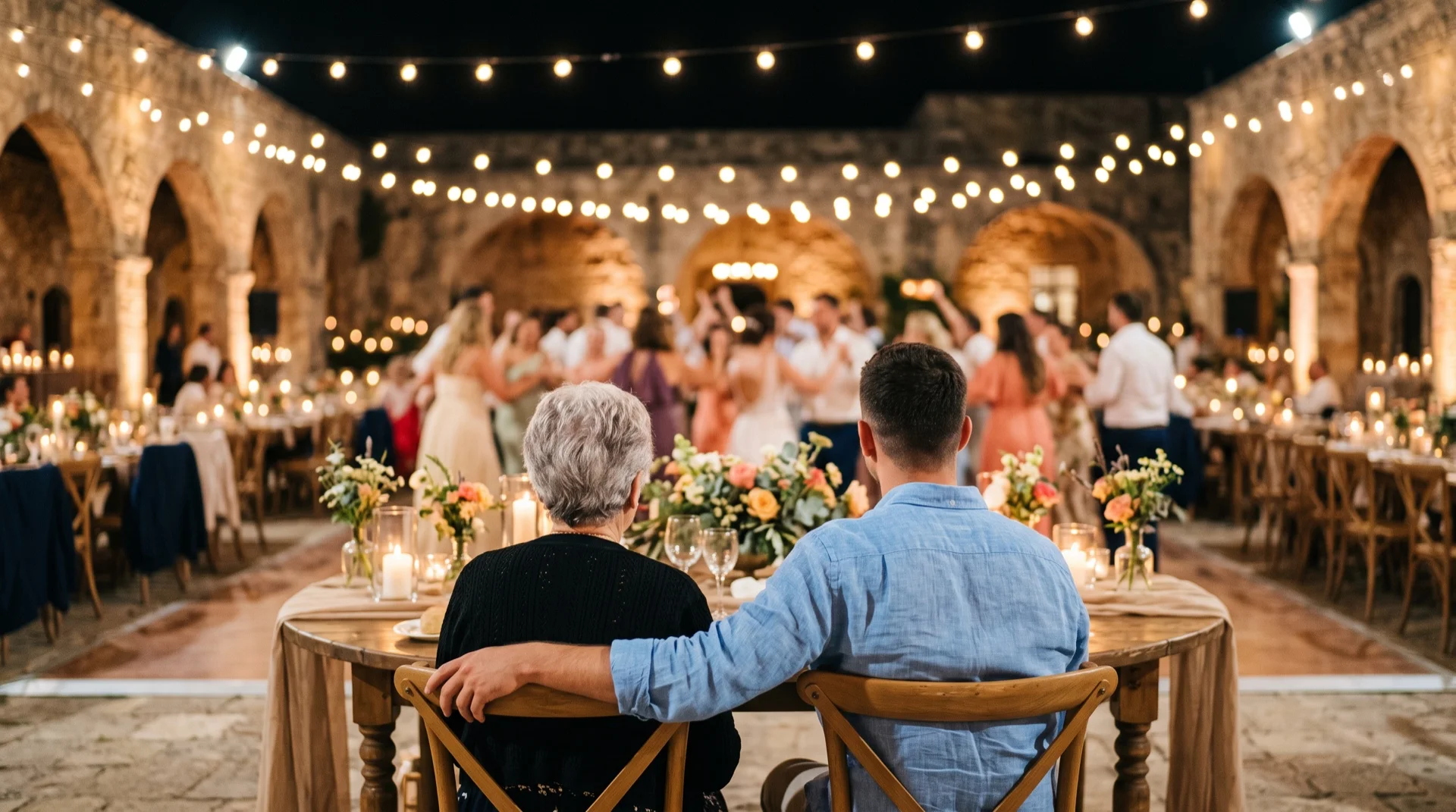
- Parents and grandparents want a clear view of the couple and the dance floor. The first dance is often followed by the whole family dancing, and the older generation will be up for it.
- Greek receptions run late, with dinner often served after 21:00 and dancing until the early hours. Put the guests who want to dance near the DJ and the ones who want to talk further away. That is a better split than Greek and British.
Late changes when guests are flying in
At a destination wedding, someone always misses a connection. Plan for it:
- Keep one or two flexible seats at your most sociable tables.
- Check the plan the morning of the wedding, not the week before. Flight cancellations happen.
- Send the venue a live link instead of a PDF, so the version they print from is the latest one.
When Emma and Kostas lost four guests to a cancelled flight from Gatwick, they moved two tables around at five in the afternoon on their phones. With WhiteClover you tap a guest, then a seat, and "Arrange automatically" can reseat only the guests who are still waiting without breaking up any party. The venue's link always shows the default plan, so the coordinator saw the change without anyone sending a new file.
Telling guests where to sit
A seating board at the entrance works, but at a venue with a long walk from the ceremony terrace, it creates a queue. Many couples now also send each guest their table on their phone, and our guide to how guests find their table compares the options.
In WhiteClover, each seated guest sees "Your table" in the guest app from 2 hours before the event: their table, their seat, their plus one and a small floor plan with their table highlighted. Nobody sees anyone else's seat. If you turn it on, they also get an email with their table at the same time, and a push if they have notifications on.
The short version
Seat by travel group first and put a bridge on every mixed table. Use the welcome dinner as your test run, and keep the plan editable until the day.
If you are planning a wedding in Greece and your seating plan lives in a spreadsheet that three people keep editing, try the WhiteClover seating chart. Tables, automatic arranging, exports, the venue link and "Your table" for guests are free. For the bigger picture of marrying here, start with our page on destination weddings in Greece.
Frequently asked questions
Should I seat guests by nationality at a destination wedding?
Not as a rule. Seat by travel group first, then mix at the table level, with at least one person on each mixed table who speaks both languages. The exception is guests who speak only one language: they should always share a table with people who speak it.
Do we need a seating chart for the welcome dinner?
Usually not. Open seating at the welcome dinner lets guests who have just met find each other, and it shows you who gets on before you finalise the reception plan.
How many people per table at a destination wedding?
The same as anywhere: eight to ten at a round table, depending on its size. At long tables, plan in groups of about six, because that is how far a conversation reaches.
Where do the κουμπάροι sit at a Greek wedding?
Usually at the couple's table or the table next to it. Ask the family. It matters more to them than any etiquette guide.
How do we handle guests who cancel at the last minute?
Keep a flexible seat or two, recheck the plan on the morning of the wedding, and share a live link with your venue so they always print from the current version.
Recommended
Written by
Nicole V.
Part of the WhiteClover team, helping couples and hosts plan unforgettable events with modern digital tools. Passionate about simplifying the celebration planning journey.
You Might Also Like
 Wedding Planning
Two-Language Wedding Day: Greek and English
Running a Greek and English wedding day: the ceremony card, speeches, one bilingual MC, menus, signs and day-of messages, with lines you can copy.
 Wedding Planning
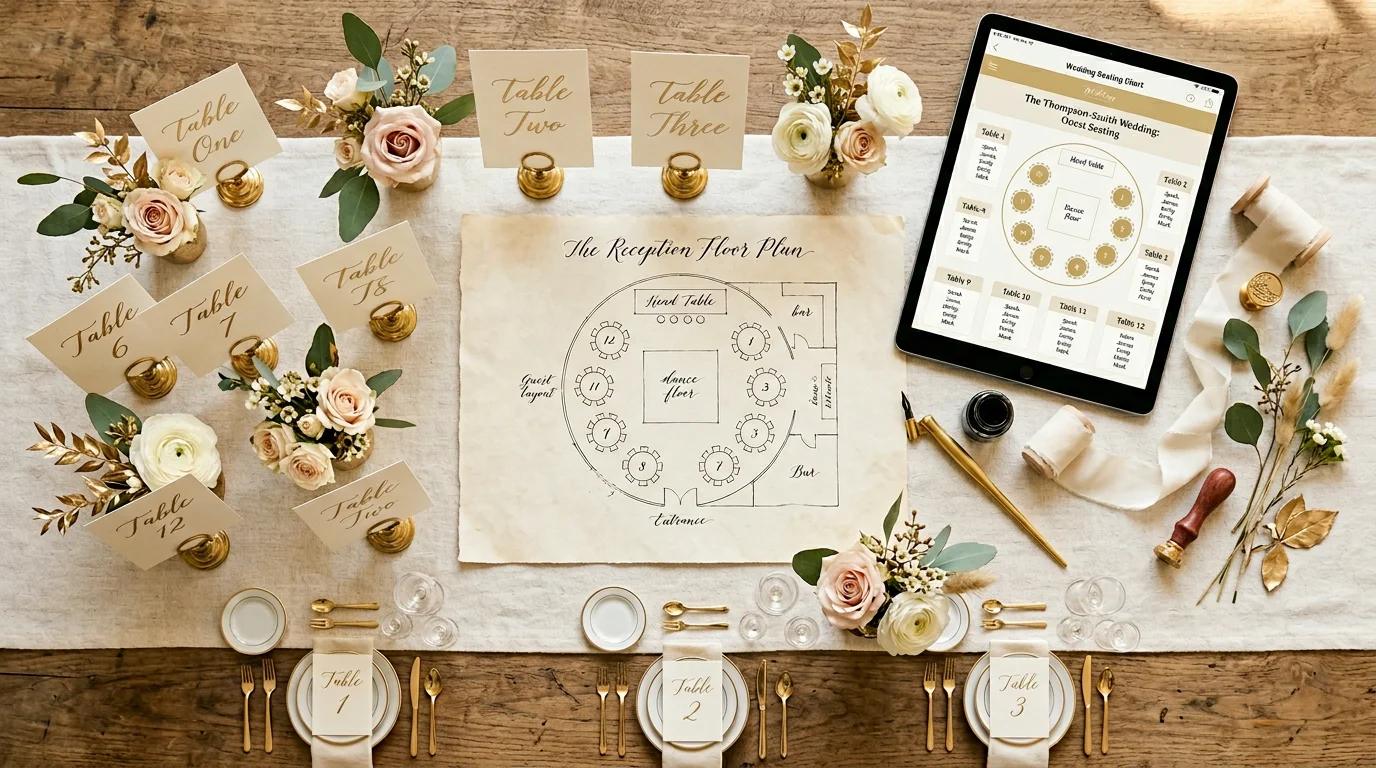
How to Create a Wedding Seating Chart [2026 Guide]
Step-by-step guide to creating your wedding seating chart. Table layout tips, etiquette rules, handling no-shows, and free drag-and-drop tools for 2026.
 Guest Experience
Destination Wedding: Who Pays for Guest Rooms?
Should you pay for guests' accommodation at a destination wedding? Three models, what tends to bother guests, and lines to copy for your website.