Advertisement
 Sponsored
Destination Wedding: Who Pays for Guest Rooms?
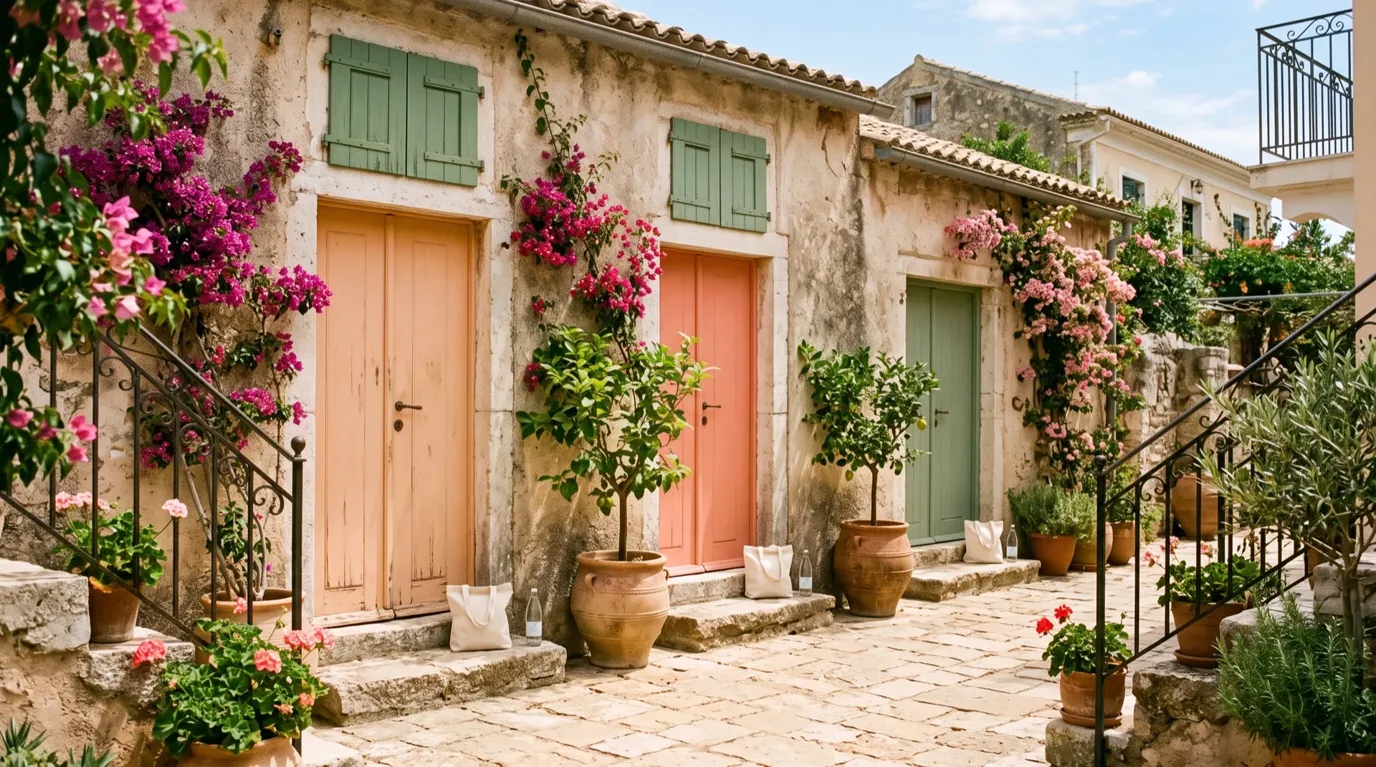
A hypothetical pair shows the problem. Claire is Irish, Yannis is from Athens, and their Corfu villa sleeps 24. They invite 70 people. Claire's mum assumes the beds are for family. Yannis's mum assumes nobody needs one, because in Athens you go home after a wedding. Two families, two completely reasonable defaults, and a spreadsheet with 46 people who did not fit.
Who pays for guest accommodation at a destination wedding is a perennial argument on Reddit's destination wedding forum. One thread asking whether it was fair to charge guests €50 per person per night for on-site rooms at an Italian venue drew 138 comments. Another, titled "Why do you opt for destination wedding if you do not cover accommodation for your guests?", drew 186. There is no single rule. There are three workable models, and one thing guests mind far more than the cost.
TL;DR:
- One model: guests pay for their own rooms, and the couple makes it easy with options at several prices.
- Some couples pay for a small inner circle: parents, grandparents, the wedding party.
- In our view, what stings is rarely the paying. It is finding out late or feeling pushed into one expensive option.
- Say who pays in one plain sentence, early, on your save the date or website.
- Ask in your RSVP who needs a room and for how many nights.
Plan Your Event
One platform for every occasion: weddings, baptisms, corporate events and private parties.
The three models
| Model | Who it suits | What guests say |
| Guests pay, couple helps | Larger weddings | Fine, if told early and given choices (our read) |
| Couple pays for an inner circle | Villa weddings, small hotels | Fine, if the line is clear |
| Couple pays for everyone, or subsidises | Small, all-inclusive weddings | Generous. One guest on Reddit says they expect it |
1. Guests pay, and you make it easy
This is what Claire and Yannis do in our example for everyone outside the villa. They negotiate a block of rooms at a hotel ten minutes away, with a set release date, then list two cheaper alternatives and a couple of apartment options.
We think guests care more about time and options than about a free room. One commenter in a Reddit destination wedding thread described their routine: when the save the date arrives, they "look at the page asap… check the accommodations listed, check flights".
Pro tip: Offer at least three price points: the block hotel, something cheaper in walking distance, and self-catering for families. A single option at one price reads like a requirement.
2. You pay for an inner circle
When the venue has rooms, the question becomes who sleeps there. One clear answer is parents, grandparents, siblings and the wedding party, which in Greece includes the koumbaros or koumbara.
This works when the line is drawn on a principle people can see. "Immediate family and the wedding party" is a rule. "People we like most" is a grudge waiting to happen. Leave it unsaid and, like our example couple, you may find out in May that eight guests believe they are staying in the villa.
3. You pay for everyone
Some couples cover all rooms, which is easiest to afford when the guest list is 20 or 30. One guest in the forums goes further: "Every destination wedding i went, couple paid for everything. If you can't afford that, don't do destination wedding." That is one person's view, and others disagree. Still, it is worth knowing the expectation exists.
A middle path is to pay for the wedding night only, or to cover a welcome dinner instead of rooms. It is a gesture people feel without committing your budget to every night of everyone's stay. If you are weighing it against other costs, our Greece destination wedding budget guide shows where the money usually goes.
What tends to sting
This part is our judgement rather than a survey. In our view, guests object less to paying than to:
- Late information. A friend might tell Claire: "I don't mind €120 a night. I mind not knowing until March." The price is illustrative.
- One expensive option, presented as if it were the only one.
- Minimum stays they did not choose, like a three-night block at a resort.
- Vague wording that leaves them unsure whether a room is included.
All four are communication problems, not money problems. You can solve them without spending a cent more.
Lines for your save the date or website
Pick the lines that match your model and put them on your save the date or website. Plain beats apologetic.
If guests pay their own way:
"Guests are responsible for their own accommodation. We've reserved rooms at [hotel name] until 28 February. Mention our names when you book.""We know a trip to Corfu is a big ask. We've listed options at three prices below so you can choose what works for you.""There are lovely apartments a short walk from the venue, which might suit families better than a hotel."
If you pay for some guests:
"The villa sleeps our parents, grandparents and the wedding party. We've reserved rooms nearby for everyone else.""We'll be in touch personally if we've booked a room for you. If you haven't heard from us, please book your own."
If you cover the wedding night:
"We'd love to host you on the wedding night, Saturday 19 June. Please book any extra nights yourselves."
If you pay for everyone:
"Your room is on us for the two nights of the wedding. Just let us know in your RSVP who you're bringing."
When you want to say "no pressure":
"We understand that traveling can be difficult, so please don't feel pressure to attend if it doesn't work for you."
That last line is quoted word for word from a commenter in a Reddit destination wedding thread. Another commenter in the same thread made the opposite point: a no-pressure note can read as an admission that the trip is an imposition. Use it if it sounds like you, skip it if it doesn't.
Pro tip: Say who pays once, in one sentence, and stop. Three paragraphs of explanation reads as guilt, and guilt invites negotiation.
Room blocks on Greek islands
A few things are specific to Greece. Many island hotels are small, so a "block" may mean ten rooms rather than fifty, split across two places. Release dates matter: on a popular island in June, rooms you release in April may be gone the same day. Ferries add a night for many guests, which our guide to island wedding travel and ferries covers in detail.
And Greek guests from the mainland may need less: some will prefer one night and the morning boat back. Do not assume everyone needs the same thing. Ask.
Ask, don't guess
The cleanest fix is a question in your RSVP: "Do you need accommodation? Which nights?" You will know who needs a room, who is staying with a cousin, and who thinks they are in the villa, before it becomes a problem in May. If your grandparents won't fill in a form, add their answer yourself from the dashboard.
With an online wedding RSVP you can add that question to your RSVP form and see every guest's answer in one list. Our post on what Greek island guests will ask lists the other questions worth answering in advance.
So, who pays?
Guests paying their way is fine, and so is covering an inner circle. Paying for everyone is generous, not expected. Choose the model your budget can carry without resentment, then tell people early, clearly and once.
Your guests are giving up leave, flights and ferries to be there, and our leave maths for a Greece wedding shows how much. Clear room details are the easiest thing you can give back.
On WhiteClover, one wedding website carries the travel and room-block details in its Q&A, and the RSVP asks about nights, so guests find everything without messaging you. Venue booked? Set up your RSVP with a rooms question and send it with the invitations.
Frequently asked questions
Is the couple expected to pay for guests' hotel rooms at a destination wedding? Not necessarily. A common approach is that guests pay for their own rooms and the couple helps by reserving a room block and listing options. Some couples cover parents and the wedding party.
How do you tell guests they have to pay for accommodation? In one plain sentence on your save the date or website, for example: "Guests are responsible for their own accommodation. We've reserved rooms at [hotel] until [date]." Add options at different prices.
Should we pay for the wedding party's rooms? Some couples do, especially at villa venues. It is a kind gesture, not a requirement. Whatever you decide, tell them early so nobody books twice.
When should we tell guests about accommodation? With the save the date. For a Greek island in summer, 9 to 12 months out is ideal. Our hunch: late information bothers guests more than the price.
Is it rude to ask guests to pay for an on-site villa? Not if it is optional and clearly priced, with cheaper alternatives nearby. It feels rude when it is the only option and guests learn the price late.
Recommended
Written by
Dimitris S.
Part of the WhiteClover team, helping couples and hosts plan unforgettable events with modern digital tools. Passionate about simplifying the celebration planning journey.
You Might Also Like
 Guest Experience
Greek Island Wedding: What Guests Will Ask
Dress code in August heat, cash on small islands, the church up a hill. The questions your guests will ask, answered, so you can send a link instead.
 Wedding Planning
Island Wedding Travel: Ferries and Transfers
Which port, which ferry, and why the last boat matters. What to put on your travel page so island guests stop asking you the same question forty times.
 Wedding Planning
Greece Destination Wedding Budget Guide
Planning a destination wedding in Greece? Get a real cost breakdown: venue, catering, legal fees, hidden costs, and a tiered budget for 20 to 120 guests.