Advertisement
 Sponsored
If you grew up in Melbourne or Manchester with kitchen Greek, enough to order but not enough for a liturgy, and a cousin in Thessaloniki has just asked you to be koumbaros, you probably said yes before you knew what it meant. That's fine.
Here is the short version: the koumbaros (or koumbara, for a woman) is the wedding sponsor in a Greek Orthodox ceremony. It's a religious role first and a "best man" role a distant second. You swap the rings, you swap the crowns, you pay for a handful of very specific things, and the bond is meant to last well beyond the wedding.
This guide covers who can be a koumbaros, what you do in church, what it typically costs in 2026, and a timeline so nothing lands on you in the last week.
TL;DR: You must be Orthodox for a church wedding. Budget roughly €800 to €3,500 (easywedding's 2026 range), and start your paperwork early.
- In church, you exchange the rings three times and the crowns three times, and you finish the wine left in the shared cup.
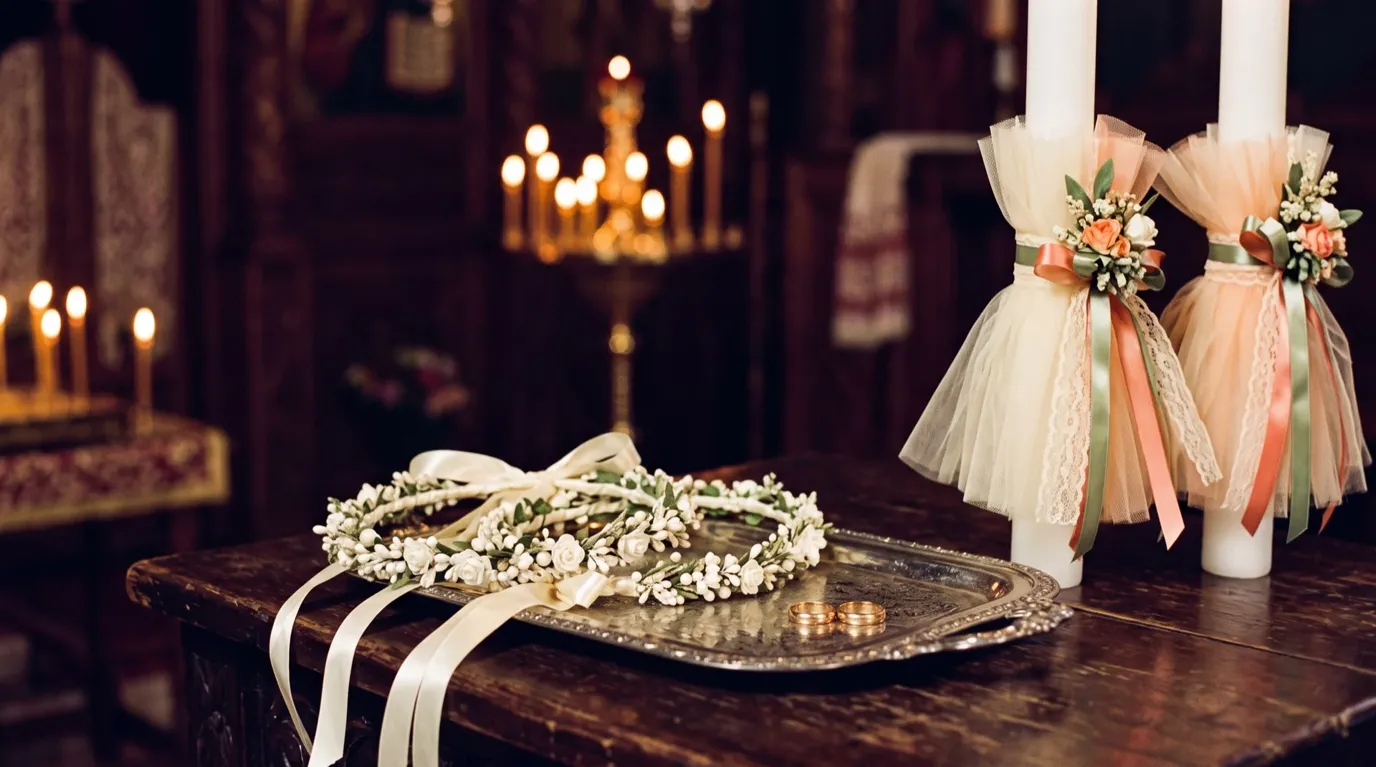
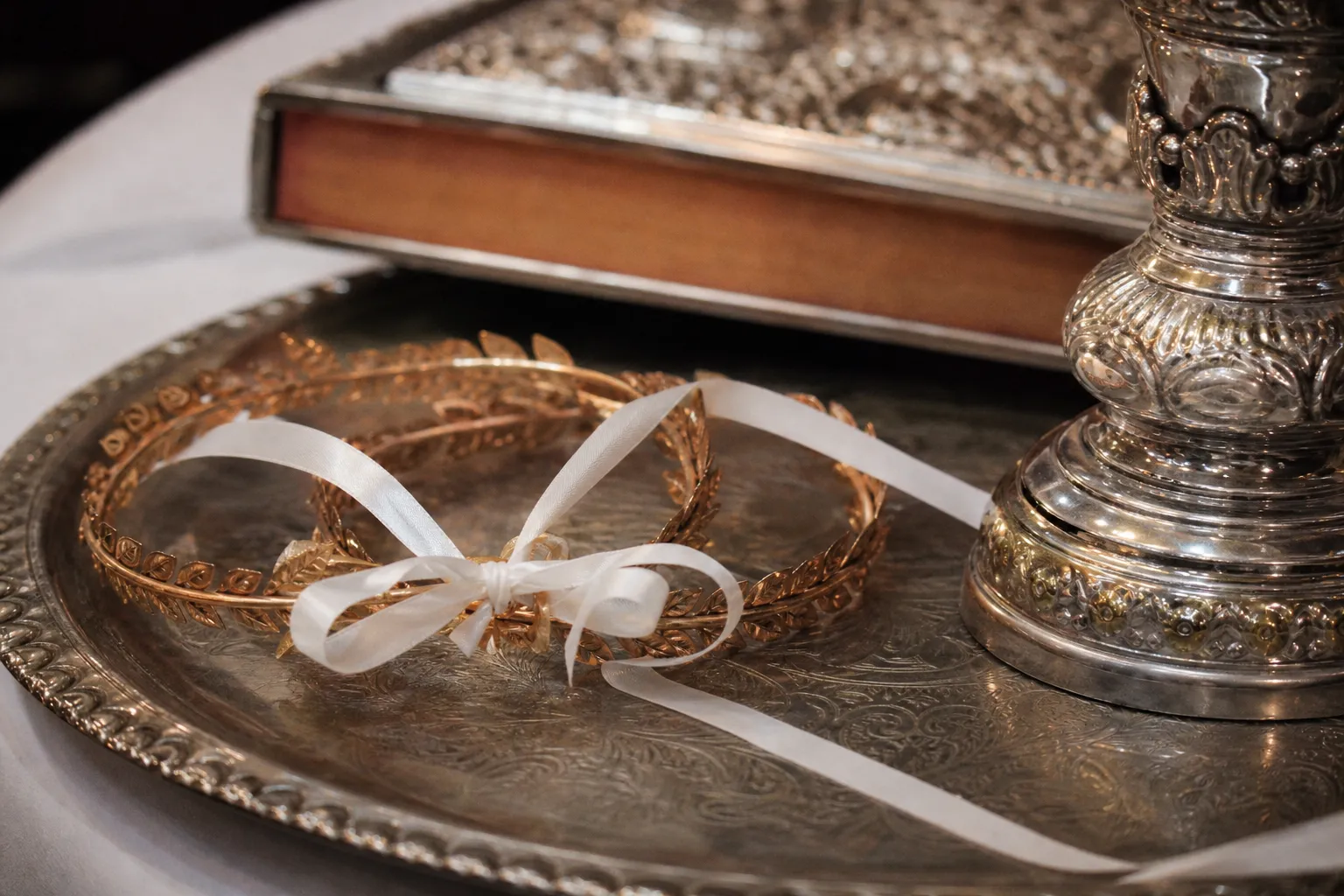
- You traditionally pay for the crowns, the candles and the tray set, plus a gift to the couple.
- Church decoration and the priest's fee vary by family. Agree who pays, out loud, early.
- If your baptism certificate is from a church abroad, a Greek parish may need it validated. That takes time.
Plan Your Event
One platform for every occasion: weddings, baptisms, corporate events and private parties.
What a koumbaros actually is
In English, people often translate koumbaros as "best man". That's half true. The best-man part (stag weekend, speech, keeping the groom calm) is optional and borrowed. The koumbaros part is sacramental: you are the sponsor of the marriage, and you physically take part in the service.
The bond isn't supposed to end at the reception. One Greek wedding shop's guide repeats the old saying that the koumbaros who marries a couple should also baptise their first child. Not every family expects it, but it's worth knowing before you say yes.
Who can be a koumbaros
For a church wedding in Greece, the rule is clear. A parish in Athens puts it plainly: the koumbaroi "must be Orthodox Christians", and if they're married themselves, they must have had a church wedding. A civil marriage or a cohabitation agreement on its own isn't enough. Greek Orthodox parishes abroad say the same, for example the Annunciation church in Rochester, New York: "an Orthodox Christian in good standing".
You'll usually need to bring:
- A baptism certificate. If you were baptised abroad, the Agios Therapon parish in Athens asks for it to carry validation by the Holy Synod of the Church of Greece.
- A recent family status certificate, and if you're married, proof that it was a church wedding. If you've never been registered in Greece, ask the parish what it accepts instead.
Requirements vary between dioceses, so ask the couple to check with their parish as soon as you agree.
Not Orthodox? You can still be part of it
If you're a non-Orthodox friend or partner and the couple asks you, it isn't a snub that you can't sponsor the church wedding. It's the Church's rule, and can you marry without a koumbaros sets out the couple's options. A couple can still give a close non-Orthodox friend another role: a reading at the reception, the speech, looking after the rings until the church. At a civil wedding there's no koumbaros in the religious sense, only witnesses who sign the marriage declaration. The Municipality of Western Mani, for example, notes that the declaration is signed by the mayor, the spouses and two witnesses. Our guide to civil vs religious weddings in Greece explains the paperwork.
What you do in church, step by step
- Arrive early, with the crowns, the rings and the candles if the couple haven't brought them.
- The rings. The priest blesses them, then you swap them between the couple's ring fingers, three times.
- The crowns. The priest places the stefana on their heads. You cross your hands and swap the crowns between them three times.
- The common cup. The couple drink sweet red wine from the same cup. Tradition says whatever is left is finished by the koumbaros and koumbara.
- The walk around the table, known as "Isaiah, dance". This is when guests may throw rice. Keep your head down.
- Signing. You'll sign the church paperwork after the service.
For the meaning behind each moment, our Greek Orthodox wedding guide for guests walks through the whole service.
Pro tip: Practise the crown swap at home with two dinner plates. Crossing your arms the right way round in front of 200 people is harder than it looks, and nobody wants a crown on the floor.
What a koumbaros pays for in 2026
The Greek wedding platform easywedding.gr published a 2026 price guide for koumbaros costs. We've used their ranges here, alongside what's traditionally expected.
| Item | Typical range (easywedding, 2026) | Traditionally paid by |
| Wedding crowns (stefana) | €50 to €500 | Koumbaros |
| Wedding candles | €30 to €150 | Koumbaros |
| Tray, carafe and cup set | €50 to €200 | Koumbaros |
| Priest's fee | €100 to €300 | Varies by family |
| Parish charge | €100 to €500 | Varies by family |
| Church decoration | €200 to €2,000 | Varies by family |
| Gift to the couple | €100 to €500 and up | Koumbaros |
| Your suit | €200 to €800, or €80 to €150 to hire | You |
easywedding's total for a church wedding is roughly €800 to €3,500, before any stag party or travel. For a civil wedding they put it at €300 to €1,000.
To make that concrete: a koumbaros who picks silver-plated crowns at around €150, mid-range candles and a simple tray set, and gives €500, lands somewhere near €900 before travel. If the groom's parents cover the church flowers, agree that on a phone call months ahead, not on the morning of the wedding.
If you're also wondering how your envelope compares to other guests', our guide to how much money to give at a wedding has the ranges.
A koumbaros timeline, from yes to after
| When | What to do |
| As soon as you say yes | Ask the couple which parish, and start your baptism certificate. If it's from abroad, start now. |
| 4 to 6 months before | Talk money with the couple: crowns, candles, decoration, priest. Write down who pays what. |
| 2 to 3 months before | Order the crowns and candles. Check the style with the couple. |
| 1 month before | Hand your documents to the parish. Book your suit. Plan the stag only if they want one. |
| The week before | Collect crowns, candles, tray set and a small bag of white koufeta for the tray. Learn the crown swap. |
| The day | Arrive early. Keep the rings in your inside pocket, not your trousers. |
| After | Send the couple a message the next day. And maybe start thinking about a christening. |
For the tray, you'll need an odd number of white koufeta. Our guide to how many koufeta per guest covers that too.
Our honest take
Say yes for the right reasons, then ask about money in the first conversation, not the last. The koumbaros isn't a cash machine. The couple chose you because they trust you to stand next to them, steady, holding two crowns and a lot of emotion. Simple crowns and an honest budget are completely fine. Nobody at the wedding is weighing the silver.
Make it easy for your koumbaros
Your koumbaros is about to spend real money and a fair bit of nerve on your wedding. The kindest thing you can do is put the details in one place: the parish, the paperwork, the time to arrive and who's paying for what.
WhiteClover's planning hub lets you track costs, vendors and notes in one place, and your guests get the timings and directions from the same link as your invitation. When the paperwork is sorted, send your invitations from the same account.
FAQ
What does a koumbaros do at a Greek wedding?
The koumbaros sponsors the marriage. In church, they exchange the rings three times, swap the crowns three times and take part in the shared cup. They also traditionally provide the crowns, candles and tray set.
Can a non-Orthodox person be koumbaros?
Not for an Orthodox church wedding. Greek parishes require the koumbaros to be an Orthodox Christian, and married koumbaroi to have had a church wedding. At a civil wedding, a trusted friend can be one of the two witnesses.
How much does it cost to be a koumbaros?
easywedding.gr's 2026 guide puts the total for a church wedding at roughly €800 to €3,500, depending mainly on the crowns, church decoration and the gift. A civil wedding costs far less.
Who pays for the church decoration?
It varies. In some families the koumbaros pays, in others the couple or their parents do. Agree it early so nobody books a florist twice.
Does the koumbaros have to baptise the first child?
It's a tradition, not a rule. elxis.com notes the koumbaros often becomes godparent to the couple's children, but couples are free to choose someone else. Talk about it with the couple if it matters to you.
Recommended
Written by
Dimitris S.
Part of the WhiteClover team, helping couples and hosts plan unforgettable events with modern digital tools. Passionate about simplifying the celebration planning journey.
You Might Also Like
 Guest Experience
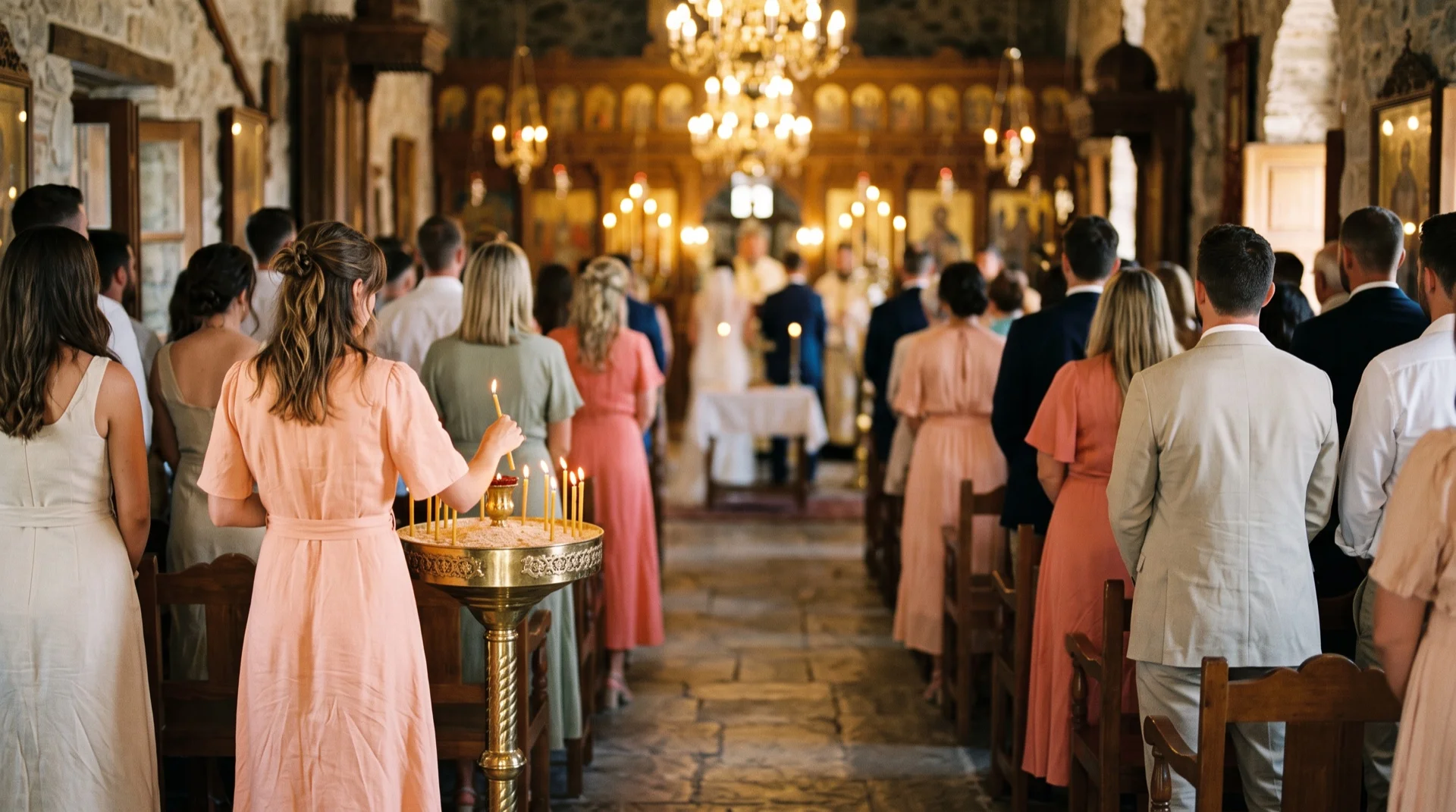
Greek Orthodox Wedding: A Guide for Guests
Your first Greek Orthodox wedding? How long it lasts, when to stand, what the crowns mean, when the rice flies and why dinner starts at ten. A guest's guide.
 Guest Experience
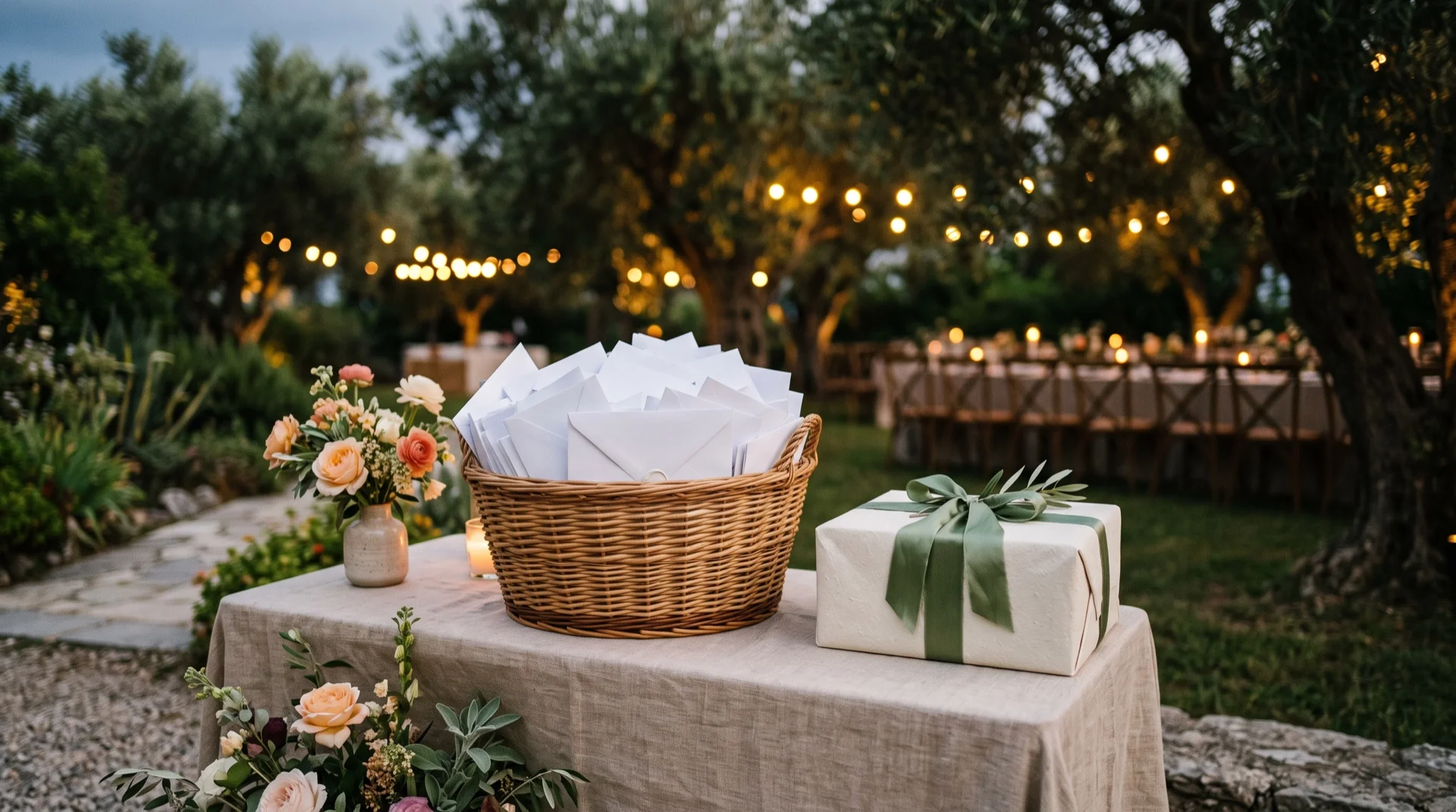
How Much Money to Give at a Wedding (2026 Guide)
How much money to give at a wedding in Greece, Cyprus, the UK and the US: honest ranges by relationship, the cover-your-plate rule, and what changes abroad.
 Inspiration
Greek Wedding Traditions: A Complete Guide
From the stefanoma crowning to koufeta favours, 10 authentic Greek wedding traditions every couple, Greek or not, can weave into their big day.