
Advertisement
 Sponsored
Best Day for a Greece Wedding: The Leave Maths
Our worked example is Rosie, a fictitious bride from Birmingham. She prices her Paros venue before she prices her guests. Friday looks like the obvious day. Then she counts what a Friday island wedding costs a London friend in annual leave: a Thursday flight, a Friday ferry, a Monday flight home. Two days off at least, for a party that lasts one evening.
Choosing the day of the week for a Greece wedding is a quiet trade. The venue's price drops midweek, and your guests' leave goes up. This guide puts numbers on both sides so you can choose with your eyes open, and it covers the two Greek calendar rules international couples usually find out too late: the church dates when Orthodox weddings are not held, and the paid marriage leave you may be owed if one of you works in Greece.
TL;DR:
- A Saturday island wedding costs most European guests 1 to 2 days of leave. A Wednesday costs about 3.
- Long-haul guests (US, Australia) need roughly a week whatever day you pick, so optimise for your European majority.
- Orthodox churches do not hold weddings in Lent, on 1 to 15 August and 29 August, or on 18 to 24 December (per a parish of the Archdiocese of Athens). Check before you book a venue.
- If you are employed in Greece, the law gives you 5 paid working days of marriage leave (6 on a six-day week), separate from your annual leave. Your guests get nothing extra.
- Put the leave maths on your wedding website. Guests appreciate being told plainly.
Plan Your Event
One platform for every occasion: weddings, baptisms, corporate events and private parties.
The leave maths, day by day
These figures assume a guest who works Monday to Friday in Europe, flies to Athens or straight to an island airport, and needs about one travel day each way. Mainland weddings near Athens can shave half a day off each side. Islands with no airport add a ferry and often a night.
| Wedding day | Typical trip | Days of leave | What guests say |
| Saturday | Fri in, Sun or Mon out | 1 to 2 | The default. Nobody complains. |
| Friday | Thu in, Sat or Sun out | 2 | Fine for most, harder for teachers and shift workers |
| Sunday | Sat in, Mon out | 1 | Cheapest for guests, but the Monday flight home is brutal |
| Thursday | Wed in, Sun out | 3 | Guests often turn it into a long weekend, which is nice if they can |
| Wednesday | Tue in, Thu or Fri out | 3 | Commits everyone to most of a working week |
One commenter on a Reddit thread about exactly this question put it simply: "taking 2 days off versus 5 really adds up." Another reported a Tuesday wedding in Greece where "not a single person mentioned it" and attendance beat expectations. Both can be true. A Tuesday works when most guests treat the trip as their summer holiday anyway. It hurts when they had other plans for that leave.
For context on how much leave people actually have: UK workers on a five-day week are entitled to at least 28 days a year, and employers may count bank holidays inside that figure, according to GOV.UK. In the US there is no federal requirement for paid vacation at all. The Department of Labor states that the Fair Labor Standards Act "does not require payment for time not worked, such as vacations". An American guest flying to Crete may be spending half their year's leave on you.
Pro tip: Do the maths for your actual guest list, not a typical one. If 60 of your 90 guests live in one city, pick the day that is kindest to that city's flights.
The venue discount, honestly weighed
Midweek is often cheaper. One couple planning a Greek wedding reported on Reddit that at their venue "Friday is 50% more expensive than Sun-Thurs". Prices vary by venue, so ask yours for a day-by-day quote. In our example, say Rosie's venue quotes €3,000 less for a Wednesday. That figure is illustrative, not a market rate.
Her calculation goes like this: 50 UK guests, each needing 1 to 2 extra days off for a Wednesday instead of a Saturday. That is 50 to 100 days of other people's holiday to save €3,000. She stays with Saturday.
We think that is the right instinct when your guest list is mostly European. The exception is when nearly everyone is travelling a long way. If your guests are spending a week in Greece regardless, the wedding day inside that week barely changes their leave, and the midweek price is a genuine saving.
Greece's church calendar: the dates you cannot have
If you want an Orthodox church ceremony, the calendar matters before the venue does. A parish page from the Archdiocese of Athens lists when weddings are not held:
- During Great Lent, from Cheese Sunday until Easter.
- From 1 to 15 August, and on 29 August.
- From 18 to 24 December.
- On the days of Christmas, Easter, Pentecost and Epiphany.
Exceptions exist only for serious reasons and need special permission. Other Metropolises can differ in detail, so ask the church before you pay a venue deposit. Easter moves every year, which shifts Lent with it: a couple planning a spring wedding needs that year's Orthodox Easter date, not the Western one.
The August rule is easy to miss if you picture a Greek wedding in high summer. In our example, it is the groom's mother who spots Rosie's draft date of 8 August.
For a civil ceremony at a town hall these church dates do not apply, though town halls keep their own office hours and some only marry on set weekdays. Our guide to civil vs religious weddings in Greece covers the difference.
If you work in Greece: your own marriage leave
This part is for the couple, not the guests. Greek employment law gives a worker paid leave for their own wedding:
- Private sector: 5 working days on a five-day week, or 6 on a six-day week, with full pay. It also applies when you sign a civil partnership (σύμφωνο συμβίωσης). The Ministry of Labour cites Article 39 of Law 4808/2021 and the national collective agreements of 1993 and 2000 to 2001. It does not come out of your annual leave.
- Public sector: 5 working days with pay under Article 50 of the Civil Servants' Code (Law 3528/2007), for permanent staff and those on open-ended contracts. You apply to your HR department, and it is granted shortly before or after the wedding. It cannot be carried forward to later.
Your guests, Greek or not, have no equivalent. A cousin taking the Monday off after your Saturday wedding uses their ordinary leave.
Pro tip: If one of you works in Greece, the marriage leave pairs well with a Saturday wedding: take the five working days the week after and you have nine days in a row before touching annual leave.
Don't confuse the two "marriage licences"
Search "wedding leave Greece" or the Greek "άδεια γάμου" and you will find two unrelated things. One is the time off above. The other is the marriage permit issued by the town hall or the Church before any wedding can happen. For foreigners that paperwork is its own project, and the roughly one-week wait for the permit is often misreported online as a residency rule. It isn't. Our Greece marriage laws guide for foreigners walks through the documents.
How to tell guests without sounding demanding
Guests rarely object to the day you pick. They object to finding out late. Once you have a date, say three things early:
"We're getting married on Saturday 12 June on Paros. If you work Monday to Friday, plan on Friday and Monday off.""The welcome drinks on Friday are optional. Arriving on the Saturday morning ferry is completely fine.""We know this is a big trip. Please don't feel you have to stay longer than suits you."
Send the date as soon as it is fixed, ideally 9 to 12 months ahead for an island, so people can request leave before their colleagues book the same week. A save the date does exactly this job, and the ferry and flight details can follow later on your wedding website. Our post on the questions island wedding guests ask shows what else to answer before anyone texts you.
Saturday, Wednesday or somewhere between
With a mostly European guest list, Saturday is usually the kindest day for guests' leave, by the maths above. Pick midweek only when the saving is real and your guests are travelling far enough that the extra days barely register. Whatever you choose, check the church calendar first, then the venue, then tell people the leave cost in plain words.
Planning a wedding abroad means making decisions on behalf of people who are not in the room: their budgets, their leave, their ferries. It is easy to optimise the parts you can see in a spreadsheet and miss the parts your guests carry.
With WhiteClover you can send your save the date, then share one page with the date, the leave maths and the travel details, and see who is coming as the replies arrive. Once your date is fixed, send your save the date and let the leave requests start early.
Frequently asked questions
What is the best day of the week for a destination wedding in Greece? For guests mostly based in Europe, Saturday usually costs them the least leave, about 1 to 2 days. If most guests come from the US or Australia, they will take about a week anyway, so a cheaper midweek date costs them little extra.
Can you get married in a Greek Orthodox church in August? Not from 1 to 15 August or on 29 August, according to a parish of the Archdiocese of Athens. The second half of August, apart from the 29th, is generally possible. Confirm with the specific church.
How many days of marriage leave do you get in Greece? Private-sector employees get 5 paid working days on a five-day week or 6 on a six-day week, separate from annual leave. Public servants get 5 paid working days under Law 3528/2007. Your own sector agreement may say more, so check it.
Do wedding guests get time off work in Greece? No. Greek marriage leave covers only the person getting married. Guests use their ordinary annual leave.
How far ahead should we tell guests the date? For an island wedding, 9 to 12 months is kind. It gives guests time to request leave and book ferries and rooms before prices climb.
Recommended
Written by
Konstantinos P.
Part of the WhiteClover team, helping couples and hosts plan unforgettable events with modern digital tools. Passionate about simplifying the celebration planning journey.
You Might Also Like
 Wedding Planning
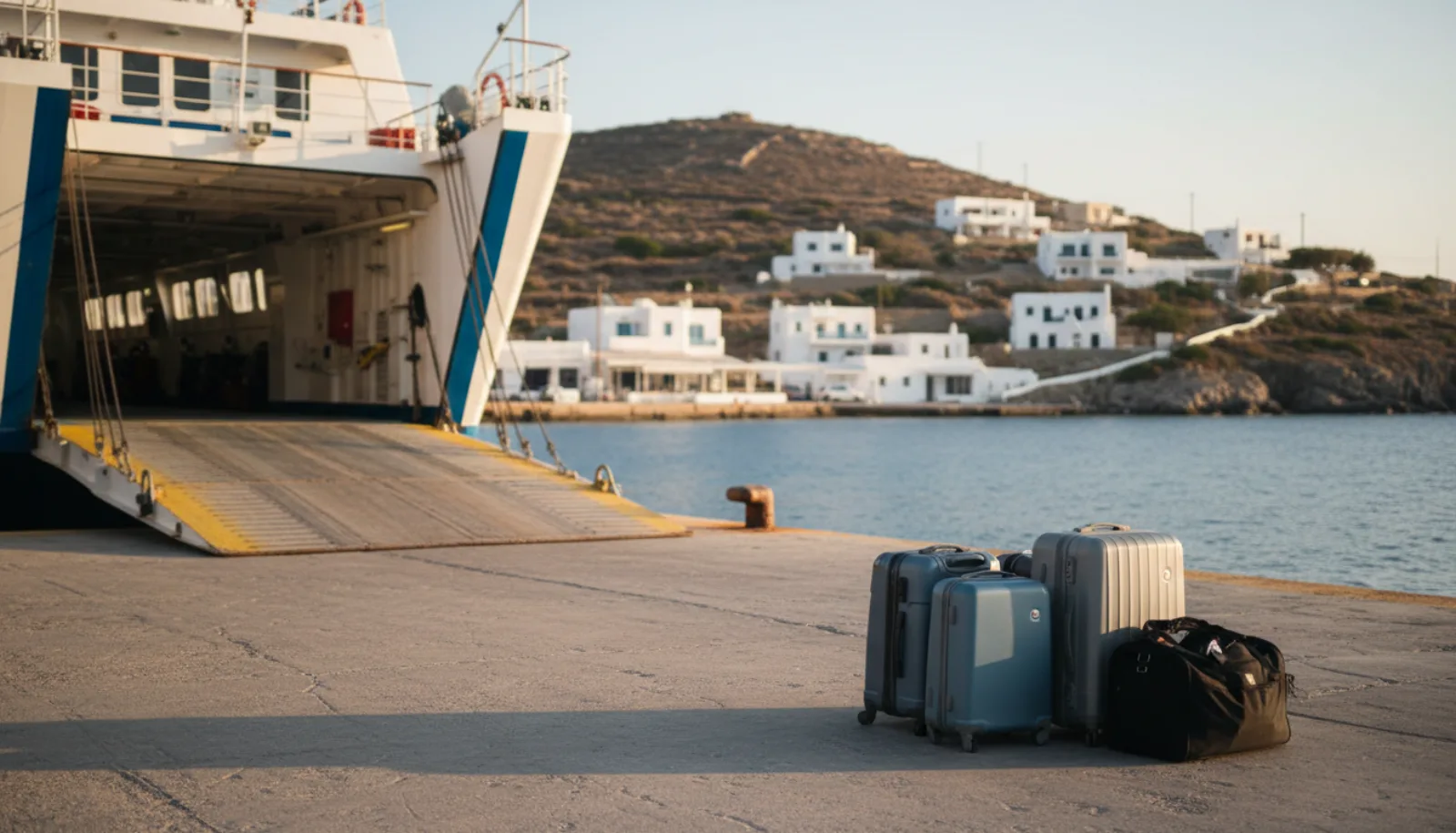
Island Wedding Travel: Ferries and Transfers
Which port, which ferry, and why the last boat matters. What to put on your travel page so island guests stop asking you the same question forty times.
 Guest Experience
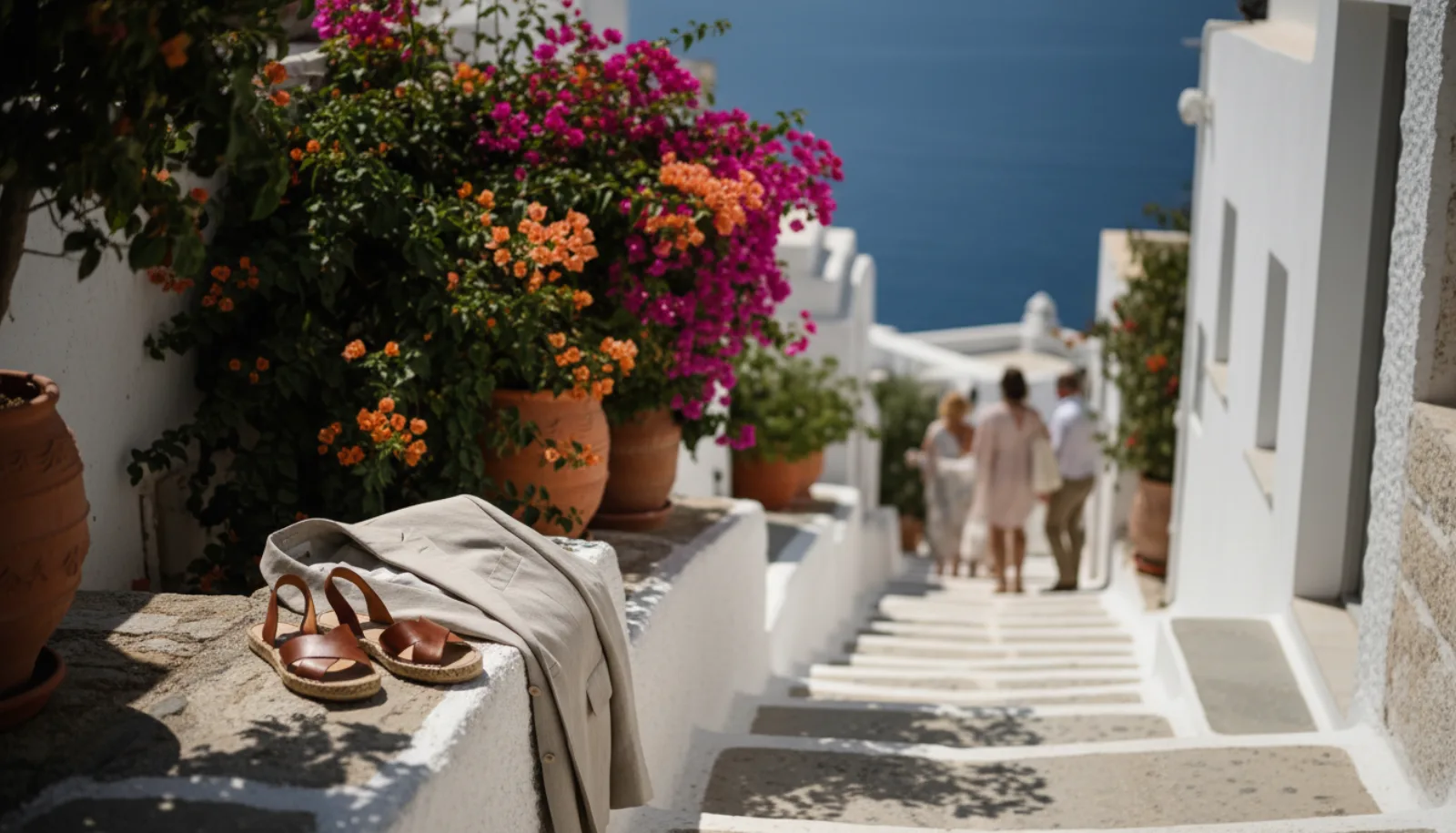
Greek Island Wedding: What Guests Will Ask
Dress code in August heat, cash on small islands, the church up a hill. The questions your guests will ask, answered, so you can send a link instead.
 Wedding Planning
10 Things to Know Before a Greece Wedding
Planning a destination wedding in Greece? These 10 honest realities, from booking windows to vendor WhatsApp, save you months of surprises.