
Advertisement
 Sponsored
Many engaged couples confuse 'Save the Date' with 'Invitation', causing unnecessary planning delays and vendor miscommunication. Understanding wedding planning terminology is essential for effectively navigating digital tools like WhiteClover.io and reducing stress. This guide clarifies critical terms to empower your wedding planning journey, helping you coordinate guests, vendors, and timelines with confidence.
Plan Your Event
One platform for every occasion — weddings, baptisms, corporate events and private parties.
Key takeaways
| Point | Details |
| Vendor Satisfaction | Clear contract terminology improves vendor satisfaction by 40% through reduced disputes. |
| Guest Management | Distinguishing guest list from seating chart reduces planning delays by 15% by preventing task confusion. |
| Greek Weddings | Greek wedding terms differ significantly due to legal requirements and cultural traditions affecting planning. |
| Planning Phases | Wedding terminology fits into four chronological phases aiding sequential comprehension. |
| Digital Integration | WhiteClover.io integrates over 30 planning features using terminology mapped to user actions. |
Introduction to wedding planning terminology and digital planning
Wedding planning terminology forms the foundation of effective communication with vendors, guests, and digital platforms. When you understand terms like RSVP, seating chart, or ceremony timeline, you make faster decisions and avoid costly mistakes. Unfortunately, many couples struggle with unfamiliar industry jargon during their first planning steps.
Common challenges include mixing up guest lists with seating arrangements, confusing Save the Date cards with formal invitations, and misunderstanding vendor contract clauses. These errors create unnecessary delays and stress. Digital platforms like WhiteClover address this by integrating planning features using terminology mapped directly to user actions, making complex tasks intuitive.
Consider these terminology-driven features:
- Smart Save the Date automates early guest notifications
- Contact Collector organizes attendee information instantly
- Timeline Builder uses phase-specific vocabulary for scheduling
- Table Management distinguishes between guest lists and seating assignments
Mastering terms early helps you plan your wedding with digital tools more effectively. When you understand what each feature does, you spend less time learning software and more time enjoying your engagement. Wedding planning platforms become powerful allies rather than confusing obstacles.
Pro Tip: Create a personal glossary of wedding terms you encounter. Write definitions in your own words to reinforce understanding and reference them when using digital planning tools.
Guest management terminology and RSVP
Guest management requires understanding several interconnected terms that many couples confuse. Save the Date cards are early notifications sent six to eight months before your wedding, giving guests time to reserve your date. Invitations arrive later, typically six to eight weeks ahead, formally requesting attendance and requiring an RSVP response.
The distinction between guest list and seating chart reduces planning delays by 15% because couples stop mixing these separate tasks. Your guest list contains names, contact information, meal preferences, and RSVP status for everyone invited. Your seating chart assigns specific tables and seats at the venue, created much later after receiving RSVPs.
| Term | Definition | Timing |
| Save the Date | Early notice reserving your wedding date | 6-8 months before |
| Invitation | Formal attendance request requiring RSVP | 6-8 weeks before |
| Guest List | Complete attendee database with contact details | Created first |
| Seating Chart | Table and seat assignments at venue | After RSVPs received |
RSVP stands for "répondez s'il vous plaît," meaning "please respond." Setting clear RSVP deadlines, typically three to four weeks before your wedding, helps finalize vendor numbers. Digital tools like WhiteClover's table management feature use this guest list management data to automatically suggest seating arrangements.
Understanding these distinctions improves guest interaction in wedding planning by clarifying when to collect information versus when to assign locations. You avoid premature seating decisions before knowing final attendance.
Pro Tip: Build your guest list immediately after engagement, but wait until receiving at least 80% of RSVPs before creating your seating chart to minimize last-minute changes.
Vendor management terminology and contracts
Vendor contracts contain specific terminology that protects both parties and clarifies expectations. A contract is a legally binding agreement outlining services, pricing, payment schedules, and cancellation policies. Clear contract terminology improves vendor satisfaction by 40% by preventing misunderstandings that damage relationships.
Key contract terms you must understand:
- Deposit: Initial payment securing your booking date, typically 25-50% of total cost
- Balance: Remaining payment due before or on your wedding day
- Force Majeure: Clause addressing unforeseeable circumstances beyond anyone's control
- Liability Waiver: Statement limiting vendor responsibility for specific situations
- Cancellation Policy: Terms governing refunds if you cancel the contract
Payment terms specify when money is due and accepted payment methods. Most vendors require a non-refundable deposit immediately, with the balance due one to four weeks before your event. Review these carefully before signing to avoid surprises.
"Always request a detailed clause breakdown from vendors before signing. Understanding cancellation policies and liability terms prevents disputes and builds trust, making your planning experience smoother."
Real-world example: A photographer's removal clause might state they can leave if working conditions become unsafe. This protects the vendor while giving you clear expectations. Understanding this language helps you streamline wedding planning by choosing vendors whose terms align with your needs.
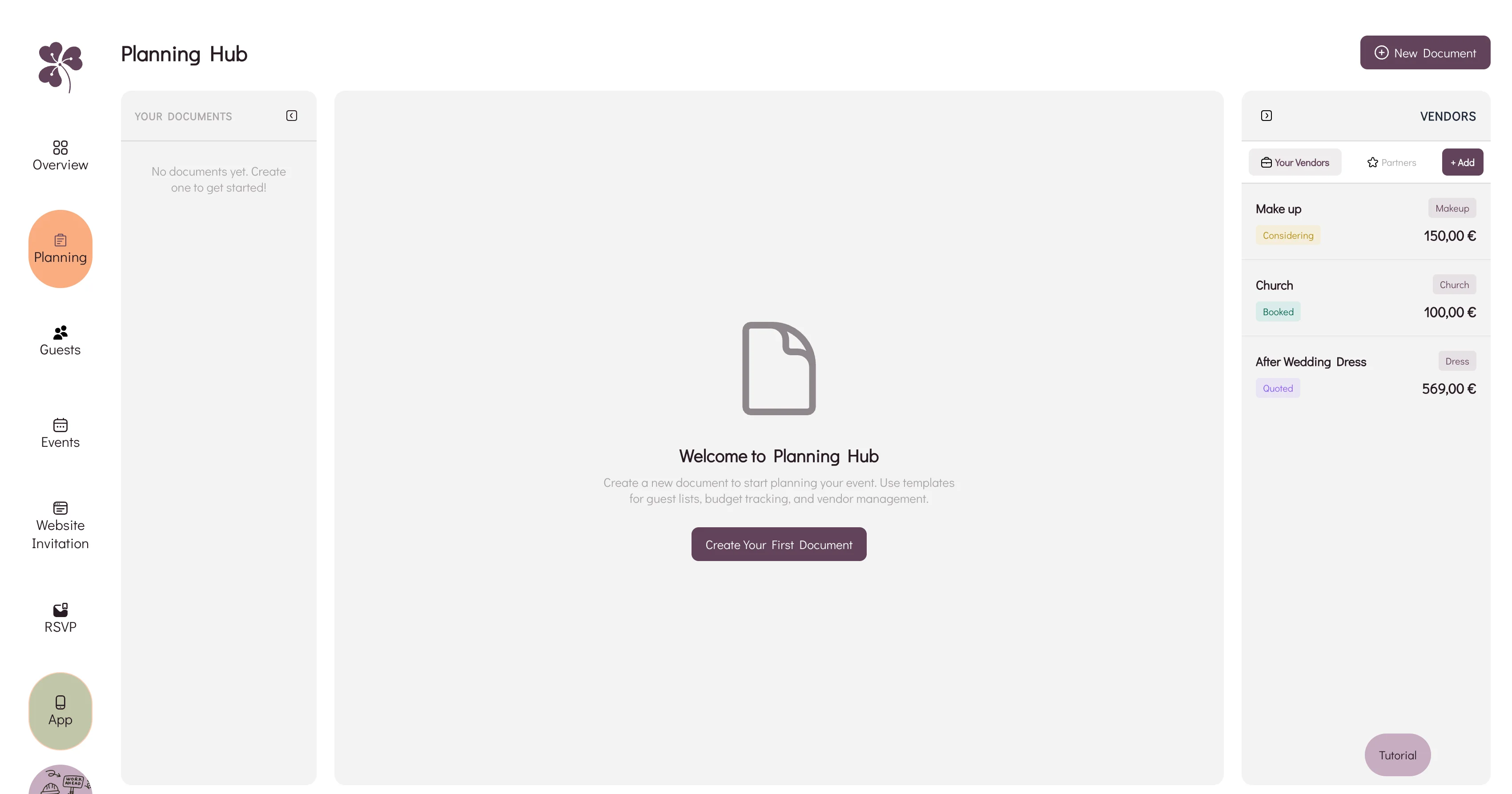
Wedding planning platforms benefits include vendor tracking features that store contract terms and payment deadlines digitally, sending automatic reminders so you never miss critical dates. The Planning Hub brings all of these capabilities — budget tracking, vendor coordination, and document management — into a single workspace.
Pro Tip: Create a contract summary sheet listing key terms, deadlines, and contact information for each vendor. Store this in your digital planning dashboard for quick reference.
Greek destination wedding terminology
Planning a destination wedding in Greece introduces region-specific terminology reflecting local legal requirements and cultural traditions. Greek civil ceremonies require specific documentation including a Certificate of No Impediment, translated and apostilled birth certificates, and sometimes divorce or death certificates for previously married individuals. Understanding these destination wedding essentials prevents last-minute legal complications.
Symbolic weddings in Greece follow a different terminology path. These ceremonies hold personal meaning but lack legal recognition, requiring couples to complete civil marriage in their home country. Terms like "blessing ceremony" or "symbolic union" distinguish these events from legally binding marriages. Many couples choose symbolic Greek weddings for their cultural authenticity without navigating complex foreign legal systems.
Greek vendor terminology differs from other destinations:
- Taverna: Traditional Greek restaurant often hosting receptions
- Koufeta: Sugar-coated almonds given as wedding favours
- Stefana: Wedding crowns used in Orthodox ceremonies
- Martirika: Witness pins designating the koumbaro (best man) and koumbara (maid of honour)
- Hora: Traditional Greek circle dance performed at receptions
Location-specific terms matter when booking venues. A "villa wedding" in Greece typically means a private residence rental with outdoor ceremony space, while "beach club wedding" indicates a commercial venue on the coastline. Clarifying these definitions with vendors prevents booking mismatches.
Integrating local terms into digital planning tools ensures accuracy when sharing information with international guests. Your destination wedding checklist should include Greek terminology definitions to help attendees understand cultural elements. Resources for destination wedding planning in Greece provide comprehensive guides for navigating these unique requirements.
Wedding timeline and schedule vocabulary
Wedding timeline terminology organizes your day into manageable phases, ensuring smooth coordination between vendors and guests. Understanding these terms helps you create realistic schedules that keep events on track. Your timeline divides into four main phases: pre-ceremony, ceremony, reception, and post-reception.
Key timing terms:
- Getting Ready: Hair, makeup, and dressing period, typically 2-4 hours before ceremony
- First Look: Private moment where couple sees each other before ceremony (optional)
- Ceremony Start: Scheduled time for processional to begin, communicated to all guests
- Cocktail Hour: 60-90 minute reception period while couple takes photos
- Grand Entrance: Couple's arrival at reception venue announced to guests
- Dinner Service: Meal period, usually 60-90 minutes depending on service style
- First Dance: Traditional opening dance performed by newlyweds
- Last Call: Final opportunity for bar service before venue closing
- Send-Off: Couple's departure with guests creating exit moment
Timeline adherence determines event success. When ceremony starts 30 minutes late, every subsequent element gets compressed, stressing vendors and guests. Building buffer time between major events accommodates inevitable delays without derailing your schedule.
Digital timeline tools within platforms like WhiteClover send real-time updates to vendors and wedding party members, keeping everyone synchronized. This wedding timeline planning approach reduces coordinator workload and prevents miscommunication.
Pro Tip: Add 15-minute buffers between major timeline segments. These cushions absorb small delays without affecting your overall schedule, reducing stress for everyone involved.
Common misconceptions about wedding terminology
Several misconceptions about wedding terminology create confusion and inefficient planning. Correcting these misunderstandings before they cause problems saves time and frustration. The most common error involves treating Save the Date and Invitation as interchangeable terms when they serve distinct purposes with different timing and information requirements.
Another widespread misconception assumes wedding terminology remains universal across regions and cultures. Reality shows significant variations exist. Greek destination weddings use different legal and cultural terms than British or American ceremonies. Assuming standard definitions without verifying local usage leads to booking errors and miscommunication.
| Misconception | Fact |
| Save the Date and Invitation are the same | Save the Date is early notice; Invitation formally requests attendance with RSVP |
| All regions use identical wedding terms | Terminology varies significantly by country, culture, and legal system |
| Guest list and seating chart are one task | Guest list collects attendee data; seating chart assigns venue positions later |
| Digital tools complicate terminology | Platforms clarify terms by mapping them to specific automated features |
Many couples mistakenly believe they can create seating charts immediately after sending invitations. This approach fails because you lack confirmed attendance data. Seating assignments require knowing exactly who is coming, their relationships, and any special accommodation needs.
Terminology variations extend beyond cultural differences. Vendor contracts may use region-specific legal language requiring translation or explanation. Destination wedding planning introduces foreign terminology that seems familiar but carries different meanings. Verifying definitions prevents costly assumptions.
Understanding these distinctions helps you use planning with digital tools more effectively. When platforms define terms clearly and map them to specific functions, you make fewer errors and complete tasks faster.
Using digital tools to master wedding terminology
Digital platforms like WhiteClover.io leverage wedding terminology to streamline planning, reducing manual errors and improving coordination. The platform integrates features using terminology mapped to user actions, making complex tasks accessible even for couples unfamiliar with industry jargon.
Key WhiteClover features tied to terminology:
- Smart Save the Date: Automates early guest notifications using instant sharing links across platforms
- Contact Collector: Organizes attendee information automatically, eliminating spreadsheet management
- RSVP Tracker: Monitors responses in real-time, updating guest list status instantly
- Timeline Builder: Creates detailed schedules using phase-specific vocabulary and vendor coordination
- Table Management: Distinguishes between guest list data and seating chart assignments
- Vendor Dashboard: Stores contract terms, payment deadlines, and communication history
Integrating terminology into workflow improves clarity by showing exactly what each tool does. When you see "Contact Collector," you understand it gathers guest information rather than creating seating arrangements. This precision reduces confusion and speeds up planning.
Benefits of terminology-driven digital planning:
- Stress reduction through automated task management using clear definitions
- Better communication with vendors and guests via standardized terminology
- On-time event execution through timeline tools using precise scheduling language
- Reduced manual errors by mapping terms to specific automated functions
The platform's Smart Save the Date and Contact Collector features enhance guest list management by automating data collection and organization. You spend less time chasing information and more time making creative decisions.
Applying learned terms directly in digital tools reinforces understanding while accomplishing real planning tasks. As you plan wedding timeline using digital tools, terminology becomes practical knowledge rather than abstract concepts. The wedding website essentials integrate seamlessly when you understand how terms connect across features.
Pro Tip: Spend 30 minutes exploring your digital planning platform's terminology guide before starting major tasks. This investment prevents confusion and helps you leverage advanced features confidently.
Conceptual framework for wedding planning terminology
Organizing wedding terminology into chronological planning phases creates a mental model that enhances comprehension and application. This framework divides terms into four sequential stages: Pre-Wedding, Ceremony, Reception, and Post-Wedding. Learning vocabulary within these contexts helps you understand when and how to use each term.
| Planning Phase | Key Terms | Brief Definitions |
| Pre-Wedding | Save the Date, Guest List, Vendor Contract, Deposit | Early planning tools securing dates and collecting attendee information |
| Ceremony | Processional, Vows, Unity Ceremony, Recessional | Core wedding ritual elements and their sequence |
| Reception | Cocktail Hour, Seating Chart, First Dance, Toasts | Post-ceremony celebration components and timeline |
| Post-Wedding | Thank You Cards, Vendor Reviews, Photo Delivery | Follow-up activities completing the wedding process |
This structure aids sequential learning by matching terminology to actual planning stages. When you start planning, you focus on Pre-Wedding terms like guest list and vendor contracts. As your wedding approaches, Ceremony and Reception vocabulary becomes relevant. Post-Wedding terms matter after your event concludes.
Mapping terms onto digital planning stages helps you use platform features at the right time. You don't need seating chart tools when first building your guest list. Understanding this sequence prevents premature task attempts and reduces overwhelm.
The framework supports clarity by showing relationships between terms. Guest list data feeds into seating charts. Save the Date timing affects invitation schedules. Vendor contracts determine payment deadlines on your timeline. Seeing these connections helps you coordinate multiple planning elements simultaneously.
Using a structured vocabulary approach improves coordination across all planning aspects. Your step-by-step wedding website guide integrates seamlessly with timeline planning when you understand how terminology connects features and phases.
Discover WhiteClover: Your digital wedding planning partner
Ready to apply your wedding terminology knowledge? WhiteClover.io offers a comprehensive platform integrating every term discussed in this guide into intuitive features that streamline your planning journey. The all-in-one suite includes personalized wedding website essentials, automated guest list management, vendor coordination tools, and detailed timeline builders using the exact terminology you've mastered.
The Smart Save the Date and Contact Collector features simplify early planning phases, while table management tools help you create seating charts effortlessly after receiving RSVPs. Whether planning a local celebration or Greek destination wedding, WhiteClover provides region-specific support and a private photo-sharing platform ensuring you capture every moment. Start planning in your dashboard and explore how planning your wedding timeline for seamless celebrations becomes stress-free when terminology meets technology.
Frequently Asked Questions
- What's the difference between Save the Date and Invitation?
Save the Date is an early notice sent six to eight months before your wedding, reserving the date on guests' calendars. Invitations arrive six to eight weeks ahead, formally requesting attendance and including RSVP cards. The timing and purpose differ significantly, with Save the Date being informational and Invitation requiring a response.
- Why does Greek wedding terminology differ from my home country?
Greek wedding terminology reflects specific legal requirements for marriage documentation and cultural traditions unique to the region. Understanding local terms like Stefana (wedding crowns) or koufeta (sugar almonds) ensures compliance with legal processes and authenticity in cultural celebrations. These differences affect planning approaches and vendor communication.
- How can I avoid confusing guest list and seating chart?
Treat your guest list as a comprehensive attendee database collecting names, contact information, and RSVP status throughout planning. Create your seating chart only after receiving most RSVPs, using guest list data to assign specific tables and seats at your venue. Separating these tasks by timing prevents premature decisions.
- How do digital platforms use wedding terminology to help me?
Platforms like WhiteClover map terminology to specific automated features, making complex tasks intuitive. When you see "RSVP Tracker," you know it monitors guest responses, while "Timeline Builder" creates schedules using phase-specific vocabulary. This clarity reduces errors and speeds up planning by showing exactly what each tool accomplishes.
- What's the best way to learn wedding terms for my big day?
Learn terminology by planning phase, starting with Pre-Wedding terms like guest list and vendor contracts. Use glossaries to define unfamiliar words in your own language, then apply terms actively in your digital planning app for practical reinforcement. Creating a personal reference document helps you remember definitions when needed.
Recommended
Written by
Konstantinos P.
Part of the WhiteClover team, helping couples and hosts plan unforgettable events with modern digital tools. Passionate about simplifying the celebration planning journey.
You Might Also Like
 Wedding Planning
Streamline Wedding Planning: Why It Matters
Streamlining wedding planning reduces stress, saves time, and enhances guest experiences. Learn how digital tools modernise organisation and communication.
 Budget & Tools
Wedding Planning Hub: Budget & Vendors
Master your wedding planning with WhiteClover's Planning Hub. Practical tips for calmer planning. Practical tips for calmer planning Full guide in the.
 Digital Tools
Wedding Planning Platforms: Key Benefits
Wedding planning platforms centralise guest management, budgeting, vendor discovery and photo sharing. Learn about digital tools, features and costs.