Advertisement
 Sponsored
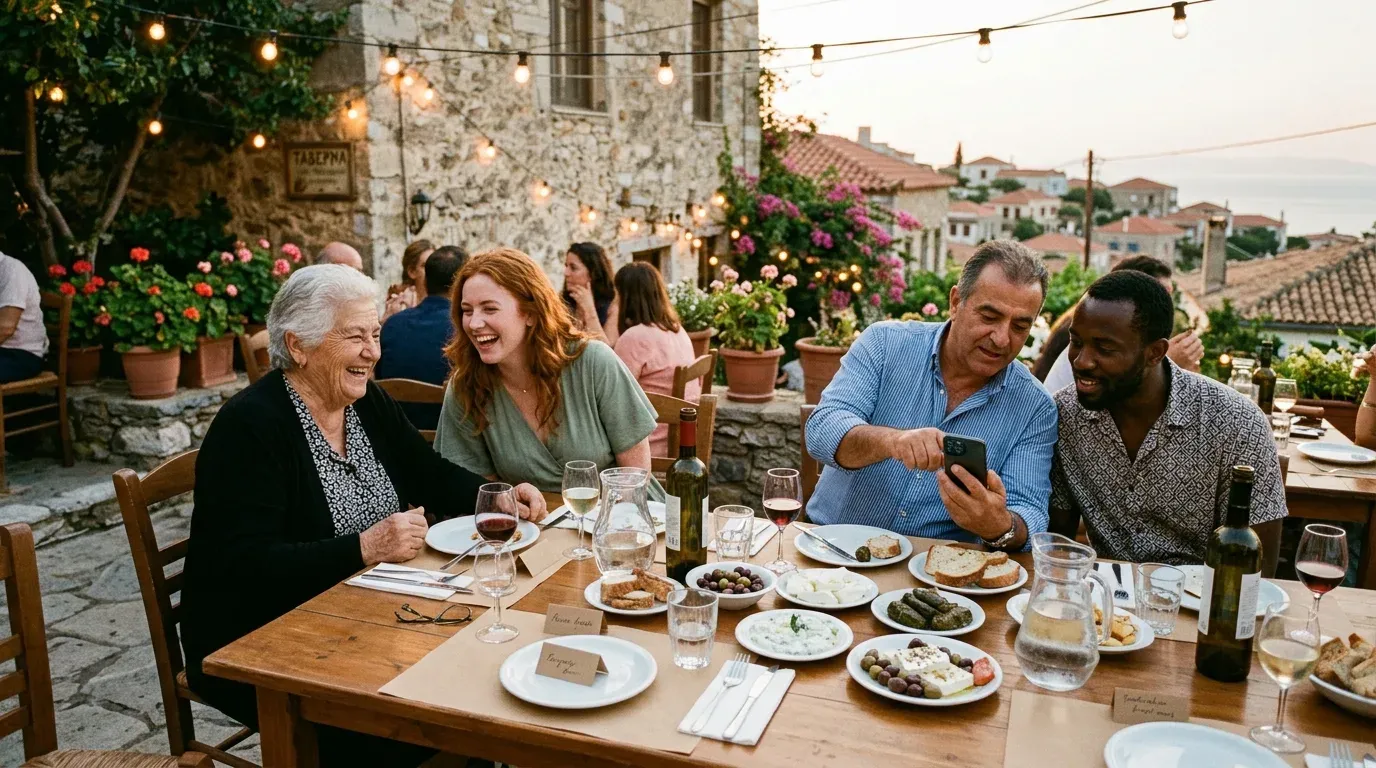
Greek Family, International Friends: One Wedding in Two Languages
Take Eleni from Thessaloniki and James from Bristol (an example couple). Her side is 140 people, most of whom have never answered an RSVP in their lives. His side is 45 friends and family who expect a website, a deadline and a meal choice. Both lists are coming to the same wedding in Halkidiki.
We already have two guides on this situation: one on a single wedding website for Greek and English guests, and one on running the day itself in two languages. This one covers the part in between: invitations, replies, and getting one number for the venue from two families who do things differently.
TL;DR:
- Plan for two ways of replying. Many Greek families expect a phone call, not a form. Build the RSVP so either works, and enter phone replies yourself.
- Send invitations in each guest's language. WhiteClover lets you choose English or Greek when you send, and write your own message in each.
- RSVP questions can be written in both English and Greek, and guests see the app in their language.
- The wedding website can carry up to 12 languages. You write each version yourself, as nothing is machine translated.
- One guest list, one deadline, one number for the venue. Split the sending, never the list.
Planning a wedding in Greece from abroad?
We're not wedding planners. We help you find the right Greek vendors for your date, place and budget, and explain the paperwork. Neutral advice, free.
We only pass your details to a vendor once you say so.
Two families, two habits
The difference that causes the most trouble is how each side replies.
Greek couples often confirm numbers by phone, close to the date. In our own research on how Greek couples talk about wedding planning, a bride asked on TikTok in July 2026 whether she really had to phone every guest for confirmation ten days before the wedding. Greek has no everyday word for RSVP. The job is called «επιβεβαίωση», confirmation, and it is usually done by calling.
Guests from the UK, Ireland or the US are more likely to expect a link, a form and a deadline weeks ahead.
Neither is wrong, and you will not change either family's habits for one wedding. So the plan has to accept both:
- International guests get a link and a deadline, and most will use it.
- Greek family get the same link in Greek. Some will use it. For the rest, one person (often a parent or a cousin) collects answers by phone and enters them in the same list.
What matters is that every reply ends up in one place, whoever typed it.
Invitations in each guest's language
When you send invitations from WhiteClover by email or text, you choose the language of the message, English or Greek, and you can write your own message for each. Send the Greek version to the Greek side and the English version to everyone else. Texts can't go to US or Canadian numbers, so North American guests get the email.
Write the Greek version in Greek from the start, not as a translation of the English. A Greek invitation that reads like a translated form is the quickest way to make an aunt pick up the phone instead.
Digital wedding invitations and wedding SMS cover the sending in more detail.
RSVP questions both sides can answer
You can write each RSVP question in English and in Greek, so a meal choice or a question about transport reads naturally in both. The guest app opens in English or Greek, following the phone's language, and guests can switch it in their settings.
Keep the questions few. Greek relatives answering on behalf of a whole household will not fill in a long form, and wedding RSVP lets families reply together for everyone in the party.
A practical set for a mixed wedding:
- Coming or not, for each person.
- Meal or dietary needs.
- Arrival day, if anyone is travelling.
- One question only your wedding needs, such as transport from the church.
One website, written twice
The wedding website is where the two sides get the same facts: times, places, travel and what to wear. WhiteClover websites can hold English, Greek and ten other languages: Spanish, French, German, Italian, Portuguese, Dutch, Russian, Arabic, Chinese and Japanese. Guests switch language on the page. You write each version yourself, so nothing reaches your Greek family through a translation engine.
What to translate, and what you can leave in one language, is covered in our guide to one wedding site for Greek and English guests.
One list, one deadline, one number
Two families do not mean two lists. Keep one wedding guest list and mark each household's language, with a tag or a note, so you know which invitation to send and who to call.
Set a single deadline for everyone, and give the person phoning the Greek side a date a few days earlier, so their answers are in before you send the number to the venue.
Then the seating. International friends often know only the couple, so plan a few mixed tables where people share a language. On the day, guests can see their own table in the guest app from two hours before, which is free and saves a crowd around the seating board.
The koumbaros, the church and other surprises
International guests at a Greek wedding will meet customs they don't know: the koumbaros or koumbara, the crowns, the rice. A short page on your website explaining the ceremony in English saves a lot of whispered questions. Our guide to the Greek Orthodox ceremony for guests is written to be shared, and what the koumbaros does and costs helps the international side understand the role.
If one of you isn't Orthodox, check early what the church needs. Our post on civil, Orthodox or symbolic ceremonies covers who can marry in an Orthodox church.
Ask us about your wedding
We're not wedding planners. Email us at [email protected] and we'll suggest Greek vendors that fit your date, place and budget, and explain the paperwork for a Greek and international couple. Neutral advice, free, and we pass your details to a vendor only once you say so.
Frequently asked questions
How do you plan a wedding with Greek family and international friends? Keep one guest list, send each side invitations in their own language, and accept that many Greek relatives will reply by phone. Enter those replies in the same list so you end up with one number.
Can wedding RSVP questions be in Greek and English? Yes. With WhiteClover you can write each RSVP question in both languages, and guests can use the guest app in English or Greek.
Should we have two wedding websites, one in Greek and one in English? No. One site with both languages behind one link is easier for guests and for you. See our guide to one wedding site for Greek and English guests.
Do Greek guests RSVP? Many Greek families confirm by phone close to the date rather than through a form. Plan for both: a link for everyone, and a family member who collects answers by phone.
Can WhiteClover translate our website automatically? No. You write each language version yourself, which keeps the Greek natural for your family.
Recommended
Written by
Marios P
Part of the WhiteClover team, helping couples and hosts plan unforgettable events with modern digital tools. Passionate about simplifying the celebration planning journey.
You Might Also Like
 Digital Tools
One Wedding Site, Greek and English Guests
Half your guest list needs Greek and half needs English. Why two separate sites break, and how to run one that serves both without maintaining it twice.
 Wedding Planning
Two-Language Wedding Day: Greek and English
Running a Greek and English wedding day: the ceremony card, speeches, one bilingual MC, menus, signs and day-of messages, with lines you can copy.
 Wedding Planning
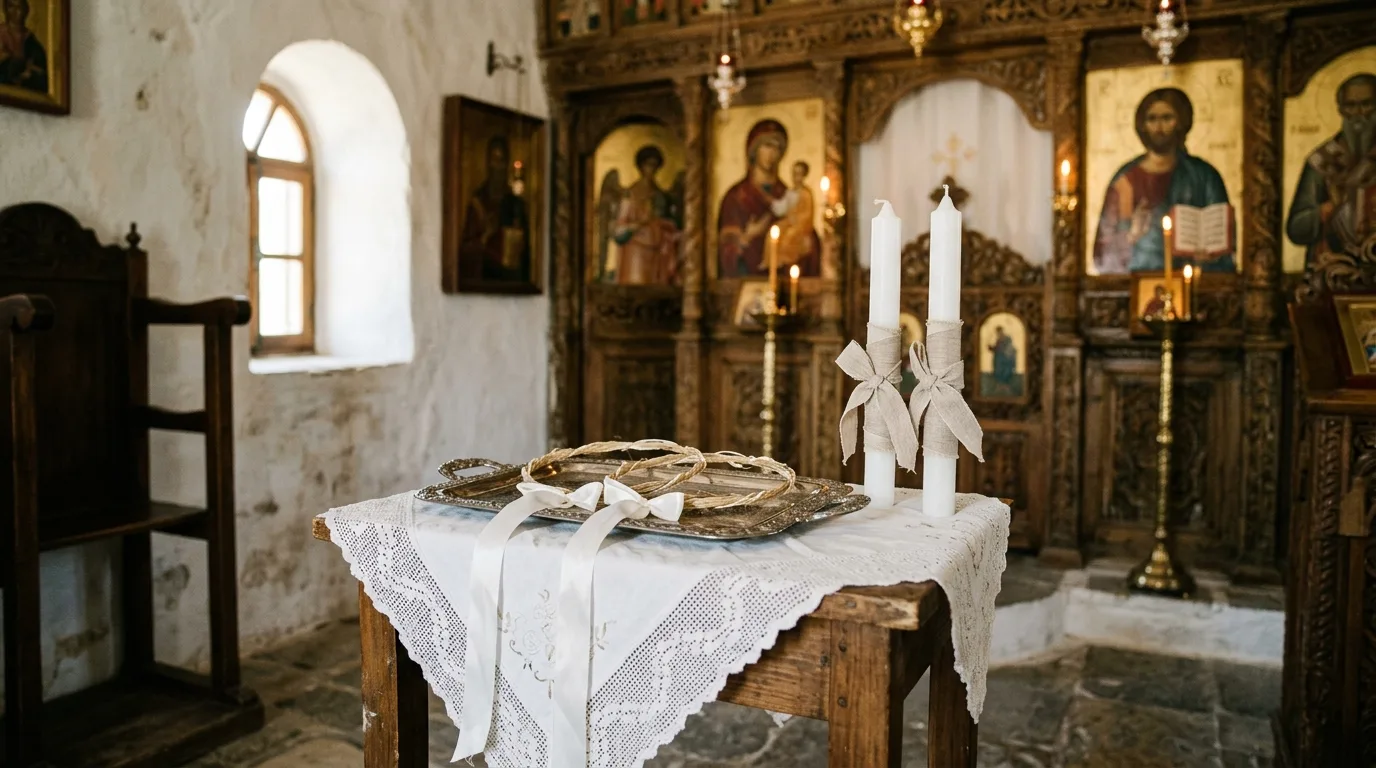
Civil, Orthodox or Symbolic Wedding in Greece
Which Greek ceremony suits a foreign couple: how civil, Orthodox and symbolic weddings differ, who can marry in an Orthodox church, and what each one needs.